
ASTER's Aggressive Buybacks and Token Burn Strategy in S3: Evaluating Velocity and Valuation Implications
Buyback Velocity: A Quantitative Deep Dive
Aster's S3 buyback program has demonstrated remarkable intensity. As of November 6, 2025, the platform has repurchased 25.5 million ASTER tokens since the program's inception, with an average daily repurchase rate of 2.76 million tokens, according to Lookonchain data. Over the 35-day S3 phase (concluding November 9, 2025), this pace implies a total repurchase volume of approximately 96.6 million tokens, assuming consistent execution.
The velocity of these buybacks is further amplified by their funding structure. By dedicating 70%-80% of S3 trading fees to repurchases, according to a Phemex announcement, Aster leverages its own ecosystem-generated liquidity to drive demand. This self-sustaining model reduces reliance on external capital and aligns tokenholder interests with platform growth. However, the effectiveness of this strategy hinges on market conditions: higher trading volumes could accelerate buyback rates, while dips might slow them, as the team retains discretion to time purchases.
Token Burn Mechanics and Supply Dynamics
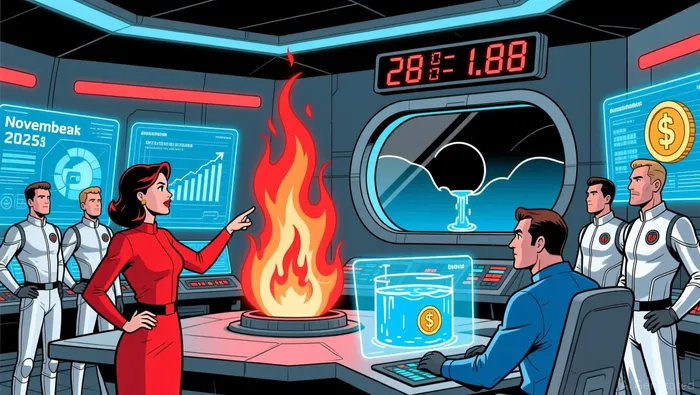
Half of all repurchased tokens are permanently burned, while the remaining 50% are locked for future airdrops, according to CryptoRank analysis. This dual approach balances immediate supply reduction with long-term community incentives. For context, a single burn event of 100 million tokens-valued at $98.9 million at current prices, according to a crypto.news article-has already reduced circulating supply by 5%, assuming the 2 billion token baseline, as reported by crypto.news. If the S3 phase meets its projected 96.6 million repurchase target, 48.3 million tokens will be burned, further shrinking supply by 2.4%.
Such reductions could theoretically drive scarcity-based price appreciation. However, market reactions have been mixed. Despite the burn announcement, ASTER's price briefly dipped below $1 to $0.98, according to crypto.news, reflecting broader market volatility. That said, the token rebounded with a 6% gain post-announcement, per Phemex coverage, suggesting investor confidence in the strategy's long-term value.
Airdrop Incentives: Balancing Holder Rewards and Liquidity
The 50% allocation of buybacks to a locked airdrop fund introduces a critical incentive mechanism. By reserving tokens for future community rewards, Aster aims to foster loyalty and sustained participation. This approach mirrors traditional stock buybacks paired with shareholder dividends, though with a crypto-specific twist: locked tokens act as a reserve for airdrops, which can be distributed based on on-chain activity or governance votes, as outlined in a Binance post.
However, this strategy carries risks. If airdrop distributions are delayed or perceived as insufficient, holders may lose patience, undermining the intended psychological boost. Additionally, the locked tokens represent a liquidity drag until released, which could amplify price swings if unlocked prematurely.
Market Reaction and Strategic Risks
While the buyback and burn plan has garnered short-term optimism, investors must remain cautious. The price dip below $1 highlights sensitivity to macroeconomic factors and broader crypto market sentiment, as reported by crypto.news. Furthermore, the success of the strategy depends on Aster's ability to maintain high trading volumes in S3-a challenge given the competitive DeFi landscape.
Critically, the program's impact on valuation is contingent on execution. If buyback velocity slows due to declining fees or market downturns, the projected supply reductions may fall short. Conversely, aggressive execution could accelerate scarcity-driven price discovery, particularly if institutional adoption or partnerships materialize.
Conclusion: A High-Velocity Gamble
Aster's S3 strategy represents a high-stakes bet on tokenomics-driven value creation. The velocity of buybacks-coupled with a disciplined 50-50 burn-airdrop split-positions ASTER to potentially outperform peers in supply reduction and holder incentives. However, the token's valuation remains exposed to broader market risks and execution uncertainties. For investors, the key variables will be the consistency of buyback velocity, the timing of airdrop distributions, and Aster's ability to sustain trading volume growth.
As the S3 phase nears its November 9 conclusion, the market will likely scrutinize whether this aggressive strategy translates into durable value or becomes a fleeting experiment in tokenomics theater.







Comentarios
Aún no hay comentarios