
Why AST SpaceMobile's Volatility Presents a Strategic Entry Point for Long-Term Investors
The satellite internet sector is undergoing a seismic transformation, driven by technological innovation and surging global demand for connectivity. At the heart of this evolution is AST SpaceMobileASTS-- (ASTS), a company whose stock has exhibited extreme volatility in 2025-surging 235.7% year-to-date. While this volatility reflects the inherent risks of investing in a high-growth, capital-intensive industry, it also creates a compelling opportunity for long-term investors willing to balance near-term uncertainties with the company's transformative potential.
A Market on the Cusp of Hypergrowth
The satellite internet market is projected to expand from USD 14.26 billion in 2025 to USD 32.86 billion by 2030, growing at a compound annual rate of 18.16%. This acceleration is fueled by three key drivers: advancements in low Earth orbit (LEO) satellite technology, government incentives for rural broadband access, and rising demand for connectivity in aviation and maritime sectors according to market analysis. For investors, this represents a multi-decade inflection point, where early movers like AST SpaceMobile could capture disproportionate value.
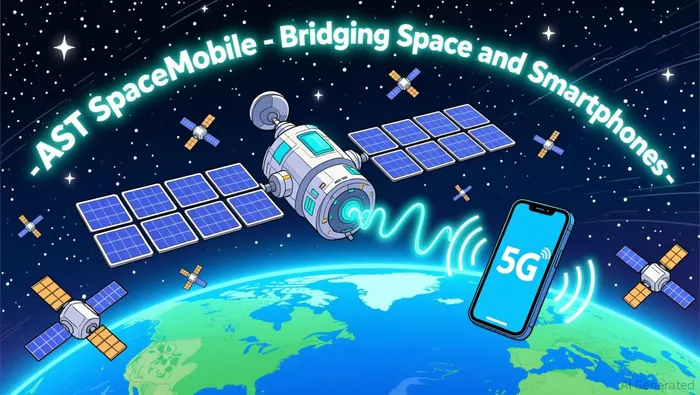
AST SpaceMobile's unique value proposition lies in its direct-to-device (D2D) satellite-smartphone technology. Unlike competitors such as SpaceX's Starlink or Amazon's Project Kuiper, which require external terminals for connectivity, AST SpaceMobile integrates satellite links directly into standard 5G handsets. This eliminates hardware barriers, making its service more accessible to consumers and enterprises alike. The company's recent partnerships with telecom giants AT&T and Verizon further amplify its addressable market, positioning it to capitalize on the 5.8 billion global smartphone users.
Catalysts for Growth: BlueBird 6 and Infrastructure Expansion
A critical catalyst for AST SpaceMobile's trajectory is the impending launch of its BlueBird 6 satellite on December 15, 2025. This satellite, 3.5 times larger than its predecessors, will significantly boost the company's data capacity and reduce latency-a key metric for competing with terrestrial 5G networks. According to a report by QuiverQuant, the BlueBird 6 launch has already driven a 236% surge in ASTSASTS-- shares this year, as investors anticipate improved service reliability and scalability.
Complementing this technological leap is AST SpaceMobile's aggressive infrastructure expansion. The company has added manufacturing facilities in Texas and Florida to accelerate satellite production, a strategic move to meet the demands of its growing constellation. While these investments have contributed to a negative free cash flow of approximately $1.08 billion, they are essential for achieving the economies of scale required to turn profitability into a reality by the late 2020s.
Balancing Risks: Valuation Discrepancies and Competitive Pressures
Despite its promising trajectory, AST SpaceMobile faces near-term headwinds. Its price-to-book ratio suggests the stock is overvalued relative to its current financials, while discounted cash flow models indicate it is undervalued by 62.6% to 71.7% depending on assumptions. This divergence highlights the challenge of pricing a company whose value is tied to future infrastructure milestones rather than present-day profitability.
The competitive landscape further complicates the outlook. SpaceX's Starlink, with its 1 Tbps throughput and sub-5 ms latency, remains the market leader, while Amazon's Project Kuiper is rapidly deploying its 3,236-satellite constellation. AST SpaceMobile's D2D model, however, offers a distinct advantage in markets where smartphone penetration exceeds fixed-line infrastructure, particularly in emerging economies. Regulatory hurdles and high ground-terminal costs for competitors also create a niche where AST SpaceMobile's approach could gain traction.
Strategic Entry Point: Navigating Volatility with a Long-Term Lens
For long-term investors, AST SpaceMobile's volatility is less a deterrent and more a feature of its growth story. The company's Q3 2025 revenue surged 1,239.91% year-over-year to $14.7 million, demonstrating the scalability of its business model. Analysts have set a median price target of $57.50 per share, implying significant upside from current levels, though institutional activity remains mixed according to market analysis.
The key to unlocking value lies in patience. AST SpaceMobile's negative free cash flow and high operating costs are temporary byproducts of its capital-intensive expansion phase. As its satellite constellation matures and commercial partnerships scale, these costs are expected to stabilize. Meanwhile, the satellite internet market's projected growth ensures that even a modest market share could translate into outsized returns.
Conclusion
AST SpaceMobile's stock volatility reflects the dual-edged nature of investing in a frontier technology sector. While risks such as regulatory uncertainties and competitive pressures persist, the company's technological differentiation, strategic partnerships, and alignment with a $32.86 billion market by 2030 make it a compelling candidate for long-term portfolios. For investors with a multi-year horizon, the current valuation discrepancies and upcoming catalysts-including the BlueBird 6 launch-present a strategic entry point to participate in the next phase of the connectivity revolution.





Comentarios
Aún no hay comentarios