
Assisted Living Costs: The $70,800 Annual Reality and Who Pays It
The national median annual cost for assisted living has hit a new high of $70,800, a 10% increase from 2023. This surge, which adds $6,600 annually and $550 monthly to the typical resident's bill, is driven by two primary forces: inflation and rising labor costs. For providers, these pressures are squeezing margins, forcing them to pass higher rates on to residents.
The variation across the country is stark. While the national median is $5,900 per month, the range spans from $4,015/month in Louisiana to $7,350/month in Alaska. This wide dispersion reflects local costs of living, regulatory environments, and the availability of care providers. The most expensive states, like Vermont and New York, command premiums that can double the cost in the cheapest states, such as Mississippi.
For senior living operators, the math is clear. Inflation remains the top driver of cost increases, but labor expenses are a close second. As one survey notes, increasing wages, staffing shortages, and rising benefit costs are critical pressures. This dual squeeze has led providers to implement annual fee increases, with assisted living monthly fees rising an average of 4.59% in 2025. While the pace is moderating, the trend is clear: affordability is becoming a pressing issue for both residents and the industry.
The Family Financial Crossroads: Out-of-Pocket vs. Filial Responsibility
The financial reality for aging parents is stark. Medicare does not cover assisted living, leaving most families to pay out of pocket. While Medicaid offers some state-specific assistance for long-term care, eligibility is strict and varies widely. For the average couple, savings and Social Security are simply insufficient, often covering only a year or two of costs. This creates an immediate and direct conflict: funding parents' care versus securing one's own future.
The burden often falls on adult children, a responsibility that can be legally enforced in 29 states. Filial responsibility laws, which mandate adult children to support indigent parents, exist in states like Pennsylvania, California, and New Jersey. Theoretically, these laws could hold a child liable for a parent's unpaid nursing home bill. However, enforcement is rare. Authorities typically pursue these claims only when a parent lacks Medicaid coverage and the child has the means to pay. A 2012 Pennsylvania case, where a man was ordered to pay his mother's $93,000 bill, remains a notable exception.
The core tension is economic. The median retirement savings for baby boomers is a mere $202,000. This sum is meant to fund a person's own retirement, long-term care, and legacy. Using it to pay for a parent's care directly undermines that security. It forces a choice between supporting a parent and protecting one's own financial future. This dynamic can strain family relationships, especially when siblings have unequal resources, and it highlights a system where the cost of aging is shifted from public programs to private, often strained, family finances.
The Expectation Gap: What Families Don't Realize
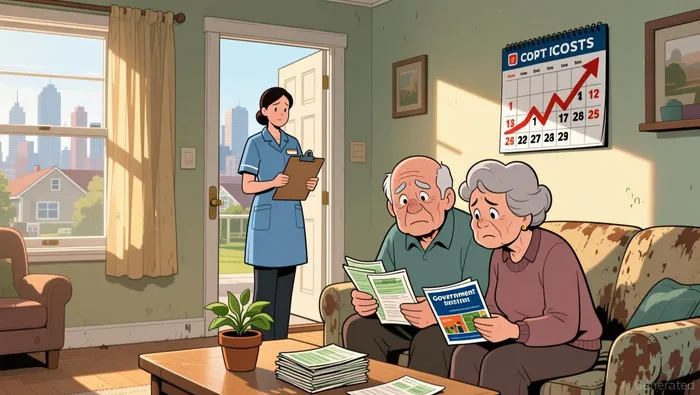
The senior living industry is undergoing a fundamental shift, but the expectations of parents and their adult children are moving in opposite directions. For many families, the dream is a luxury community offering convenience and peace of mind. Yet the reality for the incoming generation is a stark affordability crisis. Boomers and Gen Xers have saved far less for retirement than previous generations, with the median retirement savings for boomers at just $202,000. This financial gap is forcing the industry to diversify, with a clear push toward middle-market products like co-housing and reduced entrance fees to attract a generation with fewer assets.
This disconnect is hitting supply at the same time. The rate of new construction is at a record low, with just 17,000 units broken ground on in Q3 2025. The math for new projects is increasingly unfavorable, as some would need to charge between $11,000 and $13,000 per month to pencil out. That's a price far beyond the reach of most, severely limiting the growth of new supply. The industry is responding with renovations and repositioning of older buildings, but that's a stopgap measure that can't meet the sheer volume of demand.
The result is a market where affordability is the top barrier. An overwhelming 81% of prospective residents cite affordability as a reason for not pursuing community living. While tools like a free long-term care calculator can help families estimate costs, the underlying numbers are daunting. The median monthly cost for assisted living is already $5,900, and that's before factoring in inflation or the higher rates needed for new construction.
The bottom line is a painful expectation gap. Parents may envision a seamless transition to a comfortable community, but their children are navigating a market defined by high prices, limited new supply, and a financial reality that makes luxury options unattainable. The industry's pivot to more affordable models is a necessary adaptation, but it underscores a fundamental mismatch between what families hope for and what the market can realistically provide.
The Pricing Puzzle: All-Inclusive vs. À La Carte and the Middle-Market Shift
The senior living industry is caught in a fundamental tension between two pricing philosophies, each with distinct trade-offs. On one side, the all-inclusive fee offers simplicity and predictability, bundling housing, meals, care, and amenities into a single monthly rate. This model provides peace of mind and stable budgeting, appealing to those who value consistency. On the other, the à la carte approach allows residents to pay only for the services they use, offering flexibility and potentially lower costs for those with minimal care needs. Yet this flexibility comes with a cost: total monthly expenses can fluctuate unpredictably as care requirements change, creating a financial unknown.
This pricing divide sits atop a severe supply constraint. Despite the industry's need to serve a growing population, the rate of new construction is at a low not seen since 2012. The financial math for new projects is broken. To pencil out, some new communities would need to charge between $11,000 and $13,000 per month-a rate far beyond the reach of most seniors. This creates a direct conflict between funding parents' care and securing one's own future. The median retirement savings for boomers is a mere $202,000, and over 40% of 55-to-64 year olds have no retirement savings at all. This stark reality forces operators into a strategic pivot toward the middle market, diversifying offerings with reduced or no entrance fees, a la carte services, and more affordable concepts to attract a population that simply cannot afford the high-end, all-inclusive model.
The bottom line is a market in disequilibrium. The à la carte model promises affordability but struggles to scale, while the all-inclusive model is becoming financially unsustainable for new builds. The industry's solution is a slow, expensive dance of renovations and niche product lines, but it cannot match the sheer wall of demand. Until the funding gap between what seniors can pay and what communities need to charge is bridged, the supply of new, modern housing will remain frozen, leaving the middle market caught between a rock and a hard place.
Catalysts and Risks: What to Watch for the Family Budget
For families budgeting for senior care, the near-term financial landscape is one of moderation with persistent pressure. While the pace of increases is easing, costs remain a significant and growing obligation. The average monthly fee for assisted living is projected to rise 4.32% in 2026, a step down from the 4.59% increase seen in 2025. This moderation is a relief, but it comes with a caveat: the underlying drivers-labor costs and inflation-are still at work. Providers cite these as the top reasons for rate hikes, and they are a primary reason why the pre-pandemic era of 3% annual increases is unlikely to return.
The most immediate risk to a family's budget is not the headline rate increase, but the unpredictability of care needs. The pricing model is built on adjusting fees as a resident's condition changes. As one report notes, it is not uncommon for significant changes in an older adult's physical or cognitive condition to occur over relatively short periods of time. When a resident requires more services, their monthly bill will rise to reflect the additional care and staffing. This means a fixed budget based on an initial assessment can quickly become strained.
Families should also watch for mid-year fee adjustments. While only about 4% of providers implemented them in 2025, a clear majority-70% are considering doing so in 2026. These mid-year increases can catch families off guard if not anticipated. The key to managing this risk is proactive communication. Providers stress the importance of transparent communication with residents to explain the rationale behind rate adjustments. Families should ask communities for a clear breakdown of how fees are determined and what triggers a review, ensuring they understand the potential for cost changes over time.







Comentarios
Aún no hay comentarios