
Assessing the Viability of Trump Mobile as a Disruptive Entry in the US Smartphone Market
The launch of Trump Mobile, a mobile virtual network operator (MVNO) spearheaded by Donald Trump Jr. and Eric Trump, has been framed as a bold attempt to disrupt the U.S. smartphone market. However, beneath the gold-plated branding and political symbolism lies a complex web of operational and supply chain risks that challenge its viability as a serious competitor. This analysis examines the structural vulnerabilities of politically branded hardware ventures, using Trump Mobile as a case study to highlight the interplay between geopolitical dynamics, supply chain realities, and corporate strategy.
Supply Chain Realities and the Illusion of "American" Manufacturing
Trump Mobile's flagship product, the T1 Phone, was marketed as a "proudly American" device, yet its supply chain tells a different story. According to a report by , the T1 Phone is likely a rebranded version of the Wingtech Revvl 7 Pro 5G, a Chinese-made smartphone sold by T-MobileTMUS--. This revelation underscores a critical contradiction: while the Trump brand leverages nationalist rhetoric, the U.S. lacks the domestic manufacturing infrastructure to produce smartphones at scale. As noted by , the company has faced repeated delays in shipping the T1 Phone, with the release pushed from August 2025 into 2026, citing disruptions from the U.S. government shutdown as a key factor. These delays highlight operational inefficiencies and a lack of control over global supply chains, which are essential for timely product launches in a competitive market.
Geopolitical Tariffs and the Cost of "American" Branding
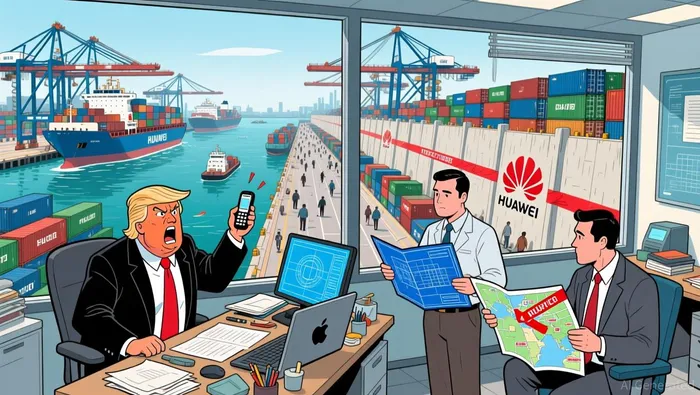 The Trump administration's recent tariff policies further complicate the venture's economic model. According to a report by , President Trump's threats of 25% tariffs on imported smartphones-initially targeting Apple's most popular device-have already driven manufacturers to accelerate production ahead of potential price hikes. While Trump Mobile's political ties might theoretically insulate it from such policies, its reliance on foreign components means it is not immune to the broader inflationary pressures. For instance, Apple's supply chain diversification efforts-spreading production to India, Vietnam, and Malaysia-have still been impacted by extended tariffs, forcing the company to consider price hikes of 17% to 18% in the U.S.
Trump Mobile, lacking Apple's scale and financial flexibility, may struggle to absorb similar costs, potentially undermining its pricing strategy for the $499 T1 Phone according to reports.
Case Studies in Politically Branded Hardware: Lessons from Apple and Huawei
Historical precedents reveal the challenges of politically branded hardware ventures. Apple, despite its global brand power, remains heavily reliant on Chinese manufacturing for both assembly and component sourcing, even as it diversifies production to Vietnam and India according to research. This duality-leveraging geopolitical alignment for high-value components while depending on low-cost manufacturing abroad-mirrors Trump Mobile's aspirational branding but exposes the inherent fragility of such strategies.
Conversely, Huawei's response to U.S. export controls offers a cautionary tale. Sanctions forced Huawei to invest heavily in self-reliance, leading to the development of HarmonyOS and advancements in semiconductor capabilities according to analysis. However, this path required significant R&D investment and government support-resources Trump Mobile appears to lack. The company's repeated delays and reliance on rebranded hardware suggest a lack of technical expertise or supply chain resilience, raising questions about its ability to innovate or adapt to geopolitical shifts.
Operational Delays and Investor Sentiment
Trump Mobile's operational track record further erodes confidence. As of December 2025, customers can preorder the T1 Phone for $100, but no firm delivery date has been announced. Such uncertainty is detrimental in a market where consumer patience is limited and competitors like Apple and Samsung operate with predictable release cycles. The repeated postponements also reflect deeper supply chain bottlenecks, potentially linked to the company's reliance on third-party manufacturers and its inability to secure timely component supplies.
Conclusion: A Politically Branded Venture with Structural Weaknesses
While Trump Mobile's entry into the smartphone market is undeniably disruptive in terms of branding and political symbolism, its operational and supply chain risks render it a high-risk proposition for investors. The venture's reliance on foreign manufacturing, vulnerability to U.S. tariff policies, and repeated delays highlight a fundamental misalignment between its aspirational messaging and the realities of global supply chains. Unlike Huawei's state-backed self-reliance or Apple's diversified production networks, Trump Mobile lacks the infrastructure, expertise, or financial flexibility to navigate these challenges. For investors, the Trump brand may generate short-term buzz, but the long-term viability of the venture hinges on resolving these structural weaknesses-a task that appears increasingly improbable as 2026 approaches.







Comentarios
Aún no hay comentarios