
Assessing the Value Trap: A Deep Dive into Specific Downgraded Stocks
Morningstar's latest screening has flagged a new batch of stocks where price has climbed into overvalued territory, a clear signal that even the most disciplined value investors must scrutinize. For the week ended January 2, the firm downgraded two prominent names to its lowest 1-star rating: Lam Research and Nextpower. This follows a broader trend, with six other stocks also receiving 2-star ratings. These aren't random picks; they are companies that have recently rallied, only to see their fundamental stories falter.
The context for this downgrading is a market that has been on a tear. The "everything rally" of 2025, driven by risk-on sentiment, created extreme valuation dispersion. While growth stocks led in the US, value stocks outperformed in many other developed markets, making the search for genuine bargains more critical-and more dangerous. In this environment, a stock's cheap price tag can be a mirage, masking deeper operational problems.
The core warning signs for these flagged companies, and value traps in general, are remarkably consistent. They point to a business that is not growing organically but is instead relying on pricing power to prop up its financials. The pattern is clear: shrinking unit sales over recent years, as seen with Molson Coors, indicate weakening demand. To compensate, companies like Conagra and General Mills have had to rely on price increases rather than volume growth. This is a classic red flag. When a company must raise prices just to maintain revenue, it often signals that its products are losing appeal or facing intense competition.
This reliance on price hikes, rather than volume expansion, is a structural vulnerability. It pressures margins over time as customers seek alternatives, and it offers no sustainable path to compounding. As Morningstar's analysis suggests, the market is rewarding stocks that appear cheap, but the real test is whether that cheapness is justified by a durable competitive advantage or if it's a price reflecting a deteriorating business model. The downgrades to Lam ResearchLRCX-- and NextpowerNXT-- are a stark reminder that even in a value-friendly market, investors must look beyond the headline P/E ratio to the health of the underlying business.
Applying the Value Investor's Framework
The MorningstarMORN-- downgrades and the broader warning signs point to a critical distinction every value investor must master: separating a temporary market overreaction from a deteriorating business model. The framework is simple but demanding. A stock trading at a discount due to a cyclical downturn or sector-wide panic can be a classic buying opportunity. But a stock priced low because its core business is weakening-a value trap-offers no margin of safety. It is a discount for a reason, and that reason is often structural.
This is where the evidence for Molson Coors, ConagraCAG--, and General MillsGIS-- becomes telling. For a value investor, the focus is not on the headline P/E ratio, but on the durability of the competitive moat and the ability to compound capital over decades. The metrics cited reveal a consistent pattern of demand softness that threatens both.
For Molson Coors, the red flag is clear. , a figure that might attract a traditional value seeker. Yet the underlying story is one of shrinking volume. Shrinking unit sales over the past two years indicate that customers are simply buying less of its beer. This is not a temporary hiccup; it is a fundamental erosion of the business model. When volume declines, the company must rely on price increases to maintain revenue, a strategy that eventually pressures margins and market share. The efficiency metric is also falling, . This combination-declining sales and deteriorating profitability-signals a business that is not compounding; it is decaying.
Conagra faces a similar challenge. , but the quality of that cheapness is suspect. The company has had to rely on price increases because falling unit sales over the past two years show it is struggling to move its products. This reliance on pricing power is a classic sign of a weakening moat. The outlook is also grim, . For a value investor, this is a stock where the low price is a reflection of a deteriorating demand environment, not a mispricing.
General Mills presents a slightly different but equally concerning picture. , but the fundamental pressures are mounting. The company is also seeing falling unit sales over the past two years, forcing it to raise prices. More critically, the financial impact is visible in its cash flows. , reflecting increased investments needed to defend its position. This is a direct hit to reinvestment capacity-the fuel for long-term compounding. .
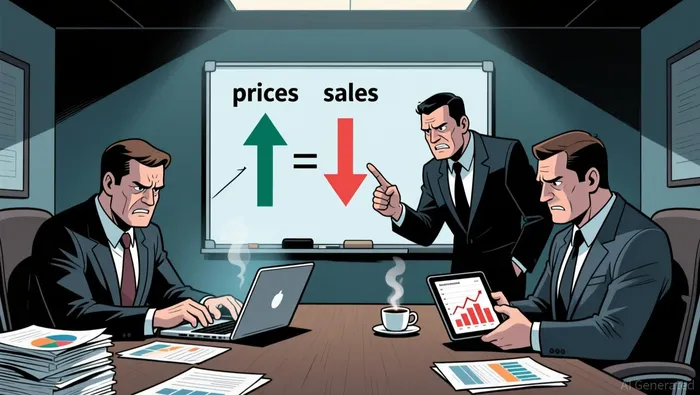
The lesson from Robert Novy-Marx's work is that a quality-focused value strategy is essential. It uses traditional metrics like P/E as a starting point, but then drills down into the quality of earnings, the sustainability of margins, and the trajectory of sales. The downgraded stocks here fail that test. They are cheap not because the market is wrong, but because the business fundamentals are right. For the patient investor, the margin of safety in a true value trap is an illusion. The real margin of safety comes from buying wonderful businesses at reasonable prices, a discipline that requires looking past the headline number to the health of the underlying engine.
Catalysts and Watchpoints for the Thesis
For the stocks flagged as potential value traps, the path forward hinges on a few key catalysts that will confirm or contradict the bearish thesis. The watchpoints are not just about earnings reports, but about the broader market forces and industry cycles that will determine whether these cheap prices are a bargain or a warning.
For LamLRCX-- Research, the primary catalyst is the semiconductor industry demand cycle itself. The company's is built on its leadership in chip manufacturing equipment, a position that is critical for its long-term compounding ability. The watchpoint is clear: monitor the trajectory of capital expenditure by major chipmakers. If the recent industry upswing is a durable multi-year cycle, Lam's position is secure. But if it proves to be a short-lived surge, the company's high valuation multiples could quickly come under pressure. The recent rotation into value stocks, which has lifted many industrial and tech names, may have already priced in a favorable cycle. As one fund manager notes, this rotation is over-extended, and a reversal could disproportionately affect quality names like Lam that have rallied strongly. The market's current optimism is a key assumption that must be tested.
The broader market context is a major macro catalyst. The valuation gap between value and growth stocks has widened to extreme levels, with value stocks trading at a . This creates a powerful narrative for a rotation back toward quality. However, that rotation is not guaranteed. It depends on the Federal Reserve's interest rate path. While rate cuts historically support growth, the current backdrop of higher rates may benefit value stocks with strong balance sheets and tangible cash flows. The watchpoint is whether the Fed's policy shift aligns with a reacceleration of the economy. If the Fed cuts too aggressively, it could fuel a broad market rally that lifts all boats, including the value traps. If it holds rates steady or hikes again, the pressure on higher-multiple growth stocks could intensify, potentially validating the value rotation.
For the consumer staples names like Molson Coors and Conagra, the catalyst is more fundamental. Their value trap thesis rests on the assumption that demand softness is structural. The key watchpoint is whether unit sales can stabilize or reverse. A recovery in volume, even without price increases, would signal a moat that is intact. Conversely, continued declines would confirm the erosion of brand power. The broader market's rotation into value provides a temporary cushion, but the real test for these companies is their ability to defend their market share and pricing power in a tougher environment. The recent performance of quality growth stocks, which have been trading at lows similar to 2022, suggests a potential for a comeback. If that reversal occurs, it would likely be led by companies with durable competitive advantages, not those struggling with volume declines.
The bottom line is that for these downgraded stocks, the catalysts are external and cyclical. The patient investor must watch the semiconductor cycle, the Fed's policy, and the rotation narrative. A move in any of these directions could quickly reprice the valuation, turning a perceived bargain into a trap or a trap into a bargain. The discipline is to wait for the evidence to confirm the underlying business story, not the market's fleeting sentiment.





Comentarios
Aún no hay comentarios