
Assessing Tokyo's Resilience and Growth Potential Amid Climate Risks and Economic Prowess
Japan's capital, Tokyo, stands at the intersection of economic might and climate vulnerability. As the world's most populous metropolitan area and a global financial hub, the city's ability to adapt to climate risks—ranging from rising sea levels to intensified typhoons—will shape not only its own future but also the trajectories of global markets. For investors, Tokyo's infrastructure and real estate sectors present a compelling case study: a city leveraging its economic clout to pioneer climate resilience strategies while maintaining its status as a powerhouse of innovation and commerce.
The Climate Challenge and Tokyo's Strategic Response
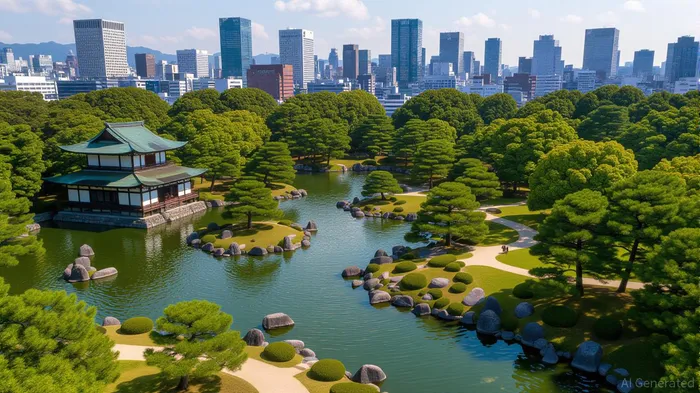
Tokyo's geographic location at the head of Tokyo Bay exposes it to flooding, seismic activity, and extreme weather events. Yet the city has long treated resilience as a non-negotiable priority. A report by the Tokyo Metropolitan Government highlights the integration of green infrastructure, such as Shinjuku Gyoen National Garden, as a dual-purpose solution for mitigating urban heat island effects and managing stormwater runoff [2]. This 144-acre oasis, blending traditional Japanese, French, and English garden styles, exemplifies how urban planning can harmonize ecological goals with cultural preservation.
Beyond green spaces, Tokyo has invested in cutting-edge engineering solutions, including permeable pavements and underground flood control systems. These projects, often funded through a mix of public and private capital, underscore the city's commitment to long-term adaptation. According to data from the World Bank, Tokyo has secured low-interest loans and grants from multilateral institutions to scale such initiatives, ensuring that climate resilience remains financially viable even in a high-cost environment [1].
Economic Prowess as a Catalyst for Resilience
Tokyo's economic strength—contributing 20.7% of Japan's GDP in FY2021—provides a robust foundation for climate adaptation [3]. The city's nominal GDP of 113.7 trillion yen (US$1.04 trillion) in 2021 reflects its role as a global economic engine, with 29 companies listed in the Fortune Global 500 [1]. This economic clout enables Tokyo to attract private investment in sustainable real estate. For instance, tax incentives and subsidies for green development have spurred projects like energy-efficient skyscrapers in Shinjuku and eco-friendly residential complexes in Tama.
The real estate sector, in particular, is poised to benefit from Tokyo's resilience-driven policies. Properties in areas adopting climate adaptation measures—such as elevated foundations, flood-resistant materials, and integrated green roofs—are likely to see increased demand. A 2025 analysis by Bloomberg notes that central Tokyo's commercial zones, supported by the world's busiest train station (Shinjuku Station) and the Shinkansen network, are already seeing a premium on developments with climate-ready infrastructure [3].
Future Opportunities and Risks
While Tokyo's proactive approach is commendable, challenges remain. The city's aging population and rising construction costs could strain resources. However, its status as a global R&D hub offers a counterbalance. Innovations in smart infrastructure—such as AI-driven flood prediction systems and modular construction techniques—position Tokyo to lead in climate adaptation technologies.
For investors, the key lies in aligning with projects that combine resilience with economic returns. The Shinjuku Gyoen model—where green spaces enhance both environmental and economic value—provides a blueprint. Similarly, partnerships with local governments and international institutions can mitigate risks while tapping into Tokyo's vast capital markets.
Conclusion
Tokyo's resilience to climate risks is not merely a defensive strategy but a catalyst for growth. By embedding sustainability into its infrastructure and real estate DNA, the city is creating a model for other megacities to follow. For investors, the opportunity lies in supporting projects that align with Tokyo's vision: where climate adaptation and economic prosperity are not competing priorities but mutually reinforcing forces.







Comentarios
Aún no hay comentarios