
Assessing the Sustainability of Q3 GDP Strength Amid Mixed Leading Indicators
The U.S. , driven by robust consumer spending, a rebound in exports, and government outlays according to the initial estimate. But as any seasoned investor knows, a single quarter's performance is just one piece of the puzzle. The real question isn't whether the economy is firing on all cylinders right now-it is-but whether this strength can hold up against a backdrop of weakening leading indicators. Let's break it down.
The Q3 Surge: A Tale of Consumer Power and Policy Tailwinds
Consumer spending, which accounts for roughly two-thirds of GDP, was the star of the show. Services spending-particularly in healthcare and international travel-surged, while demand for recreational goods and vehicles added further momentum. Meanwhile, government spending provided a timely boost, though this was partially offset by a slowdown in business investment. The Federal Reserve's continued pivot toward rate cuts earlier in the year likely eased borrowing costs for households and businesses, fueling this growth.
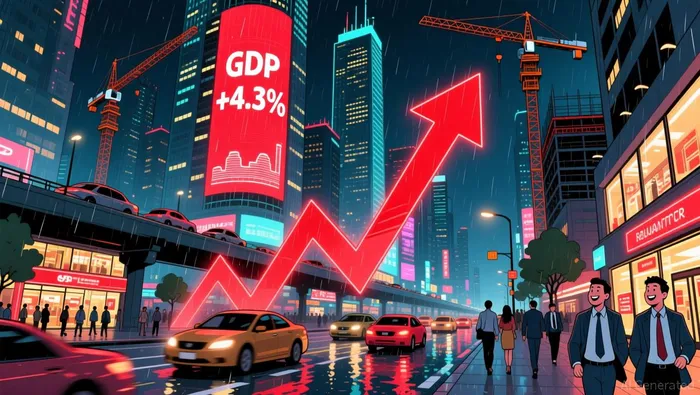
But here's the catch: the October–November government shutdown delayed critical data releases, including the GDP report itself. This creates a fog around the full picture. For example, while Q3 numbers look strong, the fourth-quarter data could be distorted by delayed fiscal spending or inventory adjustments. Investors shouldn't assume this 4.3% pace is the new normal without seeing how the fourth quarter shakes out.
Leading Indicators: A Warning Siren for 2026
The real red flags are in the leading indicators. The Conference Board's fell for the second consecutive month in September 2025, . This isn't just a blip: in November 2025, its lowest in four months, with new orders and employment contracting at an accelerating pace.
Consumer confidence, another critical barometer, has been in freefall. The Conference Board's index in December 2025, marking a fifth straight month of declines. When households start worrying about job security and business conditions, spending-especially on big-ticket items-tends to cool. .
Mixed Signals from Production and Retail
Industrial production offers a mixed read. While manufacturing output slumped in October and November 2025, . This divergence suggests structural challenges in key sectors like manufacturing, which could weigh on long-term growth. Retail sales, meanwhile, were flat in October 2025 but showed year-over-year gains in nonstore retail and food services. These categories are resilient, but they're not enough to offset broader weakness in durable goods or industrial demand.
Balancing the Books: Where to Play and Where to Hedge
For investors, the takeaway is clear: the Q3 GDP number is a win, but it's a sprint, not a marathon. Sectors like healthcare, travel, and consumer services will likely benefit from the current tailwinds. However, overexposure to manufacturing or cyclical industries could backfire if the PMI and LEI trends persist.
A balanced approach means hedging against a potential slowdown. Defensive sectors-utilities, consumer staples, and healthcare-remain solid bets. Meanwhile, investors with a higher risk tolerance might eye undervalued industrial stocks that could rebound if the mining sector's gains spill over into manufacturing.
Final Call: Optimism, But With a Seatbelt
The Q3 GDP print is a reminder of the U.S. economy's resilience. But leading indicators are flashing amber. As the Fed navigates its rate-cut cycle and fiscal policy remains in flux, investors must balance near-term optimism with a healthy dose of caution. The key is to stay nimble, monitor the fourth-quarter data closely, and position portfolios to weather both the highs and the inevitable bumps ahead.






Comentarios
Aún no hay comentarios