
Assessing the Sustainability of Germany’s Industrial Recovery Amid Trade Policy Uncertainty
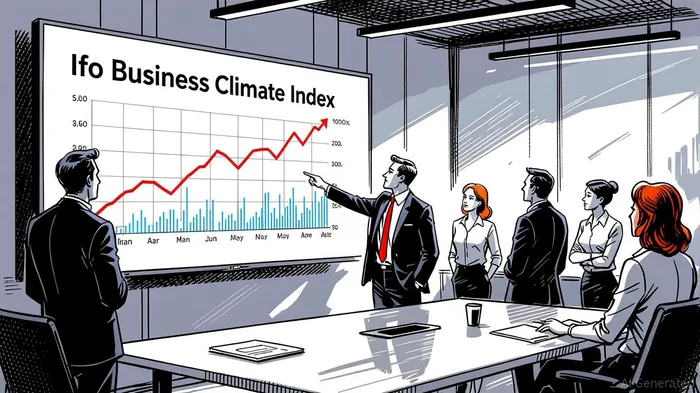
Germany’s industrial sector has shown flickers of resilience in 2025, but the question remains: Is this recovery durable, or is it a temporary rebound driven by short-term factors like the pull-forward effects of U.S. tariffs? Recent data suggests a mixed picture. Industrial production rose by 1.3% in July 2025 compared to June, marking the first growth since March, while the ifo Business Climate Index edged up to 89.0 in August, reflecting cautious optimism [1]. However, these gains are shadowed by broader structural challenges, including a 0.1% quarterly GDP contraction in Q2 and a 1.9% decline in industrial output between May and June [2].
The Fragile Uptick: Pull-Forward Effects and Short-Term Volatility
The surge in Q1 2025 exports—driven by companies accelerating shipments to avoid anticipated U.S. tariffs—created a false sense of momentum. By Q2, this pull-forward effect reversed, contributing to a 0.6% decline in July exports and a 2.9% drop in real new manufacturing orders [3]. According to a report by Bloomberg, this pattern of “front-loading” transactions has created artificial volatility, masking underlying weaknesses in demand [4]. For instance, engineering orders fell 5% year-on-year in June as tariff uncertainty persisted [5]. While the HCOB Manufacturing PMI rose to 49.8 in August, signaling a modest acceleration in output, the index remains below the 50 threshold that separates contraction from expansion [6].
Structural Reforms and ECB Easing: A 2026 Outlook
Despite near-term headwinds, structural reforms and monetary policy easing offer a path to stabilization. The Bundesbank projects that fiscal measures—particularly increased defense and infrastructure spending—will drive GDP growth of 0.7% in 2026 and 1.2% in 2027, offsetting the drag from tariffs [7]. The European Central Bank’s rate cuts, including a reduced deposit facility rate, are expected to lower borrowing costs and stimulate investment [8]. However, the transmission of these policies may be delayed due to high economic uncertainty, as noted in the ECB’s Financial Stability Review [9].
Sector-Specific Opportunities: Defense and Infrastructure
German manufacturers in sectors insulated from U.S. tariffs—particularly defense and infrastructure—are emerging as key beneficiaries. Rheinmetall AG, for example, reported a record €63 billion order backlog in H1 2025, driven by Europe’s rearmament push [10]. Similarly, RENK Group AG has seen strong demand for its heavy transportation equipment, aligning with government infrastructure investments [11]. These companies are well-positioned to capitalize on the Readiness 2030 defense initiative, which prioritizes European self-sufficiency in critical technologies [12].
In contrast, sectors like machinery and metallurgy face prolonged pressure. U.S. tariffs on steel and aluminum have forced German exporters to divert products to lower-margin markets, squeezing profit margins [13]. For investors, this divergence underscores the importance of sector selection.
Conclusion: A Cautious Case for Strategic Exposure
The recent uptick in industrial production and sentiment appears to be a blend of temporary factors and early signs of structural support. While the pull-forward effect has created near-term volatility, the ECB’s easing cycle and fiscal reforms suggest a more durable recovery by 2026. Investors should prioritize equities in defense and infrastructure, where demand is underpinned by geopolitical and policy tailwinds. However, caution is warranted in export-heavy sectors like machinery, where trade tensions remain a wildcard.
As the ifo Business Climate Index inches higher, the German economy’s path hinges on stabilizing trade relations and the timely implementation of structural reforms. For now, the recovery is a work in progress—one that demands both patience and precision for investors.
Source:
[1] German Federal Statistical Office, "Industry, manufacturing - German Federal Statistical Office,"
https://www.destatis.de
[2] BMWE, "The Economic Situation in the Federal Republic of Germany in August 2025,"
https://www.bundeswirtschaftsministerium.de
[3] Reuters, "German exports unexpectedly fall while industrial production rises,"
https://www.reuters.com
[4] Bloomberg, "German Industrial Production Rises for First Time Since March,"
https://www.bloomberg.com
[5] ifo Institute, "Survey Results,"
https://www.ifo.de
[6] HCOB, "Germany Manufacturing PMI,"
https://tradingeconomics.com
[7] Bundesbank, "The German Economy: Navigating Cyclical Fluctuations,"
https://www.bundesbank.de
[8] European Central Bank, "Financial Stability Review, May 2025,"
https://www.ecb.europa.eu
[9] European Commission, "Economic Forecast for Germany,"
https://economy-finance.ec.europa.eu
[10] Rheinmetall AG, "Financial Report for the First Half of 2025,"
https://www.rheinmetall.com
[11] Statista, "Top-performing German Company Stock 2025,"
https://www.statista.com
[12] ETF Trends, "Europe’s Defense Build-Up,"
https://www.etftrends.com
[13] LinkedIn, "Germany Steel Plate Market Insights and Forecast 2025,"
https://www.linkedin.com







Comentarios
Aún no hay comentarios