
Assessing the Sustainability of China's Aviation Recovery: A 2025 Earnings Perspective
Profitability: A Mixed Bag of Resilience and Weakness
China's three largest airlines-China Southern, China Eastern, and Air China-remain mired in losses for 2025, with China Southern projecting a deeper net loss compared to 2024. Key factors include declining cargo revenues, eroding international passenger yields, and currency exchange headwinds according to recent reports. While domestic demand has rebounded, driven by pent-up travel and government stimulus, international routes remain underperforming. Analysts note that geopolitical tensions and shifting global trade dynamics have dampened long-haul demand, forcing carriers to rely on short-haul routes with thinner margins.
This contrasts with industries like aluminium, where government-mandated capacity controls and surging demand from renewables have boosted profitability. The aviation sector's inability to replicate such interventions highlights its vulnerability to external shocks.
Overcapacity: A Looming Threat
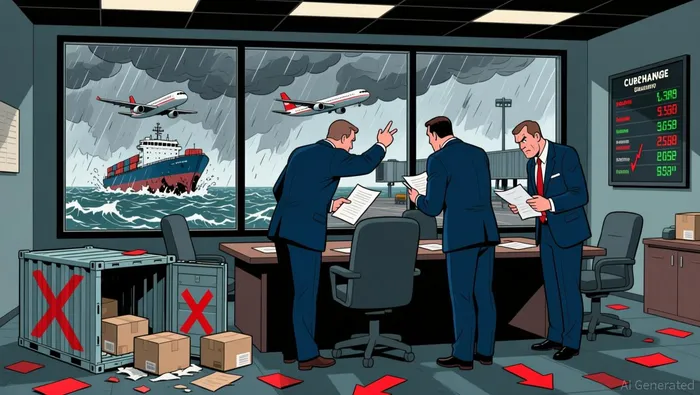
China's broader industrial capacity utilization rate fell to 74.6% in Q3 2025, according to data, a decline attributed to reduced production in mining and manufacturing. While this metric does not directly reflect aviation, it underscores a systemic issue: overcapacity across sectors. For airlines, excess seat supply on popular domestic routes has kept load factors artificially low, squeezing margins.
The absence of robust government intervention-unlike the aluminium industry's capacity controls-leaves airlines exposed. Route rationalization and code-sharing agreements have been proposed as solutions, but without regulatory coordination, carriers risk a race to the bottom on pricing.
Strategic Debt Management: A Balancing Act
To mitigate financial risks, Chinese airlines have turned to operational efficiency measures, including improved aircraft utilization and cost-cutting. A notable step is the planned A-share private placement to raise up to 20 billion yuan, aimed at repaying debts and replenishing capital. However, these efforts lack the scale of government-backed support seen in other industries, such as subsidies for renewable energy projects.
Debt restructuring and asset sales remain on the table, but details are sparse. Investors should watch for signs of deeper collaboration between airlines and state-owned entities, which could provide a lifeline in a low-margin environment.
Conclusion: A Recovery in Peril
China's aviation sector is navigating a precarious path in 2025. While short-term gains from domestic demand offer hope, structural challenges-overcapacity, weak international performance, and limited debt relief-threaten sustainability. For airlines to thrive, they must balance operational discipline with strategic alliances and, ideally, policy support akin to that seen in other industrial sectors. Until then, the recovery remains a work in progress, with significant risks for investors.







Comentarios
Aún no hay comentarios