
Assessing the Strategic Value of Renewable Energy Adoption in Sustaining Mining Viability and Long-Term ROI
The BitcoinBTC-- mining industry is at a crossroads. As profitability margins tighten amid rising operational costs and regulatory scrutiny, miners are increasingly turning to renewable energy as a lifeline. This shift is not merely a response to environmental concerns but a calculated strategy to secure long-term viability and returns on investment (ROI). With 52.4% of Bitcoin mining now powered by sustainable energy in 2025, up from 37.6% in 2022, the sector is witnessing a structural transformation that could redefine its economic and ecological footprint.
The Profitability Equation: Energy Costs and Renewable Leverage
Electricity remains the single largest expense for Bitcoin miners, accounting for 70-80% of operational costs. In regions like Iceland and Paraguay, where hydroelectric power dominates, the cost to mine one Bitcoin can drop below $26,000, compared to over $321,000 in energy-intensive markets like Ireland according to recent analysis. This stark disparity underscores the strategic value of renewable energy adoption. By locking in low-cost, stable energy sources, miners can hedge against volatile fossil fuel prices and reduce breakeven thresholds. For instance, immersion cooling technologies, which cut energy use by 14%, further amplify savings while extending hardware lifespans.
The 2024 halving event exacerbated margin pressures, forcing smaller operations to exit the market and accelerating consolidation among larger players. These firms are now prioritizing renewable energy infrastructure, with next-generation ASICs and AI-driven optimization tools enabling more efficient hash power allocation according to industry reports. 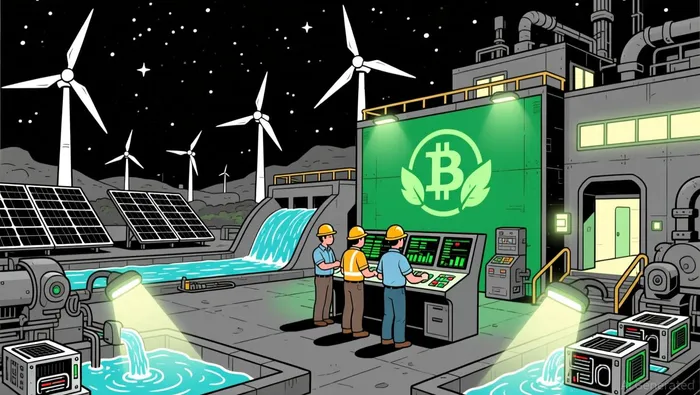 The result is a sector where profitability is increasingly tied to energy strategy: miners leveraging renewables are 30-40% more likely to remain profitable in high-difficulty environments.
ROI Analysis: Renewables vs. Fossil Fuels
Long-term ROI comparisons reveal a clear advantage for renewable-powered operations. While the upfront capital expenditure for renewable infrastructure (e.g., solar farms, hydroelectric partnerships) can be substantial, the payback period is often offset by lower marginal costs and regulatory incentives. For example, U.S. and Canadian policies now offer tax credits for sustainable mining, reducing effective energy costs by 10-15%. In contrast, fossil fuel-dependent miners face escalating risks from carbon pricing mechanisms and grid instability, particularly in regions like Texas and Kentucky, where 85% of mining energy still comes from non-renewables.
Data from 2025 shows that the average cost to mine one Bitcoin ranges between $26,000 and $50,000, with renewable-powered operations consistently falling on the lower end of this spectrum. At Bitcoin prices of $90,000–$105,000, these miners enjoy profit margins of 40-70%, compared to 10-20% for fossil fuel counterparts. This gap is projected to widen by 2030, as global renewable capacity expands and fossil fuel subsidies phase out.
Regulatory and Environmental Considerations
Regulatory tailwinds are further cementing the case for renewables. The European Union's Carbon Border Adjustment Mechanism (CBAM) and the U.S. Inflation Reduction Act (IRA) now penalize high-emission industries, creating a de facto tax on fossil fuel-based mining. Meanwhile, Bitcoin's annual carbon footprint-98.10 million tonnes of CO2-has drawn scrutiny from institutional investors, many of whom now require ESG compliance for portfolio inclusion. Miners adopting renewables not only mitigate these risks but also unlock access to green financing and public-private partnerships.
However, challenges persist. The environmental impact of Bitcoin's energy consumption-equivalent to Poland's annual usage-remains a concern, even with rising renewable adoption. Critics argue that surplus renewable energy used for mining does not necessarily displace fossil fuel generation, a point that underscores the need for complementary grid modernization efforts.
Future Outlook: 2030 and Beyond
Projections indicate that Bitcoin mining could achieve 70% renewable energy usage by 2030, driven by declining solar and wind costs and policy mandates. This transition will be critical for sustaining ROI amid rising network difficulty and energy demand. Innovations like flared gas utilization in oil fields and AI-optimized grid responsiveness are also emerging as hybrid solutions, turning stranded energy into profit centers.
For investors, the key takeaway is clear: Bitcoin miners that prioritize renewable energy adoption are better positioned to navigate the sector's volatility and capitalize on long-term trends. As the industry consolidates, strategic assets-such as low-cost energy contracts, advanced cooling systems, and regulatory compliance-will determine which firms thrive.
Conclusion
The shift to renewable energy is not just a sustainability play-it is an economic imperative for Bitcoin miners. By reducing costs, enhancing regulatory resilience, and aligning with global decarbonization goals, renewables offer a pathway to sustained profitability. As the sector evolves, investors must prioritize firms that treat energy strategy as a core competency, not an afterthought. In a world where energy is king, the greenest miners may well be the most profitable.






Comentarios
Aún no hay comentarios