
Assessing the Risks and Legal Repercussions for Jasper Therapeutics (JSPR) Amid a Securities Class Action
Legal Repercussions: A Catalyst for Shareholder Distrust
A securities class action lawsuit, led by Faruqi & Faruqi, LLP, alleges that JasperJSPR-- and its executives violated federal securities laws by failing to disclose critical manufacturing compliance issues with third-party suppliers. According to the lawsuit, these omissions, which came to light in July 2025, triggered a 55.1% plunge in JSPR's stock price, from $6.77 to $3.04 per share. The lawsuit targets investors who purchased shares between November 2023 and July 2025, with a final deadline of November 18, 2025, for lead plaintiff nominations. Such legal exposure not only imposes direct financial risks-through potential settlements or penalties-but also signals broader governance concerns. As noted by legal analysts, securities fraud cases often result in reputational damage that deters future capital inflows, compounding the challenges of operational recovery.
Operational Setbacks: Compromised Clinical Trials and Strategic Retreats
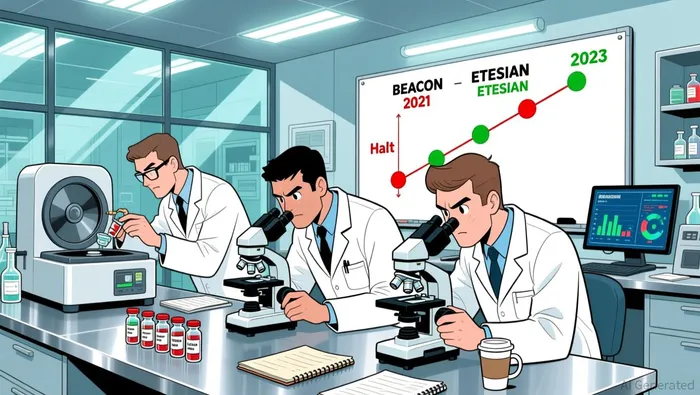 The core operational misstep lies in Jasper's reliance on a drug product lot that confounded results in two pivotal trials: the BEACON Study for chronic spontaneous urticaria (CSU) and the ETESIAN Study for allergic asthma. Specifically, 10 out of 13 patients in the BEACON cohort received doses from the problematic lot, leading to halted development in asthma and SCID (severe combined immunodeficiency) programs. While Jasper has taken steps to replace the affected drug product and resume dosing, the suspension of key therapeutic areas represents a strategic retreat that could delay revenue-generating milestones.
Compounding these issues, the company announced cost-cutting measures, including potential restructuring, to extend its financial runway. Such actions, while necessary for short-term survival, risk undermining R&D momentum. As highlighted by industry observers, biotech firms often face a delicate balance between fiscal prudence and innovation, and Jasper's current trajectory suggests a prioritization of liquidity over growth.
Regulatory Scrutiny and Path to Recovery
Post-July 2025 updates reveal a shift in Jasper's focus from manufacturing compliance to clinical site-level factors. An investigation into anomalous efficacy results in the BEACON study now centers on patient selection, administration techniques, and drug delivery methods, rather than drug substance or product quality. The company plans to finalize this analysis by Q4 2025 and convene a key opinion leader panel to inform its Phase 2b CSU study design.
While this pivot demonstrates adaptability, it also highlights the fragility of Jasper's operational framework. Regulatory bodies like the FDA are likely to scrutinize the company's ability to address site-level variability, which could delay approvals or necessitate additional trials. Moreover, the planned $30 million fundraising, which extends cash runway through mid-2026, provides temporary relief but does not resolve the underlying challenges of rebuilding investor confidence.
Financial Viability and Investment Implications
Jasper's financial health remains precarious. The stock's 55.1% decline in July 2025 erased significant market capitalization, and the company's reliance on equity financing-such as its recent underwritten offering-raises concerns about dilution and long-term debt sustainability. For investors, the key question is whether Jasper can reposition itself as a viable player in the biotech sector.
The upcoming Q4 2025 data from the ETESIAN study and expanded BEACON/OLE results in early 2026 will be critical. Positive outcomes could reignite interest in Jasper's pipeline, particularly in CSU, where the Phase 2b study is slated to begin in mid-2026. However, the legal and operational headwinds suggest a high-risk profile. As noted by financial analysts, biotech firms in Jasper's position often face binary outcomes: either a breakthrough that justifies risk or a collapse under the weight of accumulated liabilities.
Conclusion: Navigating a High-Stakes Rebound
Jasper Therapeutics stands at a crossroads. The securities class action lawsuit and operational setbacks have exposed systemic vulnerabilities, from governance lapses to supply chain risks. While the company's efforts to address site-level issues and secure additional funding are commendable, the path to recovery remains fraught with uncertainty. For investors, the decision to engage with JSPRJSPR-- hinges on a careful assessment of these risks against the potential for a turnaround. In a sector where innovation and compliance are inextricably linked, Jasper's ability to rebuild trust-both with regulators and shareholders-will ultimately determine its long-term viability.







Comentarios
Aún no hay comentarios