
Assessing the Risks of a U.S. Economic Downturn: Implications for Investors
Jamie Dimon, CEO of JPMorgan ChaseJPM--, has sounded the alarm on a confluence of risks threatening the U.S. economy in 2025. His warnings—spanning economic weakening, private credit vulnerabilities, and policy-driven uncertainty—demand careful scrutiny from investors. As one of the most influential voices in global finance, Dimon's insights are not mere speculation but grounded in empirical trends and historical parallels. This analysis unpacks his concerns and evaluates their implications for asset allocation and risk management.
The Looming Shadow of Economic Weakening
Dimon has repeatedly flagged the fragility of the U.S. economy's “soft landing” narrative. At a Morgan StanleyMS-- conference in June 2025, he stated, “I think there's a chance real numbers will deteriorate soon,” citing the waning effects of pandemic-era fiscal and monetary stimulus [2]. This observation aligns with broader macroeconomic trends: consumer spending, once buoyed by government aid, is now constrained by tighter credit conditions and rising debt burdens.
Compounding this is the drag from Trump-era tariffs, which Dimon argues have eroded business and consumer confidence. “Tariffs create uncertainty, and uncertainty kills investment,” he noted in a June 2025 interview [2]. While the full economic impact of these policies has yet to materialize in inflation or employment data, Dimon warns that lags in economic indicators could mask an impending slowdown. For investors, this underscores the need to prepare for a potential shift from growth-oriented to defensive strategies.
Private Credit: A New Can of Worms
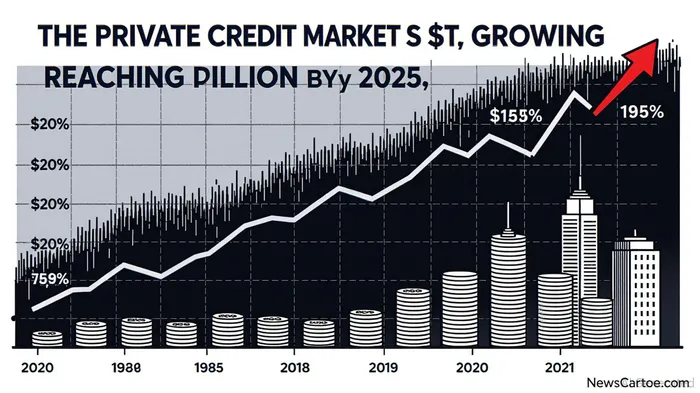
One of Dimon's most urgent concerns centers on the private credit market, which has ballooned to $2 trillion in assets by 2025—rivaling the size of the leveraged loan and high-yield bond markets [1]. He has drawn explicit parallels to the 2008 subprime mortgage crisis, highlighting risks such as opaque ratings, aggressive leverage, and illiquid structures. “This sector is built on optimism and opacity—a dangerous combination,” Dimon cautioned in a JPMorganJPM-- report [1].
The Federal Reserve's 2025 financial stability report corroborates these risks, noting that private credit loans typically feature looser terms, lower interest coverage, and weaker buffers compared to public market counterparts [1]. For investors, the implications are stark: in a recession, the lack of transparency and liquidity in private credit could amplify losses, particularly for those overexposed to high-risk, non-investment-grade assets. Dimon's advice? “Disciplined underwriting and transparency are non-negotiable” [1].
Policy Uncertainty: A Double-Edged Sword
Policy-driven uncertainty remains a wildcard. Dimon has criticized the unpredictability of Trump-era trade policies, which he argues create “stop-start” dynamics that undermine long-term planning [3]. While he acknowledges the potential for constructive global trade negotiations to mitigate these risks, he cautions that “forecasting is inherently unreliable” due to the backward-looking nature of economic data [1].
For investors, this means navigating a landscape where policy shifts—such as retaliatory tariffs or regulatory changes—could abruptly alter risk-return profiles. Dimon's emphasis on long-term strategic planning over short-term predictions is particularly relevant here. “Companies and investors must build resilience, not just optimize for today,” he advised in a June 2025 Business Insider interview [3].
Strategic Implications for Investors
Dimon's warnings point to three key areas for investor vigilance:
1. Diversification: Reducing exposure to illiquid private credit assets and rebalancing toward defensive sectors (e.g., utilities, healthcare) could mitigate downside risks.
2. Transparency: Prioritizing investments with clear risk disclosures and conservative leverage ratios will be critical in a potential downturn.
3. Policy Hedging: Allocating to assets insulated from trade policy shocks—such as domestic infrastructure or technology—may offer a buffer against geopolitical volatility.
While Dimon remains cautiously optimistic about the U.S. avoiding a severe downturn, his emphasis on prudence is a reminder that complacency is the greatest risk. As he aptly stated, “Everything won't be constantly easy—prepare for the hard times” [3].





Comentarios
Aún no hay comentarios