
Assessing the Resilience and Investment Potential of Asia's Top Thermal Coal Producers
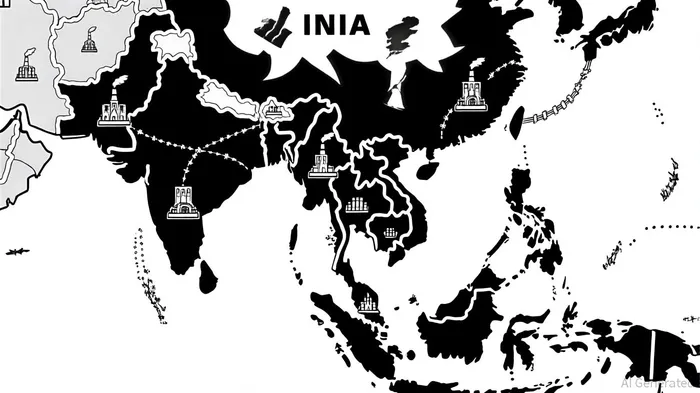
The thermal coal sector in Asia remains a cornerstone of energy security and economic growth, even as global decarbonization efforts gain momentum. For investors, the question is not whether coal will vanish but how its role will evolve—and which producers are best positioned to navigate this transition. Drawing on recent financial performance, strategic initiatives, and regional energy policies, this analysis evaluates the resilience and investment potential of Asia's top thermal coal producers.
China: The Colossus of Coal and the Balancing Act
China dominates the thermal coal landscape, accounting for nearly 58% of Asia's coal consumption in 2024 and maintaining a projected 50% share of global coal power capacity in 2025 [1]. Key players like China Shenhua Energy and China Coal Energy exemplify the sector's duality: robust production amid a push for renewables.
China Shenhua Energy reported a net income of CNY 26.7 billion for H1 2025, though analysts forecast a 4.22% decline in earnings per share for 2026 [2]. This reflects broader industry trends: while coal's share of power generation fell to a nine-year low of 51% in June 2025, new coal projects totaling 75 GW were approved in H1 2025—the highest in a decade [3]. The government's strategy of positioning coal as a “flexible backup” for renewables ensures near-term stability, but long-term risks loom as the 14th Five-Year Plan targets 30 GW of coal plant retirements by 2025 [3].
China Coal Energy, meanwhile, benefited from a 3.9% year-on-year increase in domestic coal production to 421.1 million tonnes in June 2025 [4]. However, its reliance on domestic demand exposes it to policy shifts. The company's strategic pivot toward balancing coal expansion with renewable investments will be critical, especially as the 15th Five-Year Plan approaches.
India: Coal as a Bridge to Renewables
India's coal sector is driven by its dual role in power generation and industrial demand, particularly in steel and sponge iron production. NTPC Ltd., the state-owned power giant, has demonstrated strong earnings resilience. In Q4 FY2025, its net profit surged 22% to ₹7,897 crore, while coal production rose 23% year-on-year to 30.88 million tonnes [5].
NTPC's strategic focus on diversification is equally compelling. The company aims to add 11,806 MW of capacity in FY2026, including 7,226 MW from renewables and 3,580 MW from thermal sources [5]. Its Green Hydrogen Hub in Andhra Pradesh and 30 GW nuclear power ambitions underscore a long-term vision to balance coal's immediate affordability with decarbonization goals. This hybrid approach could insulate NTPC from regulatory shocks while capitalizing on India's energy transition.
However, challenges persist. India's coal imports have declined, but domestic production must keep pace with a 12% annual electricity demand growth [6]. NTPC's ability to manage this transition—without compromising energy security—will determine its long-term viability.
Indonesia: Export Resilience and Strategic Diversification
Indonesia's thermal coal producers, led by Adaro Energy, face a unique set of dynamics. In H1 2025, the country produced 357.6 million tonnes of coal, meeting 48% of its annual target [7]. Adaro Energy, through its subsidiary PT Adaro Andalan, aims to produce 65.5 million tonnes in 2025, supported by a $2.92 billion IPO that spun off its coal assets into a separate entity [8]. This move, which rebranded the parent company as “Alamtri,” aligns with decarbonization goals while maintaining coal's profitability.
Adaro's strategic pivot is noteworthy. By separating its coal operations, the company gains access to financing from banks like DBS and Standard Chartered, which have coal exit policies [8]. Simultaneously, it is expanding into green aluminum and hydropower, aiming to reduce coal reliance by 2030 [9]. This dual-track strategy—maintaining coal production while investing in low-carbon assets—positions Adaro as a model for the sector's evolution.
Yet, Indonesia's coal exports faced a rare decline in 2025 due to weak demand from China and India [7]. While industry groups project a rebound, global coal price volatility and environmental pressures remain risks.
Earnings Durability: A Sector in Transition
The earnings durability of Asia's coal producers hinges on their ability to adapt to three forces:
1. Energy Security Priorities: Governments in China, India, and Indonesia continue to prioritize coal for grid stability and industrial growth, ensuring near-term demand.
2. Renewable Integration: Companies that invest in renewables or hybrid models (e.g., NTPC's green hydrogen hub) are better positioned for long-term resilience.
3. Policy and Financing Shifts: Adaro's spin-off and China's coal plant retirement targets highlight the sector's exposure to regulatory and financial pressures.
For investors, the key is to differentiate between “transition-proof” players (e.g., NTPC, Adaro) and those overly reliant on stagnant demand (e.g., smaller Indonesian miners).
Conclusion: A Calculated Bet on Resilience
Asia's thermal coal sector is neither doomed nor immune to change. While global climate goals loom, the region's energy needs and infrastructure realities ensure coal's relevance for the next decade. Investors should favor companies with diversified portfolios, strong domestic demand, and proactive decarbonization strategies. China Shenhua Energy's scale, NTPC's renewable ambitions, and Adaro's strategic rebranding collectively illustrate the path forward—a path where coal remains a bridge, not a dead end.







Comentarios
Aún no hay comentarios