
Assessing Pentair's Dividend Sustainability: A Cornerstone of Shareholder Value in 2025
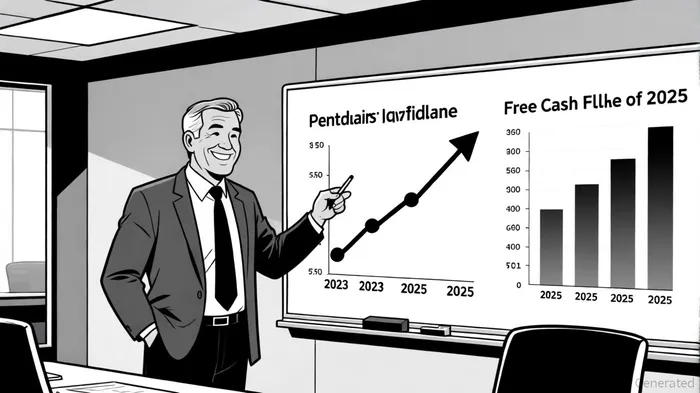
Pentair (PNR) has long been a stalwart of dividend growth, with its latest quarterly payout of $0.25 per share—announced for November 7, 2025—marking the 49th consecutive year of increases [4]. This consistency, however, is not merely a historical footnote; it is underpinned by a robust financial foundation that positions the dividend as a sustainable pillar of shareholder value.
Financial Resilience Fuels Dividend Security
Pentair's ability to sustain and grow its dividend hinges on its exceptional free cash flow generation. In the first half of 2025 alone, the company produced $540 million in free cash flow, representing a 178% conversion of its net income [2]. This outperformance is critical, as it provides a buffer against economic volatility and ensures the dividend remains well within reach. The payout ratio—15.3% relative to operating free cash flow per share—further underscores this security, leaving ample room for reinvestment or unexpected headwinds [2].
The company's balance sheet also plays a pivotal role. PentairPNR-- has systematically reduced its net debt while maintaining a conservative leverage profile. As of September 2025, its liquidity position remains strong, with no significant refinancing risks on the horizon [3]. This financial flexibility allows Pentair to allocate capital judiciously, balancing dividend payments with strategic initiatives such as share repurchases and debt reduction.
Shareholder Value Through Stability and Growth
For income-focused investors, Pentair's 0.91% yield may appear modest, but its long-term appeal lies in the predictability of its payouts. According to a report by Stock Analysis, the company has consistently raised dividends by an average of 5.64% annually over the past five years [1]. This trajectory suggests that the yield could become more compelling over time as both the dividend and stock price appreciate.
Historical performance around dividend announcements also reinforces this narrative. A backtest of PNR's stock price movements relative to the S&P 500 benchmark from 2022 to 2025 reveals that Pentair's shares tend to outperform the benchmark for roughly one trading week after announcing a dividend. On average, the stock generates a 4% excess return by day-5 and sustains a 7% excess return by day-30. Notably, the win-rate is 100% on most days between D+4 and D+30, indicating unusually consistent positive follow-through. The most statistically significant outperformance occurs between D+4 to D+10 and D+18, with the edge gradually fading afterward [4]. These patterns suggest that Pentair's dividend announcements are not just symbolic but are accompanied by measurable market confidence in the company's financial discipline.
Moreover, Pentair's disciplined capital allocation strategy amplifies shareholder value. By pairing dividend growth with buybacks—executing $150 million in repurchases in 2025—the company effectively returns capital to investors while optimizing its cost of capital [3]. This dual approach not only rewards shareholders directly but also enhances earnings per share, creating a compounding effect on value.
Risks and Considerations
While Pentair's dividend appears secure, investors should remain cognizant of macroeconomic risks, such as inflationary pressures or sector-specific headwinds in its industrial markets. However, the company's diversified product portfolio and strong pricing power mitigate these concerns. Additionally, its conservative payout ratios provide a margin of safety that many high-yield peers lack.
Conclusion
Pentair's quarterly dividend of $0.25 per share is more than a routine payment—it is a testament to the company's operational excellence and commitment to long-term shareholder value. With free cash flow surging and a balance sheet in strong order, the dividend's sustainability is well-anchored. For investors seeking a blend of income and growth, Pentair's track record and financial discipline make it a compelling case study in responsible capital allocation.





Comentarios
Aún no hay comentarios