
Assessing Novartis' Resilience in the Face of Escalating U.S. Tariffs: Strategic Positioning and Long-Term Value Creation in a High-Uncertainty Trade Environment
In an era of geopolitical volatility and protectionist trade policies, NovartisNVS-- has emerged as a case study in strategic foresight. As U.S. tariffs on pharmaceutical imports loom—potentially reaching 200% to 250%—the Swiss multinational has adopted a dual-pronged approach: stockpiling critical medicines and reshoring production. This analysis evaluates how these measures position Novartis to mitigate short-term risks while securing long-term value creation in a fragmented global market.
Inventory Stockpiling: A Buffer Against Disruption
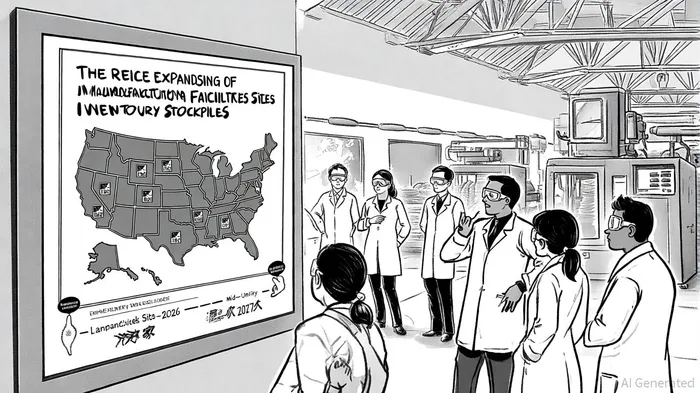
According to a report by Invezz, Novartis has significantly increased its pharmaceutical stockpiles in the United States, ensuring sufficient inventory to last until mid-2026[1]. This buffer provides critical flexibility as the company navigates the uncertainty of potential tariffs, which could escalate under the Trump administration[4]. By pre-positioning supplies, Novartis reduces exposure to sudden price shocks and supply chain bottlenecks, a strategy that mirrors broader industry trends toward localized inventory management[2].
Reshoring Production: A $23 Billion Bet on U.S. Manufacturing
To further insulate its operations, Novartis has committed $23 billion to expand its U.S. manufacturing footprint over the next five years[2]. This includes the construction of six new factories, the expansion of three existing sites, and a dedicated research and development hub in San Diego[3]. CEO Vas Narasimhan has emphasized that this shift will take three to four years to fully realize, with incremental progress expected within two years[1]. By localizing production for key medicines—such as Entresto and Kisqali—the company aims to reduce reliance on imports and avoid tariff-driven cost inflation[4].
This investment aligns with a broader industry pivot toward reshoring. As noted by Supply Chain Dive, pharmaceutical giants like Eli Lilly and GlaxoSmithKline are similarly ramping up U.S. operations in anticipation of trade barriers[2]. Novartis' scale and financial strength give it a competitive edge in executing this transition, particularly as rivals with smaller balance sheets may struggle to match its pace.
Financial Resilience: Navigating Risks Without Compromising Growth
Despite the looming tariff threat, Novartis has maintained a robust financial outlook. The company reported an 11% year-on-year increase in net sales for Q2 2025, driven by strong performance from Entresto and Kisqali[4]. CEO Narasimhan reaffirmed confidence in the firm's 2025 guidance and long-term growth projections, underscoring its ability to absorb near-term disruptions[2]. This resilience is bolstered by Novartis' diversified portfolio and its focus on high-margin therapeutics, which provide a counterbalance to potential margin pressures from tariffs.
However, challenges remain. A recent court decision has raised the specter of generic competition for Entresto, a key revenue driver[4]. While this introduces near-term uncertainty, Novartis' investment in R&D and its pipeline of next-generation therapies—such as gene therapies and AI-driven drug discovery—position it to offset such risks over time.
Strategic Implications for Investors
Novartis' approach exemplifies how proactive supply chain reconfiguration and capital allocation can mitigate geopolitical risks. By stockpiling inventory and reshoring production, the company is not only hedging against tariffs but also strengthening its domestic market position. For investors, this represents a dual benefit: reduced vulnerability to trade policy shocks and enhanced long-term earnings potential through localized manufacturing.
Conclusion
In a high-uncertainty trade environment, Novartis' strategic positioning underscores its commitment to long-term value creation. While U.S. tariffs pose a significant challenge, the company's $23 billion manufacturing shift and inventory buffer demonstrate a calculated approach to risk management. For investors, the key takeaway is clear: Novartis is not merely reacting to external pressures—it is redefining its operational model to thrive in an era of protectionism.





Comentarios
Aún no hay comentarios