
Assessing MiNK's Position in the Allogeneic Cell Therapy S-Curve
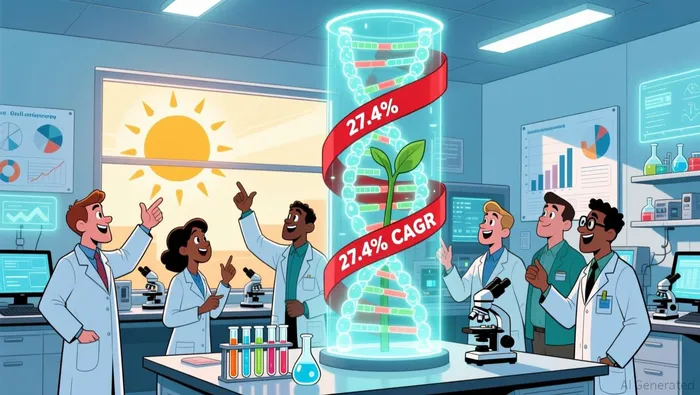
The allogeneic cell therapy market is on the cusp of an exponential adoption curve. Projected to grow at a 27.4% CAGR from 2023 to 2030, it is set to reach a staggering $1.72 billion. This isn't just incremental growth; it's the early phase of a technological paradigm shift where "off-the-shelf" therapies promise to overcome the logistical and biological hurdles of patient-specific treatments. At the heart of this shift is MiNKINKT-- Therapeutics' lead asset, agenT-797, which is being positioned not as a single drug, but as foundational infrastructure for the next generation of cell-based medicine.
The market's explosive trajectory is clearest in the segment agenT-797 targets: graft-versus-host disease (GVHD). The GVHD treatment market itself is projected to double from $1.6 billion in 2025 to $3.3 billion by 2034. This growth is driven by a rising patient pool from more allogeneic transplants and better survival rates, creating a massive, unmet clinical need. Current treatments are often inadequate, leaving a critical gap that MiNK aims to fill.
agenT-797 is designed to address the core limitations of existing allogeneic therapies. It is an off-the-shelf, HLA-independent, lymphodepletion-free therapy. This combination is key. Being off-the-shelf means it can be manufactured in bulk and stored, drastically reducing cost and wait times. HLA-independence removes the need for perfect donor matching, a major bottleneck. Most critically, the absence of lymphodepletion-a toxic preconditioning regimen-avoids the severe side effects and immune suppression that currently accompany many allogeneic treatments. In essence, agenT-797 aims to provide a safer, more accessible, and scalable solution for preventing GVHD, the major barrier to wider allogeneic transplant use.
This positions MiNK not just as a developer of a new therapy, but as a builder of the infrastructure layer for a future where allogeneic cell therapies are as routine as standard pharmaceuticals. The company's recent announcement of a Phase 1 trial for agenT-797 in allogeneic stem cell transplant patients is a direct bet on this infrastructure thesis. If successful, agenT-797 could become the standard preventative tool, enabling the broader adoption of allogeneic transplants and accelerating the entire market's exponential growth.
Validating the Platform: Clinical Progress and Financial Runway
The clinical data for agenT-797 is beginning to validate the platform's exponential potential. At the Society for Immunotherapy of Cancer (SITC) 2025 meeting, the company reported updated clinical data showing sustained tumor regression and immune reprogramming across checkpoint-refractory cancers. The most compelling results were durable remissions, including complete remissions lasting more than two years in late-stage, treatment-resistant solid tumors. This long-tail survival is critical for an S-curve thesis-it suggests the therapy isn't just a temporary stopgap but a potential reset of the disease trajectory. The safety profile further supports this, with no ≥ Grade 3 CRS or neurotoxicity reported, a significant advantage over many existing cell therapies.
Financially, the company has secured the runway to advance these promising results. A key strength is its ability to fund critical trials without diluting shareholders. The company has secured non-dilutive funding from the Department of Defense STTR grant specifically to advance its iNKT therapy for graft-versus-host disease. This federal support, combined with other grants, provides a competitive advantage in cash efficiency. More broadly, the strengthened balance sheet has extended the company's cash runway to deliver clinical results through 2026. This is a crucial buffer, enabling the planned Phase 1 GVHD trial initiation in Q1 2026 and the anticipated readouts from the ongoing Phase 2 gastric cancer study.
The bottom line is that MiNK is hitting multiple inflection points simultaneously. The clinical data shows the platform's power to achieve deep, durable responses in hard-to-treat cancers. The financial model is being reinforced by non-dilutive grants, particularly for its high-potential GVHD program. With its cash runway extended into 2026, the company is positioned to execute its next major clinical milestones without the pressure of a near-term capital raise. This combination of validated clinical promise and a robust financial foundation is the essential infrastructure for a company betting on a technological paradigm shift.
Catalysts, Risks, and the Path to Pivotal Development
The near-term path for MiNK is defined by a clear set of inflection points that will test the exponential growth thesis. The primary catalyst is the upcoming initiation of a Phase 1, investigator-sponsored clinical trial in patients undergoing allogeneic hematopoietic stem cell transplantation in Q1 2026. This trial, led by the University of Wisconsin and funded by a combination of an NIH STTR grant and a philanthropic clinical award, is a direct expansion of the platform into the high-value GVHD prevention market. Success here would validate the core infrastructure hypothesis: that agenT-797 can safely and effectively prevent a major transplant complication, thereby de-risking and accelerating the broader adoption of allogeneic therapies.
The key risk is execution. The company's ability to generate positive Phase 1 data will be critical for maintaining investor confidence and securing the future funding needed to advance into pivotal trials. This trial is a make-or-break test for the GVHD application. Given the trial's focus on a high-risk patient population and its goal of reducing a leading cause of mortality, any safety or efficacy signal will be scrutinized intensely. The financial runway extended through 2026 provides a buffer, but the pressure to deliver clinical proof-of-concept is mounting.
A parallel signal of broader platform application and de-risking is the company's expansion into severe pulmonary disease. MiNK has launched a Phase 2+ trial in severe pulmonary disease in the US population with FDA-validated endpoints. This move is strategic. It demonstrates the iNKT platform's potential to treat immune dysregulation across multiple organ systems, not just cancer or transplantation. The recruitment of national leaders in pulmonary medicine, trauma, and biodefense to its management and board further signals a serious push into this new therapeutic area. This diversification reduces reliance on a single clinical pathway and strengthens the company's overall development pipeline.
The bottom line is that MiNK is navigating a high-stakes, high-reward inflection. The coming year hinges on the successful launch and early data from the GVHD trial, while simultaneously building momentum in pulmonary disease. The non-dilutive funding for the GVHD trial is a major advantage, but the ultimate test will be the clinical data. If agenT-797 can show it is a safe, effective, off-the-shelf solution for preventing GVHD, it could become the foundational therapy that unlocks the entire allogeneic cell therapy market's exponential growth.





Comentarios
Aún no hay comentarios