
Assessing Middle East Energy Reforms and Industrial Growth as Catalysts for Emerging Market Exposure
The Middle East is undergoing a transformative phase in its energy and industrial sectors, driven by strategic reforms and policy initiatives aimed at diversifying economies historically reliant on hydrocarbons. As global markets grapple with energy transitions and geopolitical uncertainties, the region's pivot toward industrialization and renewable energy adoption presents compelling opportunities for investors seeking exposure to emerging markets. This analysis explores how energy sector reforms and industrial growth in the Middle East are reshaping investment landscapes, with a focus on strategic sector rotation into energy and industrial equities.
Energy Sector Reforms: A Foundation for Diversification
The Gulf Cooperation Council (GCC) nations are recalibrating their energy strategies to align with long-term economic vision documents such as Saudi Arabia's Vision 2030 and the UAE's Vision 2030. These frameworks emphasize reducing dependence on oil and gas by fostering high-technology manufacturing and global value chain participation. According to a report by the Middle East Council on Global Affairs, GCC countries are leveraging low-cost energy inputs and public investment to drive industrial policy, with a focus on export-oriented sectors.
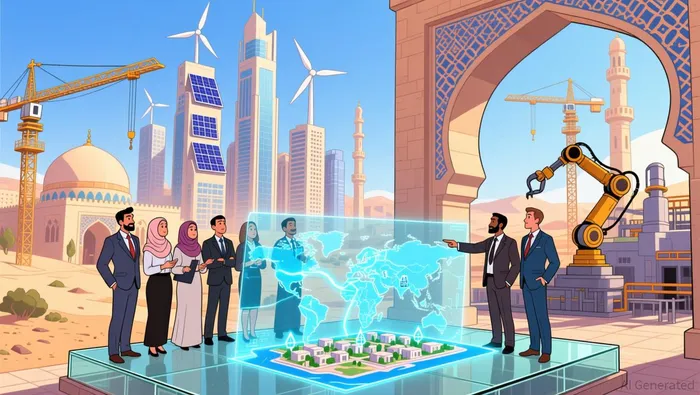 A critical catalyst for this shift is the surge in electricity demand, which has tripled from 2000 to 2024 and is projected to rise by another 50% by 2035. Over 90% of electricity generation remains oil- and gas-dependent, but the region is accelerating investments in solar power and other renewables to address sustainability goals and energy security concerns. This transition is not without challenges, however. Cybersecurity risks, exacerbated by the digitization of energy infrastructure, have led to high-profile incidents targeting firms in the UAE and Saudi Arabia.
Industrial Growth: High-Tech Manufacturing and Export Ambitions
Industrial growth in the Middle East is being propelled by strategic investments in advanced manufacturing and technology-driven industries. Governments are prioritizing sectors such as steel, petrochemicals, and green hydrogen, supported by state-backed capital expenditures. For instance, Saudi Arabia's National Gas and Industrialization reported robust third-quarter sales of SAR 795.37 million in 2025, outperforming industry averages with 6.2% year-over-year earnings growth. Similarly, Ipek Dogal Enerji demonstrated 20% earnings growth, contrasting sharply with the -45.4% decline in the broader oil and gas sector.
The GCC's industrial equities have shown resilience amid macroeconomic volatility. Oman's industrial sector contributed to a 21% year-to-date gain in its general index, driven by strong corporate earnings and domestic investor participation. Meanwhile, Saudi Steel Pipes Company is trading below its estimated fair value, offering potential for value investors as its debt-to-equity ratio improves. These developments underscore the region's capacity to generate returns in industrial equities despite global headwinds.
Investment Flows and Equity Performance: A Strategic Rotation Opportunity
The Middle East remains a pivotal hub for global energy investment, with regional governments projected to allocate USD 130 billion to oil and gas supply in 2025-accounting for 15% of the global total. Saudi Arabia leads this charge, with upstream investments reaching USD 40 billion in 2025. Gulf national oil companies (NOCs) are maintaining capital expenditures despite lower oil prices, reflecting a long-term strategic focus on expanding global portfolios and unconventional resources.
Equity markets in the region have mirrored this momentum. The MSCI Emerging Markets IMI Index surged 12.7% in Q2 2025, outperforming global benchmarks. In the Middle East, private equity allocations are gaining traction, with 80% of regional investors planning to increase exposure to alternative assets like energy infrastructure and digital transformation. This trend is supported by strong brand value growth in energy firms: ADNOC's brand value rose 25%, while Saudi Electricity Company's utility brand value increased by 30%.
Valuation Metrics and Sector Rotation Potential
Valuation metrics for Middle East energy and industrial equities in Q3 2025 reveal a mixed but optimistic landscape. While global economic stabilization has reduced premiums on infrastructure-related investments, East Pipes Integrated Company for Industry reported year-over-year revenue and net income growth. The S&P GCC Composite index gained 5% year-to-date, with Oman, Kuwait, and Dubai leading the charge.
For investors, these dynamics highlight the potential for strategic sector rotation. The World Bank projects GCC GDP growth of 3.2% in 2025, rising to 4.5% in 2026, driven by non-oil expansion and fiscal investments. PwC estimates that up to $300 billion in regional value is at stake in 2025 alone, as businesses reinvent themselves to adapt to the energy transition and technological disruptions.
Risks and Considerations
Despite the opportunities, risks persist. State capture and politicization of economic decisions remain concerns, particularly in markets where governance frameworks are less mature. Geopolitical tensions and global economic volatility could also disrupt capital flows. Additionally, the energy transition's pace may lag expectations, given the region's entrenched reliance on fossil fuels. Investors must balance these risks with the region's structural advantages, including low-cost energy, strategic geographic positioning, and ambitious policy agendas.
Conclusion
The Middle East's energy reforms and industrial growth initiatives are creating a fertile ground for emerging market exposure. Strategic sector rotation into energy and industrial equities offers access to high-growth opportunities, supported by robust policy frameworks and capital inflows. While challenges such as cybersecurity risks and geopolitical uncertainties persist, the region's resilience and innovation-driven strategies position it as a key player in the global energy transition. For investors, the time to act is now-leveraging the Middle East's transformation to capitalize on a decade of structural change.







Comentarios
Aún no hay comentarios