
Assessing Long-Term Investment Potential in Climate-Resilient Utility Models: The Southern California Edison Case Study
The escalating threat of wildfires in the American West has forced utility companies to rethink their infrastructure and operational strategies. Southern California Edison (SCE), a subsidiary of Edison InternationalEIX--, has emerged as a leader in wildfire resilience, blending advanced technology, community-focused recovery programs, and climate-informed planning. For investors seeking long-term value in utilities, SCE's approach offers a compelling blueprint for climate-resilient infrastructure.
Grid Hardening and Technological Innovation
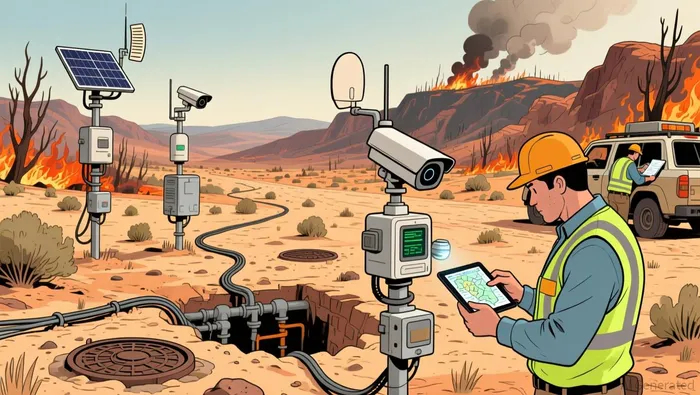
SCE's 2020–2025 wildfire mitigation plan, part of a $28–29 billion capital expenditure strategy, prioritizes grid hardening in high-risk areas. By September 2025, the company had installed covered conductor technology on over 6,800 miles of power lines, significantly reducing the risk of arcing or sparking from tree contact. Complementing this, SCE has undergrounded distribution lines in severe wildfire zones and deployed advanced tools like Early Fault Detection (EFD) and Rapid Earth Fault Current Limiters (REFCL) to preempt equipment failures. These measures are not merely reactive; they reflect a strategic shift toward proactive risk management.
Financially, SCE's commitment is underscored by annual allocations of approximately $680 million for grid upgrades. This investment aligns with California's broader wildfire resilience funding-nearly $2.5 billion since 2021 for projects like prescribed burns and home hardening-creating a synergistic environment for systemic risk reduction. For investors, such capital discipline signals a utility's ability to balance regulatory demands with long-term operational stability.
Community Resilience and Equitable Recovery
Beyond infrastructure, SCE's 2025-launched Wildfire Recovery Compensation Program exemplifies its focus on community resilience. Designed with expertise from Kenneth R. Feinberg and Camille S. Biros-architects of the 9/11 Victim Compensation Fund-the program offers direct, equitable payments to residents and businesses affected by the Eaton Fire. By 2026, it aims to address total and partial property damage, business interruption, and smoke-related losses without administrative fees according to the program launch announcement. This initiative is critical in regions like Altadena, where post-2025 wildfire recovery disparities exposed stark disparities in recovery resources for low-income and minority communities.
SCE's partnerships further amplify its impact. Collaborating with Sandia National Laboratories and the California Public Utilities Commission, the company has integrated "Social Burden" metrics into its climate planning, identifying communities most vulnerable to disruptions in critical non-electric services. Such data-driven equity frameworks ensure that infrastructure investments prioritize areas with the greatest need, a factor increasingly valued by socially conscious investors.
Climate Adaptation and Forward-Looking Planning
SCE's Climate Adaptation Vulnerability Assessment (CAVA), the first of its kind for a California utility, underscores its commitment to long-term resilience. Using global climate models, the assessment evaluates risks from temperature extremes, drought, and wildfire, advocating for extended planning horizons and industry-government collaboration. This proactive stance is mirrored in its 2026–2028 Wildfire Mitigation Plan, which expands on grid hardening and real-time monitoring systems like 1,950 weather stations and 200 wildfire cameras as detailed in SCE's mitigation efforts.
For investors, these initiatives highlight a utility's capacity to adapt to regulatory and climatic uncertainties. The integration of AI and machine learning by USC researchers to study community resilience further positions SCE at the intersection of innovation and social impact according to research findings. Such partnerships not only enhance operational efficiency but also align with ESG (Environmental, Social, and Governance) criteria, a growing determinant of investment performance.
Challenges and Opportunities
While SCE's strategies are robust, challenges remain. The Eaton Fire's legal settlements-paying 52 cents on the dollar to insurers-reveal the financial volatility of wildfire liabilities as reported in utility earnings. However, SCE's emphasis on preventive infrastructure and equitable recovery mitigates these risks by reducing future claims and fostering regulatory goodwill.
Moreover, SCE's Community Renewables Program, which allows customers to subscribe to local clean energy projects, aligns with decarbonization trends while expanding its customer base as described in SCE's clean energy initiative. This dual focus on resilience and sustainability positions the company to capitalize on federal and state incentives for green infrastructure.
Conclusion
Southern California Edison's wildfire resilience model-combining technological innovation, community-centric recovery, and climate foresight-offers a benchmark for sustainable utility investment. For investors, the company's $28–29 billion capital plan, coupled with its alignment with state funding and ESG priorities, underscores its long-term viability in a climate-vulnerable region. As wildfires become more frequent and severe, utilities that prioritize resilience will not only mitigate risks but also drive systemic change, making SCE a compelling case study for the future of climate-adaptive infrastructure.





Comentarios
Aún no hay comentarios