
Assessing the Legal and Media Risks in a Trump-Driven Political Climate
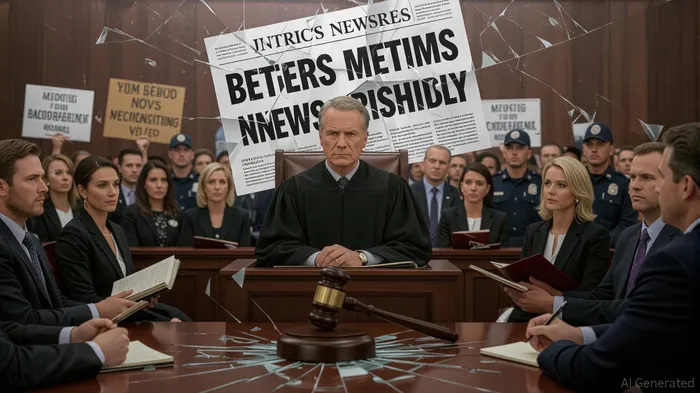
The intersection of legal battles, media dynamics, and regulatory uncertainty has become a defining feature of the Trump-driven political climate. As the former president escalates litigation against media entities and grapples with the fallout from high-profile events like the Charlie Kirk assassination, the implications for media and tech firms—and by extension, investor sentiment—are profound. This analysis explores how these developments are reshaping risk profiles and market behavior.
The Legal Front: Chilling Effects on Media and Investor Confidence
Donald Trump's $15 billion defamation lawsuit against the New York Times represents more than a personal vendetta; it signals a broader challenge to the norms of press freedom and legal accountability. Legal experts warn that such high-stakes litigation could force media organizations to adopt a more cautious approach to reporting, particularly on public figures, to avoid costly legal exposure [2]. This "chilling effect" risks stifling investigative journalism, a cornerstone of democratic accountability, while increasing operational costs for media firms to secure legal defenses.
For investors, the lawsuit underscores the growing legal risks faced by media companies in a polarized environment. If courts begin to favor plaintiffs in defamation cases involving political figures, media outlets may face higher insurance premiums, reduced editorial independence, and a shift toward risk-averse content strategies. These factors could erode revenue streams and long-term brand credibility, particularly for outlets perceived as critical of powerful political actors.
Media Dynamics and the Aftermath of Political Violence
The assassination of conservative activist Charlie Kirk has further complicated the media landscape. The incident, which involved graphic video footage circulating online, has intensified debates about content moderation, platform liability, and the role of media in amplifying polarizing narratives. According to a report by the New York Post, Vice President JD Vance's decision to host a tribute episode of The Charlie Kirk Show from the White House highlights the blurring lines between political messaging and media platforms [2].
This convergence of politics and media raises concerns about how tech firms and news organizations navigate their editorial responsibilities amid heightened societal tensions. Investors must consider the reputational and regulatory risks for platforms that host user-generated content, especially as governments and advocacy groups push for stricter oversight. The Utah governor's call for a national conversation on de-escalating political tensions [2] suggests that regulatory scrutiny of media's role in fostering division may intensify, potentially leading to new compliance costs or operational constraints.
Regulatory Uncertainty and Market Sentiment
The Trump administration's regulatory agenda, including its push to abandon quarterly earnings reports and its prioritization of foreign aid disputes, adds another layer of complexity. As noted by Bloomberg, these shifts reflect a broader skepticism of traditional financial transparency frameworks, which could disrupt investor expectations and market dynamics [2]. While there is no direct evidence linking these policies to specific stock performance in media or tech sectors between 2023 and 2025, the resulting uncertainty may lead to increased volatility and risk premiums for companies operating in politically sensitive spaces.
For example, the SEC's alignment with Trump's initiatives—such as delaying the release of foreign aid funds [4]—could create regulatory asymmetries that favor certain firms over others, distorting competitive landscapes. Tech companies reliant on government contracts or data privacy frameworks may face additional scrutiny, while media firms could see their valuation multiples pressured by perceived alignment with partisan agendas.
Strategic Implications for Investors
Investors must adopt a nuanced approach to navigating these risks. Diversification across media and tech subsectors—such as distinguishing between legacy news organizations and digital platforms—may help mitigate exposure to sector-specific legal or regulatory shocks. Additionally, monitoring litigation trends and regulatory developments (e.g., potential changes to defamation laws or content moderation policies) will be critical for assessing long-term value.
Conclusion
The Trump-driven political climate is reshaping the legal and media ecosystems in ways that demand careful scrutiny. From high-profile lawsuits to the fallout of political violence and regulatory shifts, the risks for media and tech firms are multifaceted and evolving. While direct financial data remains sparse, the broader implications for market sentiment, corporate strategy, and investor behavior are clear. As these dynamics unfold, stakeholders must remain vigilant in assessing both the opportunities and vulnerabilities inherent in this volatile landscape.







Comentarios
Aún no hay comentarios