
Assessing the Investment Implications of Small Business Pricing Behavior in a Stagnating Inflation Environment
Small businesses have long served as a critical barometer of inflationary pressures in the U.S. economy. Their pricing decisions, often shaped by immediate cost shocks and competitive dynamics, offer a real-time lens into broader economic trends. As inflation stabilizes in 2025, the interplay between small business pricing behavior and investment strategies reveals nuanced implications for investors. This analysis explores how small businesses are navigating a high-cost, low-growth environment and what their actions signal for asset allocation, sector rotations, and risk management.
Pricing Behavior as a Proxy for Inflationary Pressures
Small businesses are increasingly passing costs to consumers, a trend that underscores their role as price takers in competitive markets. According to a report, 64% of small and mid-sized businesses planned price hikes in 2023–2025 due to inflation, with 52% of those facing supply chain disruptions raising prices directly in response. By Q3 2025, nearly a quarter of small businesses had already increased prices, and a third planned further hikes within three months. These adjustments reflect a necessity to offset rising input costs, particularly from tariffs, which 50% of small business owners reported impacting them more severely in 2025 than in 2024.
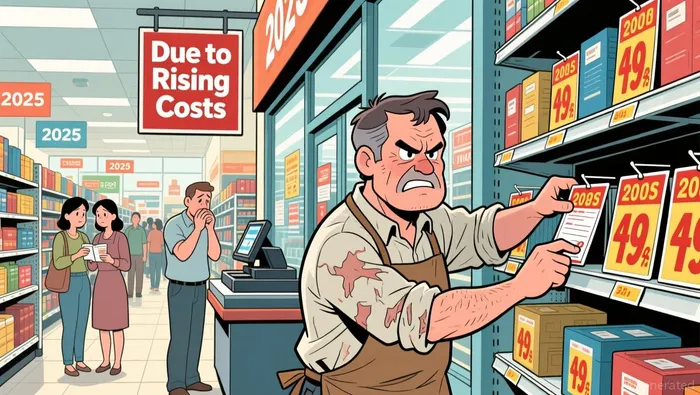 The cost-pass-through mechanism is not uniform, however. Retailers and goods-producing firms are disproportionately affected, with 81% of retail businesses reporting significant cost pressures and 72% raising prices. In contrast, service-based businesses exhibit greater pricing flexibility, highlighting sector-specific vulnerabilities. This divergence suggests that investors should scrutinize industry-level data when assessing inflationary risks.
Investment Strategies in a High-Cost Environment
Small businesses are adapting to stagnating inflation by prioritizing efficiency and short-term liquidity. A key trend is the shift toward technology and automation. For instance, 91% of small businesses using AI report revenue growth, with 60% investing in business software and 36% in AI tools. These investments aim to reduce labor costs and enhance productivity, but they also reflect a trade-off: 75% of small businesses are relying on external financing-such as business credit cards and personal contributions-to manage cash flow rather than committing to long-term expansion.
Marketing and sales remain top priorities, with 58% of small businesses allocating resources to these areas. This focus on customer acquisition and retention aligns with broader consumer behavior shifts. As 75% of consumers trade down in at least one category, small businesses are doubling down on value propositions, particularly in retail, where Walmart and Costco continue to outperform according to market data.
Sector Rotations and Asset Allocation Implications
The uneven impact of inflation across sectors is driving strategic reallocations. Retailers and manufacturers, burdened by material costs and tariffs, are more likely to adopt defensive strategies, such as cost absorption or price hikes. Conversely, service-based businesses, less exposed to input cost volatility, may retain pricing power. This divergence mirrors broader market trends, where non-market-based inflation-driven by financial services and stock market performance-remains elevated despite stabilizing core inflation.
For investors, this dynamic underscores the importance of diversification. Sectors like technology and AI, which enable small businesses to mitigate cost pressures, present growth opportunities. Meanwhile, inflation-hedging assets-such as gold, real estate, and Treasury Inflation-Protected Securities (TIPS)-are gaining traction as investors seek to preserve capital amid economic uncertainty.
Conclusion: Navigating the New Normal
Small business pricing behavior in a stagnating inflation environment reveals a duality: resilience in the face of adversity and strategic adaptation to shifting market conditions. While 87% of small businesses report meeting or exceeding expectations, their reliance on short-term financing and sector-specific vulnerabilities highlight systemic risks. Investors must balance optimism about small business innovation with caution regarding macroeconomic headwinds. By aligning portfolios with sectors and assets that mirror small business strategies-such as AI-driven efficiency tools and inflation-protected securities-investors can better navigate the complexities of a post-pandemic economy.







Comentarios
Aún no hay comentarios