
Assessing the Implications of the October 10, 2025, Market Move for Portfolio Resilience
The U.S. stock market's abrupt selloff on October 10, 2025, marked a pivotal moment for investors. The S&P 500 fell 0.8%, the Dow Jones Industrial Average dropped 1.05%, and the Nasdaq Composite, heavily tilted toward technology stocks, plummeted nearly 1.7%, according to The Economic Times. This volatility was fueled by escalating U.S.-China trade tensions, particularly after President Trump's warning of "massive increases" in tariffs on Chinese imports. The fallout was immediate: shares of tech giants like AMDAMD--, TeslaTSLA--, and NvidiaNVDA-- fell 7% and 2%, respectively, while rare earth mineral stocks surged as investors braced for supply chain disruptions, The Economic Times reported.
This market move underscores the fragility of portfolios overly concentrated in high-growth sectors. The S&P 500's allocation to mega-cap tech stocks now accounts for nearly 40% of its index, creating a structural vulnerability in environments of geopolitical and macroeconomic uncertainty, according to CNBC. For investors seeking resilience, the lesson is clear: strategic rebalancing is no longer optional-it is a necessity.
Rebalancing in the Wake of Volatility
The October 10 crash highlights two critical rebalancing imperatives. First, reducing overexposure to sectors prone to sharp corrections. Technology stocks, while historically resilient, face heightened risks in a trade-war scenario. Investors are advised to reallocate capital to underperforming but defensive sectors such as healthcare and industrials, which have demonstrated stability during periods of market stress, CNBC noted.
Second, adopting a threshold-based rebalancing strategy. Traditional calendar-based approaches may fail to address sudden market shifts, whereas a rule-based system-triggering rebalancing when an asset class deviates more than 5% from its target allocation-offers a disciplined response to volatility, according to DW Asset Management. This method minimizes emotional decision-making and ensures portfolios remain aligned with long-term goals. For instance, after the October selloff, investors could rebalance by trimming overweighted tech positions and increasing holdings in sectors like utilities or consumer staples, DW Asset Management recommends.
Tax-Efficient Rebalancing: A Dual-Purpose Strategy
Tax-loss harvesting has emerged as a powerful tool for enhancing after-tax returns during downturns. By selling underperforming assets-such as the tech stocks hit hardest by the October selloff-investors can offset gains and reduce tax liability, according to JPMorgan Private Bank. This strategy is particularly effective when combined with rebalancing. For example, proceeds from harvested losses could be reinvested into similar but non-identical assets (e.g., switching from an individual tech stock to a tech ETF), maintaining market exposure while adhering to wash-sale rules, JPMorgan Private Bank notes.
Advanced investors should also leverage tax-advantaged accounts, such as IRAs or 401(k)s, where rebalancing can occur without triggering taxable events, JPMorgan Private Bank adds. This flexibility allows for more frequent adjustments, ensuring portfolios remain optimized without incurring tax drag. Historical data suggests that combining tax-loss harvesting with rebalancing can generate an annual after-tax alpha of 0.5% to 2%, depending on market conditions and execution frequency, according to JPMorgan Private Bank.
Lessons from History and the Path Forward
The October 2025 crash echoes the lessons of past market corrections, such as the dot-com crash of 2000–2002. Diversification across sectors and asset classes proved critical for recovery, as defensive stocks and bonds cushioned the blow, per MarketClutch. Similarly, today's investors must prioritize liquidity and sector balance, particularly as inflation and interest rate uncertainty loom.
A hybrid rebalancing approach-combining time-based reviews with threshold triggers-offers the best of both worlds. For example, an annual portfolio review could be supplemented with immediate rebalancing if any asset class deviates by more than 10% from its target allocation, according to WealthBeats. This strategy allows investors to capitalize on undervalued opportunities during bear markets while avoiding overexposure during bull runs.
Conclusion
The October 10, 2025, market move serves as a stark reminder of the need for proactive portfolio management. By reducing sector concentration, adopting threshold-based rebalancing, and integrating tax-efficient strategies, investors can build resilience against future volatility. As trade tensions and macroeconomic risks persist, the ability to adapt swiftly and systematically will separate successful portfolios from those left vulnerable.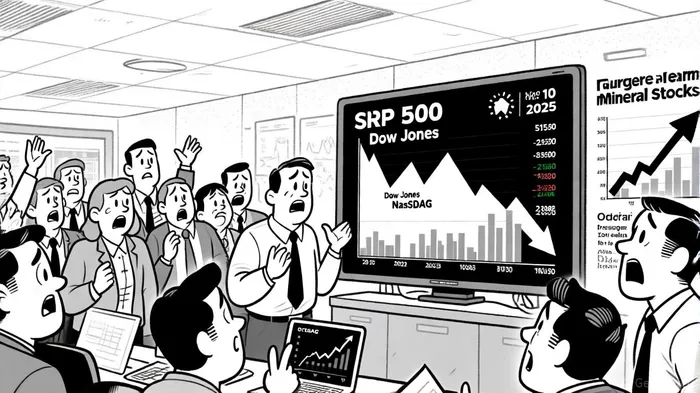





Comentarios
Aún no hay comentarios