
Assessing the Implications of Corn Futures Downturn as the Quarter Ends
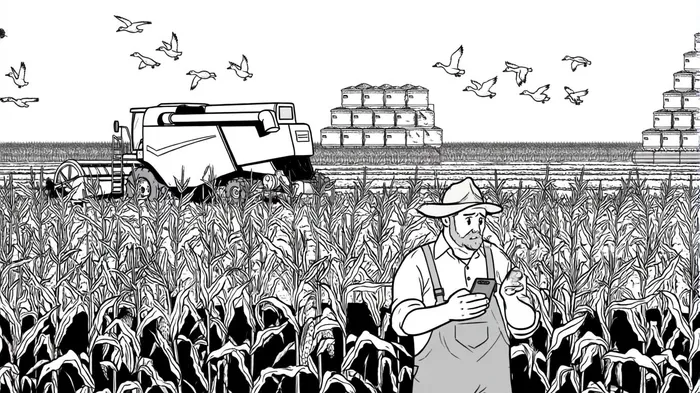
The Q3 2025 corn futures market has been defined by a delicate balance between tightening fundamentals and speculative uncertainty. Prices have oscillated within a narrow band of $4.10 to $4.30 per bushel, reflecting a tug-of-war between USDA projections of lower ending stocks and market expectations for record U.S. production[3]. This volatility underscores the need for strategic timing and risk management as the quarter draws to close.
Market Fundamentals: A Tale of Contradictions
The USDA's August 2025 update projected a corn yield of 188.8 bushels per acre, pushing the 2025/26 marketing year's season-average farm price down to $3.90 per bushel[3]. However, private analysts like StoneX have countered with higher yield forecasts (186.9 bushels per acre), suggesting a potential oversupply that could further depress prices[1]. Meanwhile, global markets have seen a modest rebound in July 2025 due to dry weather concerns in the Midwest and Black Sea regions, though demand remains steady and speculative positioning cautious[2].
This divergence between official estimates and market sentiment creates a high-stakes environment. For instance, the USDA's 10.8% ending stocks-to-use ratio for 2025/26 is lower than the long-term average but insufficient to justify prices above $5 per bushel[2]. This implies that while supply risks are being priced in, the market remains anchored to expectations of a robust harvest, limiting upside potential.
Speculative Positioning: A Double-Edged Sword
The Commodity Futures Trading Commission (CFTC) reported a surge in speculative net positions for corn, reaching 319.8K as of January 13, 2025, up from 290.5K previously[4]. This increase highlights growing investor activity, driven by factors such as weather-related supply chain adjustments and shifting global demand dynamics[4]. However, speculative bets can amplify volatility, particularly as harvest season approaches.
Traders must monitor the Commitments of Traders (COT) reports to gauge sentiment shifts. For example, a sharp increase in non-commercial long positions could signal overbought conditions, while a rapid unwinding of short positions might foreshadow a price rebound[5]. Historical data reveals that RSI-overbought signals in corn futures since 2022 have yielded mixed results: 70 overbought events were detected, with an average 30-day post-event return of –1.58% versus –0.65% for the benchmark[5]. The win rate for such signals never exceeded 54%, and negative drift became statistically notable around day 6. These findings suggest that relying on RSI-overbought conditions alone may not provide a reliable edge in corn futures trading.
Risk Management: Hedging and Position Adjustments
For producers and investors, the current environment demands proactive risk mitigation. Hedging strategies such as forward contracts and futures sales are critical to lock in prices amid low-cost uncertainty. A "straight hedge"—selling futures contracts equivalent to physical holdings—can protect against price declines, though basis risk remains a concern[2].
Producers are advised to hedge approximately 70% of their expected output to balance production risks with market flexibility[4]. For example, a farmer with 10,000 bushels in storage might sell futures contracts to secure a target price calculated as Futures Price + Expected Basis[4]. Mini corn futures contracts (1,000 bushels) offer smaller operations greater precision in managing exposure[4].
Position adjustments also play a role. As harvest nears, producers may lift hedges to capitalize on favorable cash market conditions, while investors might scale back speculative bets to avoid liquidity crunches[2].
Market Timing: Leveraging Seasonality and Macro Drivers
Historical patterns suggest corn prices often rally during spring planting and exhibit predictable behavior in late summer, particularly around key supply-demand events[2]. For Q3 2025, traders should align strategies with these cycles while factoring in real-time variables like weather anomalies and geopolitical tensions[1].
For instance, dry weather in the Midwest and Black Sea regions has already spurred short-term price rebounds[2]. However, these gains are tempered by steady demand and cautious speculative positioning, suggesting that timing the market requires a nuanced approach.
Conclusion: Navigating the Crossroads
As Q3 2025 concludes, the corn futures market remains at a crossroads. While fundamentals point to a potential oversupply, speculative activity and weather-related risks introduce volatility. Success hinges on a dual focus:
1. Risk Mitigation: Employing hedging tools to lock in prices and adjust positions dynamically.
2. Strategic Timing: Leveraging seasonal patterns and macro drivers to capitalize on short-term opportunities.
Market participants must remain agile, continuously recalibrating strategies as new data emerges. The coming weeks will test the resilience of both producers and investors, with the harvest season serving as the ultimate arbiter of price direction.







Comentarios
Aún no hay comentarios