
Assessing the Impact of Wash Trading on Polymarket's Valuation and Growth Prospects
The Prevalence of Wash Trading on Polymarket
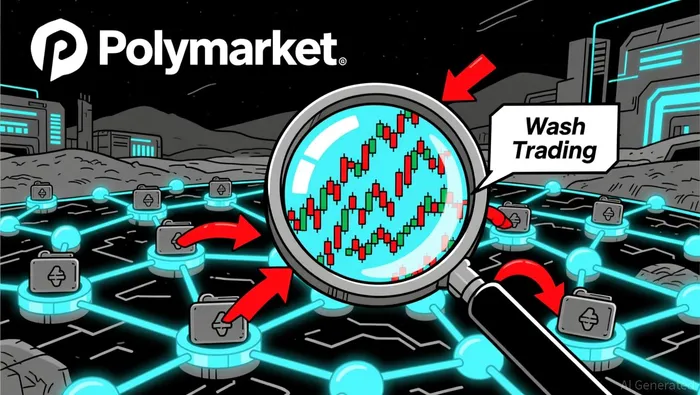
According to a report by CoinDesk, a Columbia University study found that approximately 25% of Polymarket's trading activity over the past three years may involve wash trading, with suspicious patterns identified in 14% of its 1.26 million active wallets, CoinDesk report. The study, which analyzed blockchain data from Polygon, revealed a volatile trajectory: wash trading surged to 60% of weekly volume in December 2024, dropped to under 5% by May 2025, and then rebounded to 20% by October, Cryptorank report. These fluctuations highlight the platform's susceptibility to manipulation, particularly in niche markets like sports betting, where up to 45% of volume was flagged as likely artificial, CryptoPolitan report.
The platform's design exacerbates the problem. Polymarket's lack of transaction fees, absence of KYC verification, and the potential for token airdrops create an environment where users can engage in low-cost, anonymous wash trading to simulate demand, Chainalysis blog. As one researcher noted, "The illusion of activity can distort market signals, misleading both investors and participants about genuine interest in outcomes."
Investor Due Diligence in a DeFi Era
For investors, detecting wash trading requires a nuanced approach. Traditional financial tools are ill-suited for DeFi's pseudonymous nature, but on-chain analytics have emerged as a lifeline. Chainalysis, for instance, developed heuristics to identify matched buy-and-sell transactions within short timeframes and multi-sender address activity, Chainalysis blog. These methods uncovered $2.57 billion in potential wash trading across EthereumETH--, BNBBNB-- Smart Chain, and Base in 2024, Chainalysis blog.
Investors should prioritize tools that analyze patterns such as rapid, repetitive trades, abnormal liquidity pool activity, and multi-sender behaviors, Chainalysis blog. Platforms like Volume.li also demonstrate how bots can automate fake volume, underscoring the need for real-time monitoring, Chainalysis blog. As one expert advised, "Due diligence in DeFi isn't just about financial metrics-it's about understanding the underlying data architecture."
Valuation Implications and Mitigation Strategies
The presence of artificial volume directly impacts Polymarket's valuation. A 25% inflation in trading activity could overstate user demand, liquidity, and market depth-key metrics used to justify high valuations in DeFi. For example, if 60% of December 2024's volume was fake, the platform's perceived growth during that period would be misleading, Cryptorank report. This volatility also complicates forecasting, as wash trading patterns are cyclical and hard to predict.
Mitigation strategies must address both technical and governance gaps. Polymarket could introduce transaction fees for high-frequency traders, implement KYC for large accounts, or use smart contracts to detect and penalize suspicious behavior, Chainalysis blog. However, such measures risk alienating the platform's core user base, which values anonymity and low barriers to entry.
Conclusion: Navigating the Risks of DeFi Innovation
Polymarket's story is emblematic of DeFi's dual-edged sword: innovation and vulnerability. While its prediction markets offer unprecedented accessibility, the prevalence of wash trading underscores the need for robust investor due diligence. By leveraging on-chain analytics and advocating for platform-level reforms, investors can better assess the true value of DeFi projects. As the Columbia study concludes, "The integrity of prediction markets hinges on authentic volume-without it, even the most promising platforms risk becoming hollow shells."
For now, Polymarket remains a high-risk, high-reward asset. Investors must weigh its growth potential against the persistent threat of manipulation, ensuring their strategies evolve alongside the platforms they bet on.






Comentarios
Aún no hay comentarios