
Assessing the Impact of Venezuela's Political Shift on Geopolitical Risk and Commodity Markets
The U.S. military capture of Venezuelan President Nicolás Maduro in late 2025 has ignited a seismic shift in Latin America's geopolitical landscape, with cascading implications for global commodity markets. While Venezuela's current oil production remains a marginal contributor to global supply, its vast untapped reserves and strategic geopolitical positioning have positioned it as a focal point for investors seeking to capitalize on volatility in energy and precious metals. This analysis explores how the interplay of U.S. intervention, regional instability, and market dynamics creates both risks and opportunities for investors.
Geopolitical Volatility: A Catalyst for Market Reassessment
The Trump administration's intervention in Venezuela, framed as a "decisive and necessary act" to destabilize Maduro's regime, has redefined the country's role in global power dynamics. By signaling a willingness to reshape Latin American politics through force, the U.S. has disrupted long-standing alliances, particularly with China, which had secured 80% of Venezuela's oil exports as a strategic economic lever. Analysts warn that this shift could trigger a broader realignment of regional alliances, with potential spillovers into global security debates.
For investors, such volatility often acts as a double-edged sword. On one hand, it introduces uncertainty that can destabilize markets; on the other, it creates asymmetrical opportunities for those who can anticipate shifts in supply chains and geopolitical leverage. The U.S. move has already prompted a surge in gold prices, with the precious metal hitting a one-week high as investors flocked to safe-haven assets. This trend underscores the growing perception of risk in emerging markets and the role of gold as a hedge against geopolitical instability.
Oil Markets: Short-Term Muted, Long-Term Uncertain
Venezuela's oil sector, though currently producing less than 1 million barrels per day, holds 303 billion barrels of proven reserves-nearly a fifth of the world's total. The U.S. has announced plans to invest over $58 billion to rebuild Venezuela's oil infrastructure, a move that could theoretically restore production to meaningful levels. However, industry experts caution that such a recovery would take years, given the decades of underinvestment and operational decay.
In the short term, global oil markets have remained relatively insulated from the intervention. The International Energy Agency's forecast of a 2026 oil surplus has dampened price sensitivity to Venezuela's developments. Yet, the long-term implications are more complex. If U.S. energy giants gain access to Venezuela's heavy crude reserves, they could disrupt OPEC+ dynamics and exacerbate global oversupply pressures. For now, the market's muted response reflects skepticism about the feasibility of rapid production recovery, but investors should remain vigilant for structural shifts in the coming years.
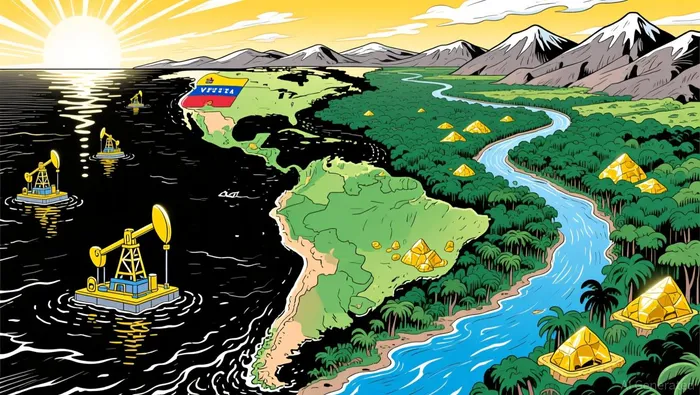
Precious Metals: A Safe-Haven Play in a Fractured World
The geopolitical turbulence surrounding Venezuela has amplified demand for gold, with prices surging over 2% in the week following Maduro's capture. This trend aligns with historical patterns where geopolitical crises drive capital toward non-correlated assets. The U.S. dollar also benefited temporarily, as investors sought liquidity amid uncertainty. However, the dollar's strength may be short-lived if the intervention sparks broader regional instability, particularly in countries wary of U.S. hegemony.
For investors, the key question is whether this surge in gold demand will persist. While the immediate spike may reflect tactical hedging, sustained momentum will depend on the trajectory of global geopolitical risks. If the U.S. intervention leads to prolonged instability in Latin America-or if similar actions are replicated elsewhere-gold's role as a strategic reserve asset could become even more pronounced.
Strategic Opportunities for Investors
The Venezuela crisis exemplifies how geopolitical volatility can create asymmetric opportunities. Energy investors with exposure to U.S. firms operating in Venezuela-such as ChevronCVX-- and Exxon Mobil-may benefit from long-term infrastructure investments, albeit with significant political risk. Conversely, those with short-term oil positions may need to hedge against oversupply scenarios.
In the precious metals space, gold's recent performance highlights its utility as a diversification tool. Investors should consider allocating to gold and gold-mining equities as a counterbalance to geopolitical uncertainties. Additionally, platinum and palladium, which are also sensitive to global instability, could offer complementary exposure.
Conclusion
Venezuela's political upheaval is a microcosm of broader geopolitical tensions reshaping the 2020s. While the immediate market impact has been tempered by global oil gluts and cautious investor sentiment, the long-term implications for energy and precious metals markets remain profound. For investors, the challenge lies in balancing the risks of volatility with the opportunities it creates-whether through strategic energy investments or safe-haven allocations. As the world grapples with the fallout of U.S. interventions, those who can navigate the intersection of politics and markets will be best positioned to capitalize on the next phase of global realignment.





Comentarios
Aún no hay comentarios