
Assessing the Impact of U.S. Tariffs on South Korea's Export-Driven Economy
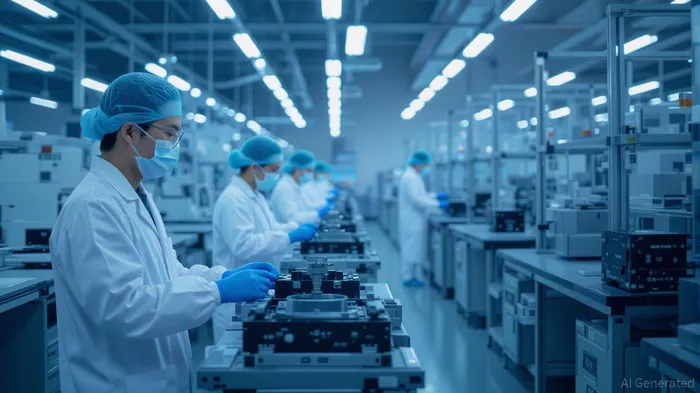
The U.S. imposition of a 25% tariff on South Korean exports—its highest rate for an FTA partner—has sent ripples through the global supply chain, particularly in the automotive, semiconductor, and steel sectors [2]. While these tariffs threaten to erode profit margins and disrupt trade flows, South Korea’s strategic adaptations reveal a resilient economy poised to mitigate risks and recalibrate its export exposure. For investors, the interplay between short-term shocks and long-term structural shifts offers critical insights into the opportunities and vulnerabilities of an export-driven model.
Sectoral Resilience: Innovation, Localization, and Diversification
Semiconductors: South Korea’s semiconductor industry, a cornerstone of its trade surplus, faces dual pressures from U.S. tariffs and export controls on AI chips to China. However, the sector is countering with a dual strategy: geographic diversification and technological leapfrogging. Companies like Samsung and SK Hynix are shifting production to Vietnam and Malaysia, while securing $20.5 billion in 2025 R&D funding for AI chips and quantum computing [1]. This pivot not only reduces exposure to U.S. tariffs but also aligns with the global demand for advanced semiconductors, ensuring long-term competitiveness.
Automotive: The automotive sector, already reeling from the 25% tariff threat, has accelerated U.S. localization. Hyundai’s $26 billion investment in U.S. production—including a low-carbon steel plant and expanded EV manufacturing—demonstrates a proactive approach to circumvent tariffs while capitalizing on the U.S. green energy transition [1]. Coupled with a government emergency package of $10.18 billion for EV subsidies and tax cuts, this strategy positions South Korean automakers to dominate the next phase of the EV market.
Steel and Aluminum: The 25% tariff on 253 steel and aluminum products has forced firms like POSCOPKX-- and Hyundai Steel to explore U.S. production hubs. Yet, their pivot to hydrogen-based green technologies—backed by a $227 million 2025 investment—offers a dual benefit: reducing CO2 emissions by over 95% and aligning with global carbon neutrality standards [1]. This innovation not only insulates the sector from trade barriers but also taps into the $350 billion U.S.-South Korea investment package, which includes $150 billion for shipbuilding and $200 billion for nuclear energy [3].
Market Diversification: Beyond the U.S.
South Korea’s response to U.S. tariffs extends beyond sector-specific adaptations. The country is actively diversifying its export markets, with Southeast Asia and India emerging as key destinations. The Korea-Vietnam trade relationship, for instance, has seen a 12% year-on-year increase in bilateral trade, driven by semiconductor and automotive exports [2]. This geographic spread reduces reliance on the U.S. and mitigates risks from protectionist policies.
Future Export Exposure: Risks and Opportunities
While South Korea’s strategies are robust, challenges remain. The 15% tariff on automotive exports, though lower than the initially threatened 25%, still poses a risk to profitability [3]. Moreover, the U.S. is considering tariffs on semiconductors exceeding 25%, which could disrupt supply chains and force further capital reallocation [2]. For investors, these uncertainties highlight the need to monitor policy shifts and sector-specific vulnerabilities.
Conversely, South Korea’s focus on green technologies and AI-driven innovation presents long-term opportunities. The government’s 15 trillion won ($10.18 billion) support package for green tech and EVs [2] underscores a commitment to future-proofing the economy. Investors who align with these trends—such as funding hydrogen infrastructure or semiconductor R&D—stand to benefit from South Korea’s strategic pivot.
Conclusion
South Korea’s export-driven economy is navigating a complex trade landscape, but its blend of innovation, localization, and diversification signals resilience. While U.S. tariffs pose immediate challenges, they also catalyze structural upgrades that enhance long-term competitiveness. For investors, the key lies in balancing caution with optimism: hedging against short-term volatility while capitalizing on the country’s strategic investments in technology and sustainability.
Source:[1] Assessing South Korea's Resilience Amid U.S. Tariff [https://www.ainvest.com/news/assessing-south-korea-resilience-tariff-pressures-strategic-opportunities-key-export-sectors-2508/][2] Navigating 2025 US Tariffs: Impact on South Korean [https://www.sourceofasia.com/us-tariffs-2025-how-south-korean-businesses-are-navigating-new-trade-barriers/][3] South Korea tariff deal with US: What it means for automotive [https://www.automotivelogistics.media/supply-chain/south-korea-tariff-deal-with-us-what-it-means-for-automotive/650472]







Comentarios
Aún no hay comentarios