
Assessing the Impact of Slowing Drilling Activity in Key U.S. Shale Basins on Energy Infrastructure and E&P Valuation
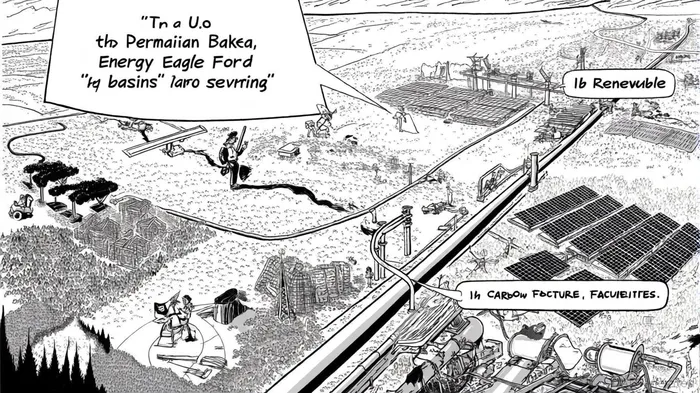
The U.S. shale industry is undergoing a pivotal transformation as slowing drilling activity in key basins like the Permian, Bakken, and Eagle Ford intersects with the energy transition. While efficiency gains and capital discipline have sustained production amid reduced rig counts, the reallocation of capital toward energy transition initiatives is reshaping infrastructure utilization and E&P company valuations. This analysis explores how these dynamics are redefining the sector's strategic priorities and financial metrics.
Drilling Activity Trends and Efficiency Gains
Despite a projected 15% decline in the U.S. rig count in 2025, operators are leveraging technological advancements to maintain output. For instance, the Permian Basin achieved an average of 1,400 barrels per day (bpd) of new-well oil production per rig in June 2024, a 14 bpd increase from May 2024[1]. Similarly, the Eagle Ford and Bakken basins reported robust productivity, with 1,639 bpd and 1,747 bpd per rig, respectively[1]. These gains reflect innovations like extended-reach laterals and AI-driven analytics, which enable operators to compress timelines and reduce costs[3].
However, the overall reduction in drilling activity—driven by lower oil prices and capital discipline—is expected to cut liquids output by 200,000 barrels per day (kbpd) annually in 2025 and 2026[2]. The Permian, the largest shale oil basin, faces a decline in dry gas production from 20.1 billion cubic feet per day (bcfd) in March 2025 to 18.6 bcfd by March 2026[2], intensifying pressure on other basins like the Haynesville to meet demand.
Energy Infrastructure Utilization and Transition-Driven Repurposing
Energy infrastructure is becoming a strategic asset as operators adapt to shifting priorities. Major pipeline expansions in the Permien, such as the Matterhorn Express Pipeline, are alleviating natural gas takeaway constraints and reducing per-barrel costs[4]. These projects facilitate faster access to global pricing hubs like the Gulf Coast, enhancing margins.
Simultaneously, ESG priorities are driving infrastructure repurposing. Operators are investing in flaring reduction, water recycling, and carbon capture initiatives to meet regulatory and investor demands[3]. For example, ChevronCVX-- increased Permian activity by 20% in 2024 despite a flat rig count, demonstrating how improved scheduling and infrastructure utilization can offset drilling declines[4].
The energy transition is also prompting midstream consolidation. Deals increasingly include infrastructure carve-outs and bundled gathering assets, particularly in the Permian and Haynesville basins[1]. This trend reflects a focus on vertical integration to secure offtake and improve operational margins.
E&P Valuations: Balancing Production Efficiency and Transition Risks
E&P company valuations remain tied to production efficiency and breakeven costs. According to the Dallas Fed Energy Survey, firms require an average WTI oil price of $65 per barrel to profitably drill new wells and $41 per barrel to cover operating expenses for existing wells[2]. These figures highlight the sensitivity of valuations to oil price volatility and production costs.
However, energy transition risks are increasingly embedded in valuations. A discounted cash flow (DCF) analysis of ExxonMobil reveals that the market assumes a “business as usual” future for fossil fuels, overvaluing the company by up to 70% compared to a scenario with aggressive climate policy[5]. This disconnect underscores the underpricing of long-term energy transition risks, as investors prioritize short-term returns over decarbonization challenges.
Capital reallocation toward renewables and carbon capture is further complicating valuation dynamics. While 75% of investors remain engaged in fossil fuel projects—particularly natural gas—as a hedge for energy security[3], companies like bpBP-- are resetting strategies to prioritize shareholder value. BP's shift to allocating $1.5–2 billion annually to hydrogen, CCS, and biogas reflects a broader industry trend toward disciplined, selective transition investments[5].
Strategic Reallocation and Future Outlook
The energy transition is accelerating capital reallocation, with global energy investment expected to exceed $3 trillion in 2025, of which $2 trillion will target clean energy technologies[5]. However, regulatory uncertainty, high capital costs, and supply chain bottlenecks are slowing progress in areas like carbon capture[5].
For U.S. shale operators, the path forward involves balancing traditional production with transition initiatives. The Permian's projected growth from 8.4 million barrels per day (Mbpd) in 2024 to 14 Mbpd by 2030 under favorable oil prices[2] illustrates the basin's enduring importance. Yet, operators must also address the $18 trillion capital gap required to fund the green transition through 2030[5], necessitating innovative financing and collaboration.
Conclusion
Slowing drilling activity in U.S. shale basins is not a harbinger of decline but a catalyst for strategic reinvention. By prioritizing efficiency, infrastructure optimization, and selective energy transition investments, E&P companies can navigate near-term challenges while positioning for long-term resilience. Investors must weigh the interplay of production metrics, capital allocation, and regulatory shifts to assess valuations accurately in this evolving landscape.





Comentarios
Aún no hay comentarios