
Assessing the Impact of the Russian Central Bank's Rouble Rate Adjustments on Currency and Commodity Markets
The Russian Central Bank’s aggressive monetary policy shifts in 2025 have sent ripples through global currency and commodity markets, creating both opportunities and risks for emerging market investors. As the Bank of Russia navigated inflationary pressures, economic contraction, and geopolitical isolation, its rate adjustments have directly influenced the rouble’s trajectory and indirectly shaped oil and metals pricing dynamics. For investors, understanding these interdependencies—and deploying tailored risk mitigation strategies—is critical in a world where geopolitical volatility and monetary policy are increasingly intertwined.
The Rouble’s Volatility: A Double-Edged Sword
The Bank of Russia’s decision to cut its key interest rate by 300 basis points between May and July 2025—from 21% to 18%—marked a pivotal shift in its monetary strategy. These cuts were driven by disinflationary trends, with core inflation easing to 9.8% year-on-year by June 2025 [1]. However, the real interest rate remained exceptionally high at 18% against 4% inflation, continuing to suppress domestic borrowing and economic activity [2].
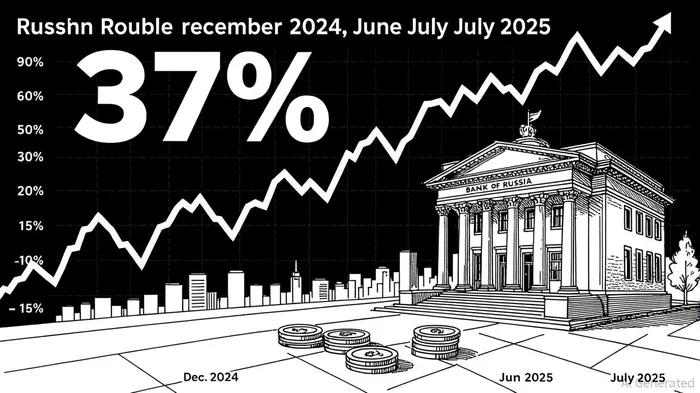
The rouble’s response to these rate cuts was paradoxical. Despite the easing of monetary policy, the rouble appreciated by 6.6% against the U.S. dollar in Q2 2025 and by 37% from December 2024 to June 2025 [1]. This strength was fueled by high interest rates attracting carry trade inflows, restricted capital outflows due to sanctions, and a persistent current account surplus. Yet, the rouble’s appreciation created a Catch-22: while it reduced import costs, the deepening economic contraction limited demand for imports, leaving the currency overvalued in the eyes of analysts [3]. By September 2025, the rouble had weakened slightly by 0.1%, reflecting ongoing volatility amid global economic shifts [4].
Commodity Market Implications: Oil, Metals, and Geopolitical Tensions
The rouble’s strength has indirect but significant implications for oil and metals prices in emerging markets. A stronger rouble reduces the competitiveness of Russian energy and commodity exports priced in dollars, potentially dampening global supply and supporting prices. However, this dynamic is complicated by geopolitical factors. For instance, U.S. sanctions—including a 500% tariff on Russian goods—have disrupted traditional trade flows, while OPEC+ production cuts have added upward pressure on oil prices [5].
In metals markets, the interplay of currency movements and trade policies has been stark. U.S. aluminum tariffs, doubled to 50% in 2025, pushed prices to $2,548.25 per ton, illustrating how geopolitical risks and trade barriers can override monetary policy effects [6]. Similarly, gold has emerged as a critical hedging instrument, with its price surging to $2,400 per ounce in Q3 2025 as investors sought refuge from currency volatility and conflict uncertainties [6].
Strategic Implications for Emerging Market Investors
For investors in emerging markets, the Russian Central Bank’s rate adjustments highlight the need for adaptive strategies. First, diversification remains paramount. The $120 billion in equity outflows from emerging markets between 2023 and 2024 underscores the risks of overexposure to regions with high geopolitical tension [6]. Investors should consider reallocating to markets like India and Mexico, which offer growth potential with lower exposure to conflict-driven volatility [6].
Second, hedging against currency risk is essential. The rouble’s appreciation and subsequent volatility demonstrate the value of instruments like forward contracts and gold. Gold’s correlation with geopolitical risk—now at 0.85—has reinforced its role as a safe-haven asset [6]. Additionally, investors might explore index-linked commodity contracts to mitigate exposure to Russian-dominated markets.
Third, nearshoring and regional supply chain strategies can reduce reliance on volatile trade corridors. For example, shifting critical mineral investments to allied regions like Canada or Ukraine can insulate portfolios from Russian export disruptions [5]. Similarly, infrastructure investments in renewable energy and AI-driven power generation offer long-term resilience amid reindustrialization trends [6].
Risk Mitigation in a Fractured Geopolitical Landscape
The Russian-Ukrainian war, Middle East conflicts, and U.S.-China tensions have amplified the need for proactive risk management. Investors must monitor fiscal changes in Russia, such as potential adjustments to oil export revenues, which could indirectly affect commodity prices [1]. Emerging technologies like AI and digital twins can enhance supply chain agility, providing real-time insights into geopolitical and economic shifts [6].
Conclusion
The Russian Central Bank’s rouble rate adjustments in 2025 have created a complex web of effects on currency and commodity markets. While high interest rates initially stabilized the rouble, the subsequent easing has exposed the fragility of Russia’s economy amid sanctions and geopolitical isolation. For emerging market investors, the path forward requires a blend of diversification, hedging, and strategic foresight. In a world where monetary policy and geopolitics are inextricably linked, adaptability will be the key to navigating the turbulence ahead.
Source:
[1] Russian economy update: Q2 2025 [https://nestcentre.org/russian-economy-update-q2-2025/]
[2] Monetary Policy Guidelines for 2025-2027 | Bank of Russia [https://www.cbr.ru/eng/about_br/publ/ondkp/on_2025_2027/]
[3] Hundred roubles to dollar would be acceptable, says... [https://www.reuters.com/markets/europe/hundred-roubles-dollar-would-be-acceptable-says-russian-government-source-2025-05-19/]
[4] Bannockburn Capital Markets | September 2025 Monthly [https://eaccny.com/news/member-news/bannockburn-capital-markets-september-2025-monthly/]
[5] Oil prices gain as risks of sanctions on Russia offset... [https://www.reuters.com/business/energy/oil-prices-gain-risks-sanctions-russia-offset-opec-output-hike-2025-09-07/]
[6] Global Geopolitical Shifts and Their Impact on Commodity... [https://www.ainvest.com/news/global-geopolitical-shifts-impact-commodity-equity-markets-2509]







Comentarios
Aún no hay comentarios