
Assessing the Impact of Regional Geopolitical Volatility on Israeli and Middle Eastern Markets
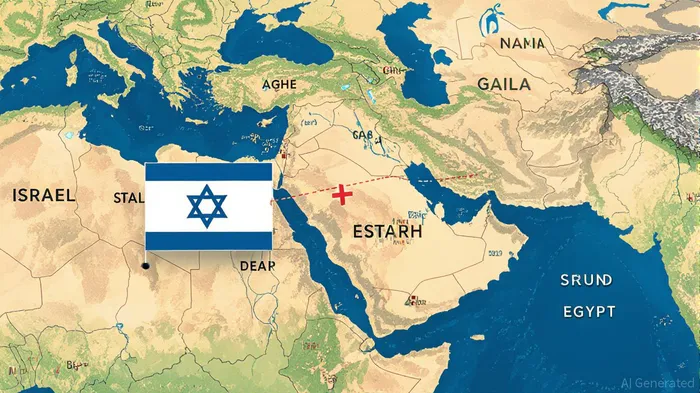
The Middle East remains a focal point of global geopolitical volatility, with Israel's military actions in Gaza, its unprecedented strike in Qatar, and regional energy deals reshaping investment landscapes. As tensions escalate and diplomatic alliances shift, defense, technology, and energy sectors in Israel and the broader region are experiencing both opportunities and risks. This analysis examines how these developments are influencing strategic investment resilience across key industries.
Defense Sector: A Double-Edged Sword
Israel's military operations have historically driven growth in its defense industry, but recent actions—such as the September 2025 strike in Doha targeting Hamas leadership—have introduced new complexities. While the attack underscored Israel's expanding operational reach, it also drew sharp condemnation from Qatari and Jordanian officials, raising concerns about regional backlash[5].
However, the defense sector remains a cornerstone of Israel's economy. The $25 billion acquisition of CyberArkCYBR-- by Palo Alto NetworksPANW--, announced in late 2025, highlights sustained global demand for Israeli cybersecurity expertise[6]. According to a report by Bloomberg, Israeli defense exports grew by 18% year-on-year in 2024, driven by U.S. and European demand for counterterrorism technologies[1]. Yet, the diplomatic fallout from the Qatar strike could strain partnerships with Gulf states, potentially limiting access to emerging markets.
Technology: Innovation Amid Uncertainty
The tech sector in Israel and the Middle East is navigating a paradox: geopolitical instability is both a threat and a catalyst. For instance, the Hamas attack on an Israeli army camp in Gaza City in August 2025—resulting in four soldier deaths—spurred renewed government funding for AI-driven surveillance and drone technologies[2].
Meanwhile, Qatar's diplomatic shifts, including its alignment with Hamas, have created a fragmented tech ecosystem. While Israeli startups continue to attract global venture capital, Qatari investments in regional tech hubs have slowed. A Reuters analysis notes that Qatari sovereign wealth funds reduced their Middle Eastern tech portfolio by 12% in 2025, citing “heightened geopolitical risks”[3]. This divergence underscores the sector's vulnerability to diplomatic realignments.
Energy: A Fragile Path to Cooperation
The $35 billion gas export deal between Israel and Egypt, signed in late 2025, represents a rare bright spot in an otherwise turbulent landscape[6]. By supplying 130 billion cubic meters of gas by 2040, the agreement aims to stabilize regional energy markets and reduce reliance on volatile Gulf suppliers.
Yet, the broader energy sector faces headwinds. The Israeli attack in Qatar and ongoing Gaza escalations have disrupted cross-border energy projects. For example, the proposed Jordan-Israel-Egypt power grid, once seen as a cornerstone of regional cooperation, has stalled due to Jordan's condemnation of Israel's Doha strike[5]. According to the International Energy Agency, Middle Eastern energy investments fell by 9% in Q3 2025, with Gulf states prioritizing domestic projects over cross-border collaborations[4].
Strategic Resilience: Navigating the Volatility
Investors must balance short-term risks with long-term opportunities. In defense, the global demand for Israeli technologies ensures sectoral resilience, though diplomatic friction could limit market access. For tech, innovation in cybersecurity and AI will likely outpace geopolitical headwinds, provided startups diversify funding sources. Energy, meanwhile, hinges on the success of bilateral deals like the Israel-Egypt agreement, which could serve as a model for stabilizing regional markets.
The coming months will test the adaptability of these sectors. As Prime Minister Netanyahu emphasized in a September 2025 address, “Security and economic growth are not mutually exclusive—they are interdependent.” Whether this interdependence translates into sustained investment resilience will depend on the region's ability to navigate its complex geopolitical terrain.





Comentarios
Aún no hay comentarios