
Assessing the Impact of Philippine Graft Scandal on Sovereign Risk and Emerging Market Exposure
Sovereign Risk and Credit Rating Dynamics
Credit agencies have maintained a cautious but not punitive stance. S&P Global Ratings reaffirmed the Philippines' "BBB+" long-term credit rating in November 2024 with a positive outlook, noting that governance improvements could pave the way for an upgrade. Similarly, Fitch and Moody's have upheld their "BBB" and "Baa2" ratings, respectively, with stable outlooks, emphasizing that the scandal could catalyze systemic reforms rather than derail the country's economic trajectory.
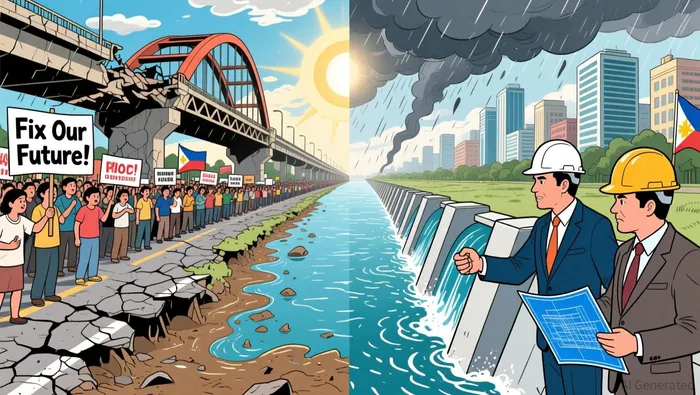
The key concern for rating agencies remains fiscal transparency. The audit of flood control projects revealed alarming irregularities, including identical costs across different locations and monopolistic contractor practices. While these findings have delayed potential upgrades, they also highlight a critical juncture: credible anti-graft measures could reverse the damage to investor confidence. Finance Secretary Ralph Recto has acknowledged this, stating that the scandal "prevented" an S&P upgrade but that progress remains achievable with stronger governance.
Reforms and Market Recovery Potential
The administration's response has focused on three pillars: legal accountability, institutional oversight, and fiscal discipline. The Independent Commission for Infrastructure (ICI), established in September 2025, has already identified 80 anomalous projects and implicated 37 individuals, including lawmakers. The proposed Independent Commission Against Infrastructure Corruption Act of 2025 aims to grant the ICI subpoena powers and access to government records, addressing concerns about its credibility.
Legislative measures, such as the CREATE MORE Act and the Public-Private Partnership Code, are designed to streamline infrastructure projects and reduce bureaucratic bottlenecks according to economic analysts. These reforms, if implemented effectively, could redirect funds to high-impact "soft infrastructure" projects, such as education and healthcare, as suggested by Budget Undersecretary Joselito Basilio.
However, the path to recovery is not without hurdles. The third-quarter GDP contraction of 2025, attributed partly to stricter validation procedures slowing infrastructure spending, underscores the short-term economic pain of these reforms. The peso and stock market have also weakened, with the Philippine Stock Exchange Index (PSEi) reflecting volatility amid investor uncertainty according to Bloomberg reports.
Investor Opportunities and Risks
For investors, the Philippines presents a paradox: a resilient economy with a 5.6% GDP growth projection for 2025, yet vulnerable to political and governance risks according to credit analysts. The World Bank's 2023 Enterprise Survey noted a decline in bribery cases to 8% among firms, suggesting some progress in curbing corruption. However, the U.S. State Department's ranking of the Philippines at 114th in the 2024 Corruption Perceptions Index highlights persistent challenges.
Emerging market exposure to the Philippines must weigh these factors. The redirection of funds to "soft infrastructure" could attract impact investors, while the permanent blacklisting of fraudulent contractors may improve project quality. Yet, the risk of populist policies or prolonged political instability- exacerbated by Vice President Sara Duterte's public criticism of the administration-remains a wildcard.
Conclusion: A Delicate Balance
The Philippines' graft scandal has undoubtedly elevated its sovereign risk profile, but it has also created an opportunity for meaningful reform. Credit agencies' stable outlooks reflect a belief that the administration's actions, if sustained, could restore investor confidence. For now, the focus must remain on the credibility of the ICI, the enforcement of fiscal transparency measures, and the ability to balance accountability with economic momentum.
As the Marcos administration races to jail suspects before Christmas 2025 according to Reuters reports, the global market will be watching closely. The Philippines' recovery hinges not just on punishing the guilty, but on proving that systemic change is possible.







Comentarios
Aún no hay comentarios