
Assessing the Impact of Insider Selling at Supernus Pharmaceuticals on Investor Confidence and Stock Valuation
In October 2025, Supernus PharmaceuticalsSUPN-- (SUPN) became a focal point for investors due to a series of high-profile insider selling transactions. These activities, documented in SEC filings and analyst reports, raise critical questions about their implications for investor confidence and stock valuation. While insider selling can signal a lack of confidence in a company's prospects, the context-such as pre-arranged trading plans and broader market dynamics-must be carefully evaluated to avoid misinterpretation.
Insider Transactions: Volume, Timing, and Context
According to a TradingView report, Supernus Pharmaceuticals' CEO, Jack A. Khattar, sold 40,173 shares on October 1, 2025, at an average price of $48.07 per share, totaling $1.93 million. A Form 4 filing shows the transaction was executed under a Rule 10b5-1 trading plan adopted on November 14, 2024, suggesting a pre-scheduled strategy rather than a reactive decision. The report noted that following the sale, Khattar retained direct ownership of 1,160,870 shares and indirect ownership of 1,005,600 shares through the KBT Trust, indicating his continued alignment with long-term shareholder interests.
A separate MarketBeat alert shows a Form 144 filing revealing plans by another insider to sell 1,904 shares through Morgan Stanley Smith Barney, with an aggregate value of $91,468.16, expected to occur on October 2, 2025. This transaction, linked to the exercise of stock options, further underscores compensation-related liquidity needs rather than a bearish outlook.
Market Reaction and Stock Performance
The stock price of Supernus Pharmaceuticals exhibited notable volatility during this period. On September 15, 2025, the stock closed at $45.19, per the company's historic stock lookup, but by October 2 it had surged to $48.64, closing at $47.96, as recorded in the Yahoo Finance history. Yahoo Finance's data also show daily volatility reached 2.61% on October 2, reflecting heightened trading activity amid insider sales. Notably, an earlier sale of 10,235 shares on September 29-valued at $491,485-reduced his ownership by 0.89%, yet his remaining holdings were still valued at approximately $54.95 million, according to MarketBeat and an InsiderTrades alert.
The market's mixed response highlights the complexity of interpreting insider selling. While some investors may view large-scale sales as a red flag, the stock's upward trajectory and positive analyst sentiment suggest that external factors, such as broader industry trends or product pipeline updates, may have outweighed concerns about insider activity.
Analyst Commentary: Contrasting Signals
Analyst reactions to SUPN's recent performance have been largely bullish. Cantor Fitzgerald upgraded its price target from $46.00 to $63.00 and assigned an "overweight" rating, while Zacks Research elevated its recommendation to "strong-buy" (reported by MarketBeat). These upgrades reflect confidence in Supernus Pharmaceuticals' fundamentals, including its portfolio of CNS therapies and potential regulatory milestones. The stock's consensus "Buy" rating and average price target of $51.50 further reinforce this optimism.
However, analysts caution that insider selling, even when pre-arranged, could introduce short-term volatility. For instance, the CEO's October 1 sale occurred as the stock approached its 52-week high, potentially testing investor sentiment. Yet, the fact that these transactions were executed under structured plans-designed to comply with SEC rules-mitigates concerns about insider pessimism.
Implications for Investors
For investors, the key takeaway lies in contextualizing insider activity within the broader market narrative. While the volume of shares sold by Khattar and other insiders is significant, the use of Rule 10b5-1 plans and the CEO's continued substantial ownership suggest a strategic, long-term approach to liquidity management. Additionally, the stock's strong performance and analyst upgrades indicate that external drivers-such as product launches or partnerships-are likely dominating market sentiment.
Nevertheless, investors should remain vigilant. A sudden acceleration in insider selling, particularly outside of pre-announced plans, could signal waning confidence. Conversely, continued insider retention of shares, coupled with positive operational updates, would reinforce the case for long-term investment.
Conclusion
The recent insider selling at Supernus Pharmaceuticals presents a nuanced picture. While the transactions themselves are substantial, their execution under structured plans and the broader positive market context suggest that they should not be interpreted as definitive bearish signals. Investors are advised to weigh these activities against the company's operational progress, analyst ratings, and macroeconomic factors. For now, the stock appears to balance insider liquidity needs with strong external demand, making it a compelling but cautious addition to a diversified portfolio.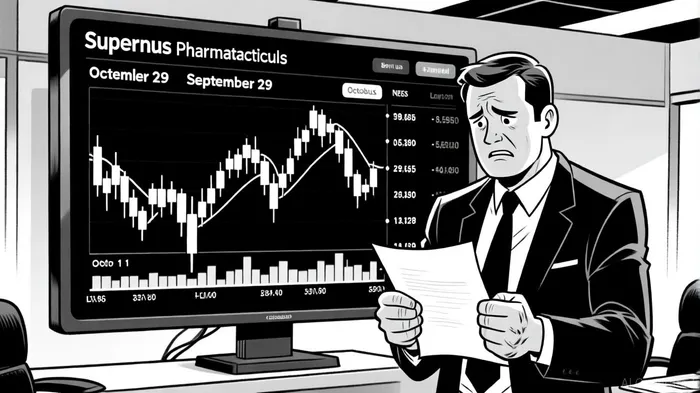





Comentarios
Aún no hay comentarios