
Assessing the Impact of Geopolitical Narratives on Global Market Stability
The interplay between geopolitical rhetoric and market stability has never been more pronounced than in 2025, as U.S. Treasury Secretary Scott Bessent's aggressive stance toward China has reshaped risk perceptions and capital flows. His accusations that China is "deliberately undermining the global economy" through export controls on rare earths and critical minerals[1] have triggered immediate market volatility, with S&P 500 and Nasdaq futures plunging by 1.3% and 1.6%, respectively[1]. These developments underscore how high-level political narratives can act as catalysts for financial instability, even as they signal broader strategic shifts in global economic power.
Geopolitical Rhetoric and Risk Perception
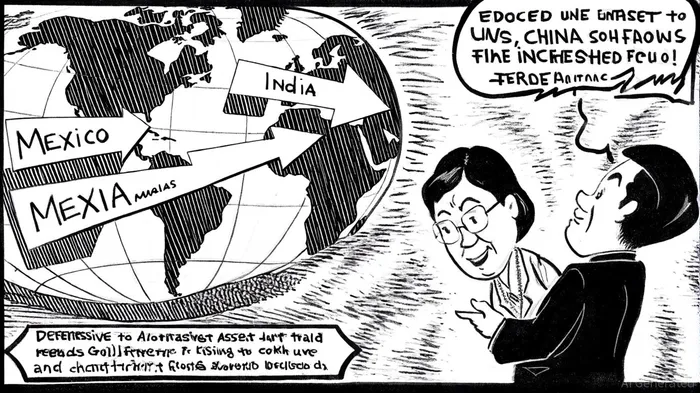
Bessent's rhetoric has amplified fears of a prolonged trade war, with China retaliating by imposing an 84% tariff on U.S. goods[2]. Such escalations have heightened risk perceptions, particularly in sectors reliant on cross-border supply chains. According to a report by the Brookings Institution, geopolitical tensions have led to a "notable shift" in U.S. foreign direct investment (FDI), with capital redirecting toward "friendshoring" partners like Mexico and India[4]. This reallocation reflects a broader de-risking strategy, as firms seek to mitigate exposure to China's regulatory unpredictability and potential conflicts over Taiwan[1].
The psychological impact of such narratives is evident in investor behavior. A May 2025 CNBC Fed Survey noted a 53% probability of a U.S. recession within the next year, up sharply from 22% in January[3]. While this figure may overstate the immediate risks, it illustrates how geopolitical rhetoric can distort market expectations, creating self-fulfilling cycles of volatility.
Capital Flows and Emerging Market Divergence
Emerging markets have experienced divergent capital flows in response to U.S.-China tensions. China, once a dominant recipient of global investment, has become a "negative outlier," with portfolio inflows weakening since the Russia-Ukraine war[1]. In contrast, non-China emerging markets have maintained relatively stable flows, driven by accommodative central bank policies and a weaker U.S. dollar[5]. For instance, India's domestic-driven growth and favorable demographics have attracted increased inflows, while Mexico has benefited from nearshoring initiatives[1].
The Federal Reserve's analysis highlights how geopolitical fragmentation is reshaping FDI patterns, with firms prioritizing political alignment over cost efficiency[4]. This trend has bolstered economies like Vietnam and Malaysia, which are perceived as safer alternatives to China. However, structural challenges in China-such as deflationary pressures and a slowing property market-continue to deter capital, despite its role as a key supplier of critical minerals[2].
Defensive Asset Allocation Strategies
In response to heightened uncertainty, institutional investors are adopting defensive positioning. T. Rowe Price's August 2025 Global Asset Allocation Viewpoints recommends a "neutral stance on equities" and an underweight in bonds due to inflationary risks from tariffs[6]. Similarly, Pathstone's Tactical Allocation Viewpoints advocates for short-duration/cash allocations and a bias toward value stocks to mitigate downside risks[6].
Alternative assets are gaining traction as hedges against geopolitical shocks. Gold reserves have risen by 12% year-to-date, while real estate and infrastructure investments are being prioritized for their liquidity and resilience[3]. Central banks in emerging markets are also recalibrating policies, with some opting for modest rate cuts to support growth amid tightening global financial conditions[5].
The Road Ahead
The coming months will test whether Bessent's optimism about a U.S.-China trade deal materializes. A resolution could stabilize markets, but the risk of further escalation remains high, particularly with the Trump-Xi summit in South Korea scheduled for October 29[4]. Investors must balance the potential for diplomatic breakthroughs with the reality of entrenched geopolitical rivalries.
For emerging markets, the key will be leveraging their resilience while avoiding overexposure to China's structural vulnerabilities. As the Brookings Institution notes, economies with strong institutional quality and open capital markets will likely outperform in this fragmented landscape[1].







Comentarios
Aún no hay comentarios