
Assessing the Impact of the Gaza Hostage Deal on Israel's Economic and Market Outlook
The October 2025 Gaza Hostage Deal, brokered by U.S. President Donald Trump and supported by Qatar, Egypt, and Turkey, has marked a pivotal shift in the Middle East's geopolitical landscape. By securing the release of Israeli hostages and nearly 2,000 Palestinian prisoners, the agreement has temporarily eased regional tensions, triggering immediate market reactions and reshaping long-term investment dynamics. This analysis evaluates how the deal mitigates geopolitical risks, influences foreign direct investment (FDI) flows, and unlocks sector-specific opportunities in Israel and neighboring economies.
Geopolitical Risk Mitigation and Market Stability
The ceasefire has directly reduced the geopolitical risk premium in global energy markets. According to an Invezz analysis, oil prices dropped by 1–2% following the deal, as the threat of supply disruptions in the Red Sea and Gulf of Aqaba diminished. This decline reflects a recalibration of market expectations, with traders factoring in lower volatility from Middle East conflicts. However, the BlackRock Geopolitical Risk Dashboard notes that broader global tensions-such as U.S.-China strategic competition and U.S. trade policy shifts-continue to dominate risk assessments. While the Gaza deal has localized benefits, it has not significantly altered the overall trajectory of the Geopolitical Risk Index (GPR), which remains elevated, according to The Soufan Center.
Foreign Direct Investment (FDI) Trends and Regional Opportunities
The ceasefire has catalyzed renewed interest in Israel's economy, historically a magnet for FDI. In 2024, Israel attracted $11.8 billion in FDI, a 15% increase from 2023, driven by large-scale projects like Intel's $15 billion Kiryat Gat factory, according to a JNS report. Post-deal optimism could further bolster inflows, particularly in sectors tied to reconstruction and technological innovation. A proposed $25 billion investment package for Gaza infrastructure, led by the U.S., Saudi Arabia, and the UAE, underscores the region's potential for long-term growth, as described in an Archyde article.
Neighboring Gulf Cooperation Council (GCC) economies are also poised to benefit. The GCC's 4.1% GDP growth projection for 2025, supported by oil production and non-oil sector expansion, is highlighted in the EIU outlook. Sovereign wealth funds and private investors are increasingly targeting renewable energy, fintech, and smart city projects in Saudi Arabia and the UAE, leveraging favorable regulatory frameworks and tax incentives, as noted by Southwest Journal.
Sector-Specific Investment Opportunities
- Energy and Renewables: The Middle East's pivot to clean energy is accelerating, with Saudi Arabia's NEOM and the UAE's Masdar leading in solar and hydrogen projects, a trend highlighted by Southwest Journal. A stable Gaza could further enhance regional energy security, attracting capital to infrastructure upgrades and LNG expansion.
- Construction and Infrastructure: With over $3 trillion in active GCC infrastructure projects, demand for construction firms and materials suppliers is surging, a dynamic also noted by Southwest Journal. Gaza's post-conflict reconstruction could add billions to this pipeline, creating opportunities for engineering and logistics firms.
- Fintech and Digital Banking: The UAE's DIFC and ADGM free zones host over 800 fintech firms, while Saudi Arabia's regulatory sandboxes are fostering innovation in digital payments and blockchain, as discussed in the Southwest Journal piece. A reduction in geopolitical risks may accelerate cross-border financial partnerships.
Risks and Cautions for Investors
Despite these opportunities, fragility persists. The Gaza ceasefire remains contingent on Hamas's disarmament and Israel's troop withdrawal, with regional actors like Yemen's Houthis threatening to resume attacks if the agreement falters (as previously noted by The Soufan Center). Additionally, global trade tensions and U.S. tariff policies could dampen growth in Q4 2025, according to an RMSI briefing. Investors must balance optimism with caution, prioritizing diversified portfolios and hedging against political volatility.
Conclusion
The Gaza Hostage Deal has undeniably reduced localized geopolitical risks, offering a window for economic stabilization and investment in Israel and the broader Middle East. While energy markets and FDI flows show promise, the region's long-term success hinges on the durability of the ceasefire and the resolution of broader global tensions. For investors, the post-deal landscape presents a mix of high-reward opportunities and lingering uncertainties-a dynamic that demands strategic foresight and agility.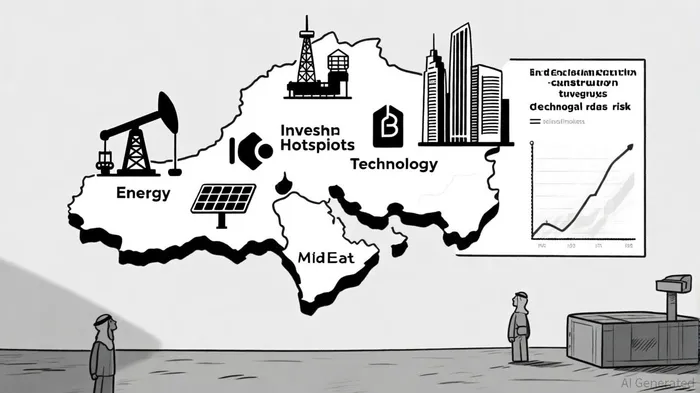





Comentarios
Aún no hay comentarios