
Assessing the Impact of Fed Policy Shifts and Media Trends on Market Sentiment
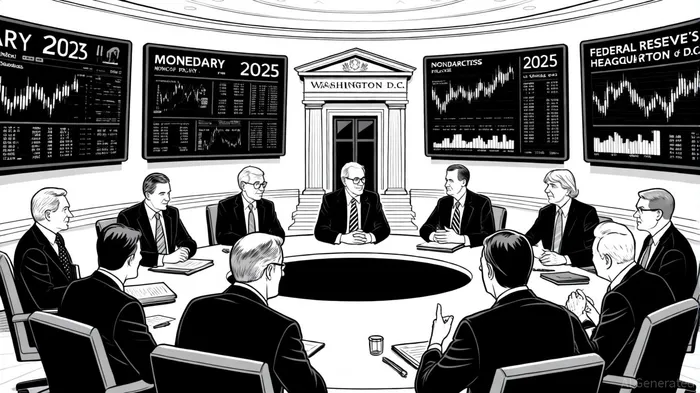
The Federal Reserve's recent pivot toward a more accommodative monetary policy has sent ripples through global financial markets, reshaping investor sentiment and readiness for a potential cooling rally. As the post-Powell communication era unfolds, the interplay between central bank messaging, media narratives, and market behavior has become a critical lens for understanding how investors are preparing for a period of recalibration. This analysis examines the Fed's strategic shifts, the role of media in amplifying or dampening uncertainty, and the tools investors are deploying to navigate a landscape marked by both clarity and ambiguity.
The Fed's Policy Revisions: A Balancing Act
The Federal Reserve's revised Statement on Longer-Run Goals and Monetary Policy Strategy, released in August 2025, marks a deliberate departure from the Flexible Average Inflation Targeting (FAIT) framework. By abandoning the “average” clause and refocusing on “flexible inflation targeting,” the Fed aims to align its dual mandate of maximum employment and price stability more effectively [1]. This shift reflects lessons learned from the pandemic era, where persistent inflation and labor market imbalances exposed gaps in the previous framework.
The September 2025 rate cut—lowering the federal funds rate to 4.00%–4.25%—further underscores the Fed's prioritization of labor market concerns over inflation. While inflation remains above the 2% target, cooling wage growth and a softening labor market have prompted officials to adopt a more dovish stance [2]. However, the market's mixed response to this decision—evidenced by slight declines in the S&P 500 and Nasdaq Composite—highlights the complexity of investor expectations. As one analyst notes, “The Fed's wait-and-see approach has created a tug-of-war between optimism over rate cuts and skepticism about the durability of a soft landing” [3].
Media Trends: Amplifiers of Uncertainty
Media coverage has played a pivotal role in translating the Fed's nuanced communication into public sentiment. Powell's emphasis on “shifting risks and uncertainties” during his August 2025 speech, for instance, was widely interpreted as a signal of prolonged policy caution, spiking volatility in Treasury yields and equity indices [4]. The media's ability to distill complex policy statements into digestible narratives has both clarified and muddied the waters for investors.
A case in point is the April 2025 announcement of broad global tariffs, which caught markets off guard and triggered a surge in the VIX (volatility index) to the 99th percentile of historical levels. This event underscored how media-driven uncertainty—particularly around trade policy—can delay investment decisions and amplify market swings [5]. Meanwhile, the Fed's “dot plot” projections, intended to provide transparency, have been criticized for their opacity, with some investors finding them more confusing than illuminating [6].
Investor Readiness: Navigating a Cooling Rally
As the Fed signals a potential rate-cutting cycle, investors are recalibrating their strategies to prepare for a cooling rally. A cooling rally refers to a market upswing driven by optimism about monetary easing but tempered by underlying economic fragility. In this context, investor readiness hinges on three key factors:
- AI-Driven Decision-Making: With heightened volatility and rapid policy shifts, investors are increasingly leveraging artificial intelligence to parse real-time data and execute dynamic strategies. AI tools now analyze Fed transcripts, economic indicators, and media sentiment to predict market movements with greater precision [7].
- Hedging Against Uncertainty: Elevated Economic Policy Uncertainty (EPU) and Trade Policy Uncertainty (TPU) metrics have prompted a surge in hedging activity. For example, the Dec-25 Fed Funds futures contract has become a critical barometer, with traders adjusting positions based on incoming data such as jobs reports and geopolitical developments [8].
- Sectoral Rebalancing: The anticipated rate cuts have spurred a shift toward sectors sensitive to lower borrowing costs, such as real estate and equities. However, caution persists in sectors vulnerable to inflationary shocks, reflecting a fragmented market outlook [9].
Conclusion: A Delicate Equilibrium
The post-Powell communication era is defined by a delicate equilibrium between policy clarity and persistent uncertainty. While the Fed's revised framework and dovish pivot have injected optimism into markets, the lingering shadows of stagflation and geopolitical risks necessitate a cautious approach. Investors, armed with advanced tools and a nuanced understanding of media-driven narratives, are navigating this landscape with a blend of pragmatism and vigilance. As the Fed continues to refine its messaging, the coming months will test whether a cooling rally can solidify into a sustainable recovery—or if new uncertainties will reignite volatility.







Comentarios
Aún no hay comentarios