
Assessing the Impact of Escalating Geopolitical Tensions on Oil Price Volatility
The oil market is a battlefield where geopolitics and economics collide. As the U.S. escalates sanctions on Russian oil producers and peace talks in Ukraine remain in limbo, investors are left navigating a volatile landscape. Here's how these dynamics are reshaping energy markets-and what it means for your portfolio.
The U.S. Saga: A Double-Edged Sword
The U.S. has weaponized its foreign policy to cripple Russian oil exports, targeting giants like Rosneft and Lukoil in October 2025. These sanctions have slashed Russian fossil fuel revenues to their lowest levels since the invasion of Ukraine, while simultaneously creating a ripple effect across global supply chains. For instance, U.S. month-on-month as those countries processed discounted Russian crude. Yet, this strategy isn't without risks. The EIA forecasts a steady decline in Brent crude prices. production ramps up and demand growth slows.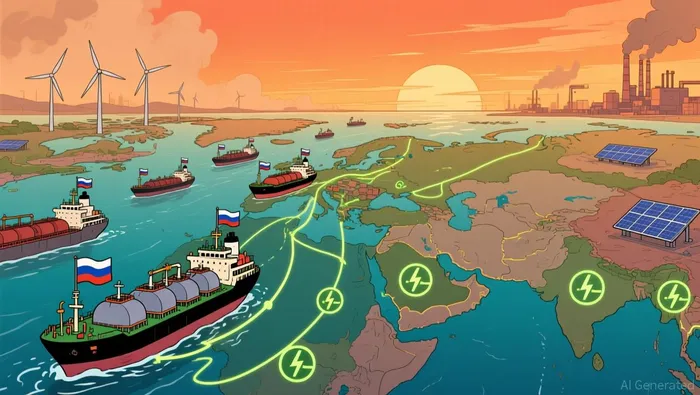 . The key takeaway? Sanctions are effective in the short term but could backfire if they accelerate the shift to renewables or force buyers like China and India to diversify away from Russian oil entirely.
Ukraine Peace Talks: A Pendulum of Volatility
The Ukraine-Russia peace process remains a wildcard. Stalled negotiations have pushed oil prices higher, with traders pricing in geopolitical risks. A successful peace deal, however, could unleash a flood of Russian oil back into global markets, potentially collapsing prices. For example, per barrel, reflecting both market adaptation and risk premiums. Meanwhile, the Federal Reserve's interest rate decisions add another layer of uncertainty. Lower rates could stimulate economic growth and energy demand, but tighter monetary policy might dampen it. Investors must watch these talks closely-they're the emotional barometer of the oil market.
and the Global Production Chess Match
OPEC+ has been the stabilizer in this chaos, maintaining production cuts to prop up prices. But their grip is slipping as non-OPEC+ producers like the U.S., Canada, and Brazil surge ahead. The U.S. "drill, baby, drill" agenda is paying off, with domestic output rising to offset Russian supply gaps. However, this surge risks oversupplying the market, especially if OPEC+ fractures or peace in Ukraine materializes. The EIA's bearish price outlook hinges on this very scenario. For now, OPEC+ remains a critical player, but its influence is waning in a multipolar energy world.
China and India: The New Energy Titans
China and India are rewriting the rules of the game. China, the largest importer of Russian crude, has locked in long-term pipeline deals and is pushing for yuan-based oil settlements to bypass U.S. sanctions according to analysts. India, meanwhile, has leveraged discounted Russian oil to bolster its refining sector, exporting high-margin diesel to Europe. But U.S. tariffs on Indian oil purchases have forced New Delhi to pivot toward Saudi and Iraqi crude as reported by experts. Both nations are also investing heavily in nuclear and green energy to reduce reliance on fossil fuels-a strategic move that could redefine global energy demand in the long term according to industry sources.
for Investors
The oil market is no longer a simple supply-and-demand equation. It's a geopolitical chess match where every move has cascading effects. Here's how to position your portfolio:
1. Hedge Against Volatility: Consider energy ETFs with exposure to both oil and natural gas, which offer diversification amid shifting dynamics.
2. Bet on Resilience: Companies with strong refining capabilities (e.g., Reliance Industries) are well-positioned to capitalize on discounted Russian crude.
3. Watch the Yuan: As China and India push for de-dollarization, investments in yuan-denominated energy assets could gain traction.
4. Short-Term Caution: With EIA forecasting lower prices in 2026, short-term traders should brace for a bearish trend unless geopolitical tensions escalate further.
The Bottom Line
The oil market is in a state of flux, driven by U.S. sanctions, Ukraine peace talks, and the rise of China and India. While the short-term outlook is bullish due to geopolitical risks, the long-term trajectory is bearish as production surges and renewables gain ground. Investors must stay nimble, balancing exposure to geopolitical tailwinds with the inevitability of a greener future.







Comentarios
Aún no hay comentarios