
Assessing the Impact of the El Teniente Mine Collapse on Copper Supply Chains and Codelco's Strategic Outlook
The collapse of Chile's El Teniente mine in August 2025 has sent shockwaves through global copper markets, exposing vulnerabilities in supply chains and raising urgent questions about the resilience of state-owned mining operations. As one of the world's largest underground copper producers, El Teniente accounts for 10% of global copper output, making its indefinite suspension a pivotal event for investors, policymakers, and the energy transition. This analysis evaluates the disaster's implications for copper supply, Codelco's strategic response, and the long-term investment landscape in a post-disaster mining sector.
Immediate Supply Chain Disruptions and Price Volatility
The mine's closure has created an acute supply gap equivalent to over a month of Chinese refined copper imports. With global copper inventories already at historic lows, the loss of 356,000 metric tonnes of annual production has intensified fears of a prolonged shortage. Copper prices on the London Metal Exchange (LME) have surged 12% in 2025, reaching $9,707.50 per ton, as traders factor in the risk of extended downtime.
The disruption is compounded by broader challenges in the refining sector. Negative treatment fees and capacity constraints in key regions like Japan and the Philippines have further strained supply. Meanwhile, the U.S. government's recent exclusion of refined copper from a 50% tariff has stabilized U.S. markets, but the spread between U.S. and LME prices now stands at $130 per ton, reflecting fragmented trade flows.
Codelco's Crisis Management and Safety Reforms
Codelco's immediate response—suspending operations, evacuating 3,000 workers, and launching an international audit—demonstrates a rare prioritization of safety over production. The audit, led by an independent panel of global experts, will scrutinize engineering standards, seismic preparedness, and emergency protocols. Key questions include whether the 4.2-magnitude earthquake exposed flaws in the mine's 120-year-old infrastructure or if operational practices contributed to the collapse.
However, Codelco's financial and governance challenges loom large. With $20 billion in debt and a legal obligation to transfer 70% of profits to the Chilean government, the company's ability to invest in modernization remains constrained. This raises concerns about its capacity to implement the safety upgrades likely mandated by the audit. For investors, the audit's findings will be critical in assessing Codelco's long-term viability.
The Audit as a Catalyst for Industry-Wide Change
The El Teniente incident is a wake-up call for the mining sector. The audit's focus on seismic resilience, tunnel reinforcement, and emergency response protocols could set new safety benchmarks, particularly in seismically active regions. If the findings reveal systemic gaps in Codelco's safety culture, they may prompt regulatory reforms in Chile and beyond.
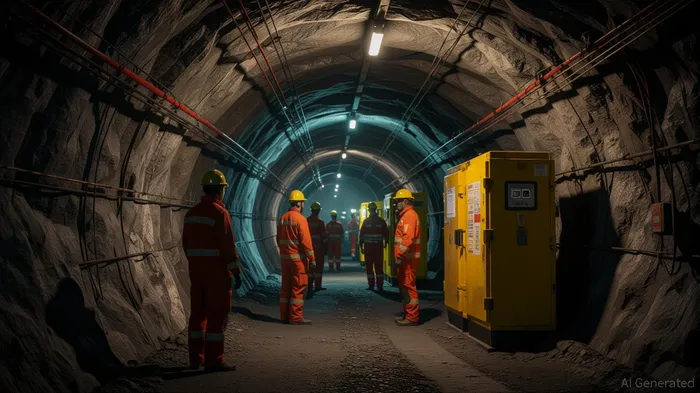
Moreover, the disaster highlights the limitations of legacy infrastructure. El Teniente's 4,500 kilometers of tunnels, many predating modern safety standards, underscore the urgent need for automation, AI, and predictive analytics in risk management. Companies like BHP and Freeport-McMoRanFCX--, which have already adopted such technologies, are likely to gain a competitive edge in a post-disaster landscape.
Investment Implications: Risk, Resilience, and the Energy Transition
The El Teniente collapse underscores the inherent risks of copper production, particularly in geologically unstable regions. For investors, this event reinforces the importance of diversification and ESG compliance. Mid-tier miners with agile operations, transparent governance, and robust safety protocols—such as First Quantum Minerals or Ivanhoe Mines—are emerging as attractive alternatives to state-owned giants like Codelco.
The energy transition, which is projected to triple global copper demand by 2035, further amplifies the stakes. Copper's role in electric vehicles, renewable energy grids, and AI infrastructure means that supply disruptions will have cascading effects on clean energy markets. Investors must weigh short-term volatility against long-term demand growth, favoring producers with strong ESG credentials and technological innovation.
Conclusion: A Call for Strategic Resilience
The El Teniente mine collapse is a stark reminder of the fragility of critical supply chains. While the immediate focus is on Codelco's audit and the mine's reopening timeline, the broader lesson lies in the need for systemic resilience. Investors should prioritize companies that balance production efficiency with safety innovation and diversification. For Codelco, the path forward hinges on transparency, modernization, and a commitment to aligning with the energy transition's demands.
In a world increasingly dependent on copper, the El Teniente disaster is not just a tragedy but a catalyst for rethinking how we mine, manage, and invest in the raw materials of the future.







Comentarios
Aún no hay comentarios