
Assessing the Impact of Canada’s Billions in Tariff Relief on Key Export-Dependent Sectors
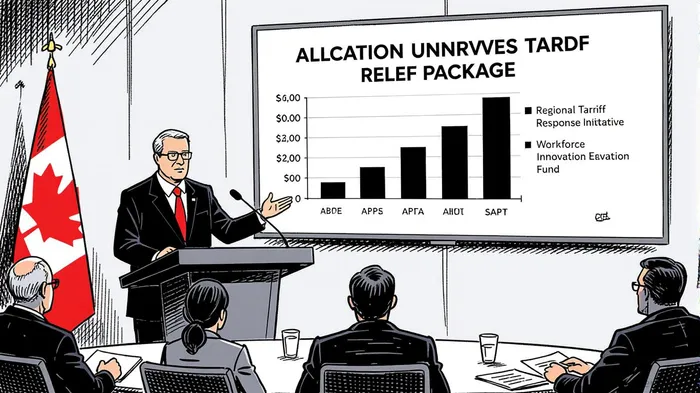
Canada’s trade landscape in 2025 has been reshaped by escalating U.S. tariffs on key exports, prompting the federal government to deploy a $6.15 billion relief package to stabilize export-dependent industries. This analysis evaluates how these measures—centered on the Strategic Response Fund (SRF) and Regional Tariff Response Initiative (RTRI)—are reshaping strategic investment opportunities in resilient Canadian manufacturing and resource equities.
Strategic Response Fund: A Pillar for Industrial Resilience
The SRF, a $5 billion initiative, targets sectors like automotive, steel, and aluminum, which face acute pressure from U.S. tariffs. By funding retooling, capital investments, and market diversification, the SRF aims to offset revenue losses and job cuts. For instance, aluminum processors are adopting new technologies to reduce costs, while canola producers are expanding into Asian markets [1]. Provincial co-funding is encouraged, amplifying the fund’s reach. This focus on innovation and diversification positions these sectors to mitigate long-term trade risks.
Regional Tariff Response Initiative: Empowering SMEs
The RTRI, expanded to $1 billion over three years, provides non-repayable grants of up to $1 million to SMEs. This initiative supports projects such as digitization, supply chain optimization, and domestic market expansion. For example, Prairie-based steel firms are leveraging RTRI funds to automate production lines, reducing reliance on U.S. inputs [2]. By prioritizing SMEs, the program fosters regional economic resilience, particularly in rural areas where trade disruptions have been most acute.
Workforce Alliances: Bridging Labor Gaps
Complementing financial support, the Workforce Alliances program ($382 million) and Workforce Innovation Fund ($50 million) address labor shortages in sectors like auto parts and steel. These initiatives collaborate with unions and industry groups to reskill workers, ensuring businesses can scale operations amid shifting trade dynamics [1]. For investors, this signals a structural effort to align labor supply with industrial demand, enhancing sectoral competitiveness.
Sector-Specific Impacts and Investment Opportunities
- Automotive: The SRF’s $2 billion allocation to safeguard automotive jobs underscores its strategic importance. Companies retooling for electric vehicle (EV) components or diversifying into European markets are prime candidates for growth.
- Steel and Aluminum: With U.S. tariffs hitting 407 product categories, domestic producers are pivoting to value-added products. The 50% surtax on non-FTA steel imports further shields domestic firms, making them attractive long-term plays [3].
- Agriculture: The AgriMarketing Program’s $75 million boost for international promotion, coupled with doubled interest-free advance payments for canola producers, positions agri-food exporters to capitalize on emerging markets in Southeast Asia and the EU [1].
Strategic Investment Positioning
Investors should prioritize equities in sectors directly benefiting from SRF/RTRI funding, particularly those demonstrating agility in market diversification. For example, firms in the Prairie region leveraging RTRI for supply chain resilience or aluminum processors adopting low-carbon technologies align with both policy goals and global sustainability trends. Additionally, companies participating in Workforce Alliances programs may see reduced operational bottlenecks, enhancing profitability.
Conclusion
Canada’s tariff relief measures are not merely reactive but strategically designed to fortify industrial capacity and diversify trade dependencies. For investors, this represents an opportunity to align with sectors poised for resilience: those leveraging government support to innovate, retool, and expand beyond the U.S. market. As trade tensions persist, equities in automotive, steel, aluminum, and agri-food sectors—backed by targeted policy interventions—offer compelling long-term value.
**Source:[1] Canada Announces Major Tariff Relief Funding for Impacted Businesses [https://grantmatch.com/hot-new-programs/canada-announces-major-tariff-relief-funding-for-impacted-businesses][2] Government of Canada announces support for Prairie businesses facing trade challenges [https://www.canada.ca/en/prairies-economic-development/news/2025/08/government-of-canada-announces-support-for-prairie-businesses-facing-trade-challenges.html][3] Impact of tariffs on Canadian businesses [https://www.doanegrantthornton.ca/insights/how-new-tariffs-could-affect-canadian-businesses/]







Comentarios
Aún no hay comentarios