
Assessing the Impact of the BNSF Railway Derailment on Supply Chain Resilience and Logistics Sector Valuations
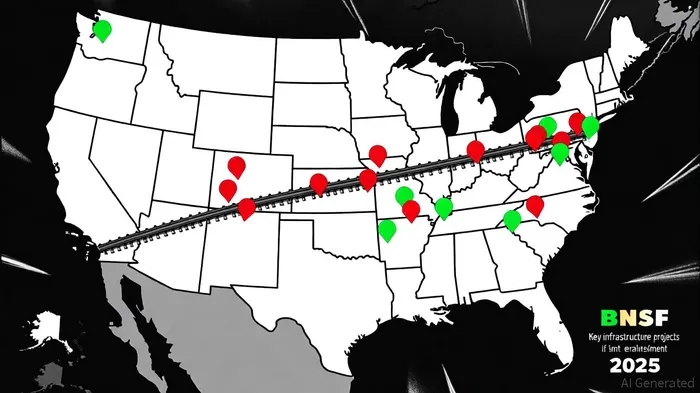
The recent spate of BNSF Railway derailments—ranging from a hazardous material spill in New Mexico to coal spills in Montana—has reignited debates about the fragility of North American supply chains and the financial risks embedded in rail-dependent logistics networks. While no injuries were reported in these incidents, the economic and operational disruptions underscore a critical question for investors: How do infrastructure failures and subsequent safety reforms reshape the valuation dynamics of the logistics sector?
The Derailment Crisis: A Stress Test for Supply Chains
The April 2024 derailment near Manuelito, New Mexico, which spilled liquefied petroleum gas (LPG) and forced the closure of Interstate 40 for 48 hours, exemplifies the cascading risks of rail transport. According to a report by Railway News, the National Transportation Safety Board (NTSB) highlighted systemic vulnerabilities, including outdated tank car designs and insufficient track inspections, and urged broader definitions of “high-hazard flammable trains” to enhance regulatory oversight[3]. Similarly, the February 2025 coal derailment in Montana, though environmentally less severe, exposed gaps in emergency response protocols and environmental risk management[1].
These incidents have compounded existing supply chain strains, such as West Coast port labor disputes, creating a compounding effect on freight reliability. For instance, the derailment of a mixed freight train carrying ethanol and corn syrup in Minnesota in early 2025 necessitated evacuations and disrupted perishable goods shipments, amplifying concerns about the transportation of volatile or time-sensitive cargo[1].
BNSF's $3.8 Billion Investment Plan: Mitigating Risk or a Costly Band-Aid?
In response, BNSF has announced a $3.8 billion capital investment plan for 2025, with $2.84 billion allocated to infrastructure maintenance—replacing 2.5 million rail ties, resurfacing 11,400 miles of track, and installing 410 miles of new rail[1]. These efforts aim to reduce unscheduled service interruptions, a key metric for rail operators. Additionally, $535 million is earmarked for expansion projects, including intermodal facilities in Chicago, Phoenix, and California, which are designed to boost network capacity and integrate multimodal logistics[4].
While such investments signal a commitment to safety and efficiency, they also raise questions about cost pass-through to customers. For example, the Phoenix rail hub project, delayed until March 2025, was initially projected to streamline freight movement but now faces scrutiny over its ability to offset recent disruptions[1]. Analysts at Roland Berger note that infrastructure investors remain cautiously optimistic about 2025, with 86% expecting moderate growth in deal activity, driven by demand for sustainable assets[2]. However, the logistics sector's valuation multiples may remain pressured if operational costs rise due to heightened safety expenditures[5].
Investor Sentiment: Balancing Resilience and Volatility
Market reactions to BNSF's recent performance have been mixed. In Q2 2025, the company reported flat revenue ($5.7 billion) compared to the prior year but achieved a 19% increase in operating income, reflecting cost controls and volume growth[6]. However, the CSX-BNSF intermodal partnership, aimed at enhancing service efficiency, initially caused a stock price dip for CSXCSX--, illustrating how strategic alliances can introduce short-term volatility[6].
Historically, BNSF's earnings releases have shown a modest positive impact on market behavior. Over a 30-day window, the average cumulative excess return for Berkshire Hathaway (BRK.B)—a key stakeholder in BNSF—has been approximately +1.90%, with a win rate rising steadily to ~68% by day 30. While the effect is limited in statistical significance, these trends suggest that markets tend to price in BNSF's earnings developments ahead of their official release, mitigating sharp post-announcement swings.
The broader logistics sector has also faced headwinds. Q1 2025 industry reports indicate declining revenue growth due to slowing global trade and rising operational costs, with rail disruptions exacerbating these trends[5]. Yet, BNSF's focus on Precision Scheduled Railroading (PSR)—a data-driven approach to optimize resource allocation—has drawn praise from analysts, who view it as a model for balancing profitability with reliability[6].
The Path Forward: Opportunities in Safety and Digitalization
The derailments have accelerated industry-wide calls for automation and digital infrastructure. For instance, the NTSB's recommendations for heavier rail and advanced tank car designs align with broader trends toward AI-driven predictive maintenance, which could reduce incident rates and long-term costs[3]. Meanwhile, the logistics sector's pivot toward digital infrastructure—such as data centers supporting AI expansion—is creating new investment opportunities, with 36% of infrastructure investors citing digitalization as a key growth driver[2].
However, the transition is not without risks. The delay of the Phoenix rail hub project highlights the challenges of large-scale infrastructure development, including regulatory hurdles and community pushback. Investors must weigh these uncertainties against the potential for long-term gains from a more resilient supply chain.
Conclusion: A Calculated Rebalance
For investors, the BNSF derailments represent both a cautionary tale and a catalyst for innovation. While the immediate financial impact of incidents like the New Mexico derailment is manageable, the long-term costs of regulatory compliance and infrastructure upgrades could weigh on margins. Conversely, BNSF's $3.8 billion investment plan and industry trends toward digital resilience present opportunities for those willing to navigate the sector's volatility.
As the NTSB and other regulators push for systemic reforms, the logistics sector's ability to adapt—through automation, safety upgrades, and strategic partnerships—will determine whether these challenges become a tailwind for innovation or a drag on valuations. For now, the rails remain a critical artery of global commerce, but their future depends on how effectively companies like BNSF can transform risk into resilience.





Comentarios
Aún no hay comentarios