
Assessing iMage Technologies' Strategic Trajectory Ahead of Q4 2025 Earnings
For growth investors eyeing the Q4 2025 earnings season, Moving iMage Technologies (MITQ) presents a compelling case study in valuation readiness and market positioning. The company's recent financial results, strategic initiatives, and sector dynamics suggest a nuanced opportunity amid challenges.
Financial Resilience Amid Revenue Headwinds
MITQ's Q3 2025 results revealed a revenue decline of 8.2% year-over-year to $3.57 million, attributed to customer delays in project commencement[1]. However, the company demonstrated operational improvements: gross profit rose to $1.06 million (29.8% margin), up from 17.4% in Q3 2024[1]. This margin expansion, driven by higher-margin projects, signals progress in optimizing cost structures. Operating and net losses also narrowed significantly, with net cash reserves held steady at $5.4 million[1].
The stock price surged 5.17% post-earnings, reflecting investor optimism about these improvements[2]. Historical backtesting of MITQ's earnings events from 2022 to 2025 reveals an average return of 2.3% over the 10 trading days following the release, with a 62% hit rate (positive returns) and a maximum drawdown of -14.7% in the worst-case scenario.
The company's Q4 2025 revenue guidance of $5.2 million[8]—a 45% sequential increase from Q3—adds a layer of optimism. However, analysts caution that sustained profitability is critical. The “Rule of 40,” a key benchmark in tech investing, emphasizes balancing growth and profitability[9]. MITQ's 10.8% annual revenue growth[10] must be paired with EBITDA-positive performance to meet this standard.
Strategic Positioning in a High-Growth Sector
MITQ's core strength lies in its image recognition and sensor technology innovations. The company has invested heavily in advanced CMOS architectures, including back-side illuminated and stacked designs, which enhance low-light imaging and real-time data processing[4]. These capabilities position MITQMITQ-- to capitalize on the image sensor market's projected 9.78% CAGR through 2030[4], driven by demand in automotive, healthcare, and industrial automation.
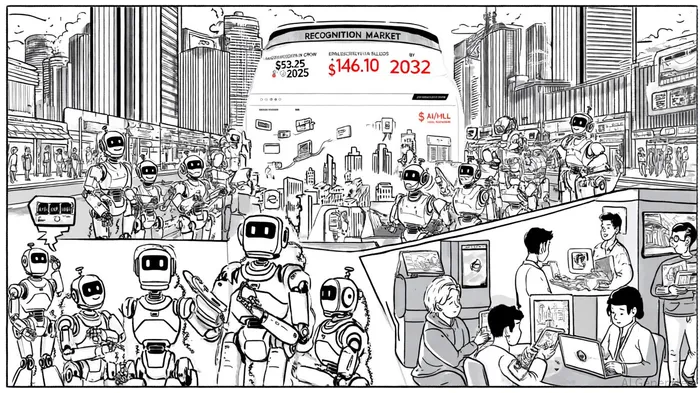
The broader image recognition market is even more dynamic. Valued at $53.25 billion in 2025, it is forecast to grow at a 15.5% CAGR, reaching $146.10 billion by 2032[5]. This expansion is fueled by AI and machine learning advancements, with tech giants like MicrosoftMSFT-- and IBMIBM-- prioritizing R&D in this space[5]. MITQ's focus on scalable, software-driven solutions aligns with this trend, though it faces stiff competition from entrenched players.
Valuation Readiness: A Mixed Picture
MITQ's market cap of $12.81 million and enterprise value of $8.64 million suggest undervaluation relative to fintech benchmarks. For firms in the $1-5M revenue bracket, fintech valuation multiples range from 3.7x to 7x revenue[6], while EBITDA multiples span 9.7x to 17.5x[6]. MITQ's negative EBITDA complicates direct comparisons, but its gross margin of 25.78% (as of September 2025)[7] hints at potential for improvement if operating efficiencies continue.
Market Positioning and M&A Dynamics
The 2025 M&A landscape for fintech and tech firms remains favorable, buoyed by private equity dry powder and expectations of interest rate cuts[6]. Yet, MITQ has not yet attracted significant acquisition interest, despite its niche expertise. This could reflect its current profitability challenges or the nascent stage of its market. For growth investors, the company's strategic alignment with AI-driven automation and real-time data processing[5] offers long-term upside, particularly in healthcare and retail applications.
Conclusion: A Calculated Bet
MITQ's Q4 2025 earnings will be a pivotal test of its valuation readiness. While the company has made strides in margin improvement and cash preservation, it must demonstrate consistent profitability to justify higher multiples. For growth investors, the key variables will be:
1. Q4 Revenue Execution: Can MITQ deliver $5.2 million, validating its guidance?
2. Margin Expansion: Will gross profit improvements translate to operating profitability?
3. Strategic Differentiation: Can MITQ leverage its sensor technology to secure high-margin contracts in AI-driven sectors?
If these questions are answered affirmatively, MITQ could emerge as a compelling long-term play in the image recognition boom. However, near-term volatility remains a risk, given its current financial metrics.





Comentarios
Aún no hay comentarios