
Assessing the Geopolitical and Supply Risks in Oil Markets Amid U.S.-Venezuela Tensions
The U.S.-Venezuela oil standoff has escalated into a high-stakes geopolitical and economic confrontation, with far-reaching implications for global energy markets. President Donald Trump's declaration of a "total and complete blockade" on sanctioned oil tankers entering or exiting Venezuela has intensified scrutiny over structural supply risks and investor positioning. While Venezuela's oil output accounts for just 1% of global supply, its strategic role in producing heavy-sour crude-a critical input for diesel-has amplified concerns about potential disruptions. This analysis explores the investment implications of these tensions, focusing on structural supply vulnerabilities, hedging strategies, and the shifting dynamics of commodity markets.
Structural Supply Disruptions and Geopolitical Risks
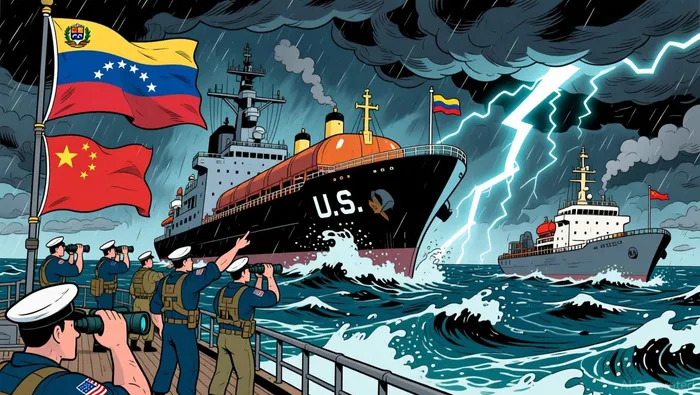
The U.S. has weaponized its naval and economic power to enforce sanctions, seizing tankers like the Panama-flagged and the shadow fleet vessel Skipper. These actions, framed as a response to alleged U.S. asset theft and a revival of the "Donroe" Doctrine, have disrupted Venezuela's ability to export oil-a lifeline for the Maduro regime. China, a key importer of discounted Venezuelan crude, has seen its independent refinery imports drop by 43.8% year-to-date, underscoring the immediate economic fallout.
Venezuela's reliance on a fleet of "zombie ships"-vessels repurposed to evade sanctions-highlights the lengths to which the regime is going to maintain exports. However, the U.S. military's readiness to intercept tankers in international waters raises the risk of broader supply chain disruptions, particularly for diesel markets. Analysts warn that a prolonged conflict or infrastructure sabotage could tighten already strained diesel supplies, exacerbating inflationary pressures.
Investor Strategies: Diversification and Hedging Mechanisms
Amid this volatility, investors are recalibrating portfolios to mitigate exposure to oil-linked risks. A key trend is the shift toward real assets like gold, which has surged to record highs above $4,300 an ounce. The World Gold Council attributes this to a combination of geopolitical tensions, a weakening U.S. dollar, and central bank demand. Gold's role as a safe haven is further reinforced by expectations of Federal Reserve rate cuts, which could erode the dollar's value and drive capital into tangible assets. In the energy sector, hedging strategies are evolving. Speculators are adopting bearish positions in Europe, while physical traders are leveraging oil futures and options to lock in prices. For instance, airlines and energy firms are increasingly using call options on jet fuel and diesel to buffer against price swings. Additionally, diversifying crude oil sourcing-such as substituting Venezuelan heavy crude with Canadian or Mexican supplies-has become a priority for refiners. Strategic petroleum reserves, including the U.S. Strategic Petroleum Reserve, are also being viewed as critical buffers.
Sector-Specific Implications: Transportation, Agriculture, and Energy
Industries reliant on diesel, such as transportation and agriculture, face acute risks. The U.S. military's blockade has already driven up diesel prices, prompting companies to adopt multi-pronged hedging strategies. These include financial instruments like futures contracts, currency forwards to manage bolivar volatility, and investments in alternative energy sources like solar and wind. For example, United Airlines has seen improved performance amid recovering transborder travel, while Frontier Airlines struggles with financial pressures.
The agricultural sector, which depends on diesel for machinery and logistics, is also adapting. Farmers are locking in fuel prices through swaps and exploring biofuels to reduce reliance on volatile markets. Meanwhile, energy companies like Chevron, which remains authorized to operate in Venezuela, are navigating a precarious balance between compliance and profit.
Conclusion: Navigating Uncertainty in a Fractured Market
The U.S.-Venezuela oil crisis underscores the fragility of global supply chains and the need for agile investment strategies. While Venezuela's oil output remains a small fraction of global demand, its symbolic and strategic role in diesel production cannot be ignored. Investors must remain vigilant, leveraging diversification, hedging tools, and real assets to navigate this turbulent landscape.
As geopolitical tensions persist, the market's resilience will depend on its ability to adapt to substitution pathways and geopolitical contingencies. For now, gold and oil futures remain central to risk management, while the long-term outlook hinges on whether a pro-Western regime in Venezuela could ease sanctions and stabilize production. In this environment, strategic positioning-rather than speculative bets-will define successful investment outcomes.





Comentarios
Aún no hay comentarios