
Assessing Geopolitical and Supply Chain Risks in the Persian Gulf After the Shahid Rajaei Port Explosion
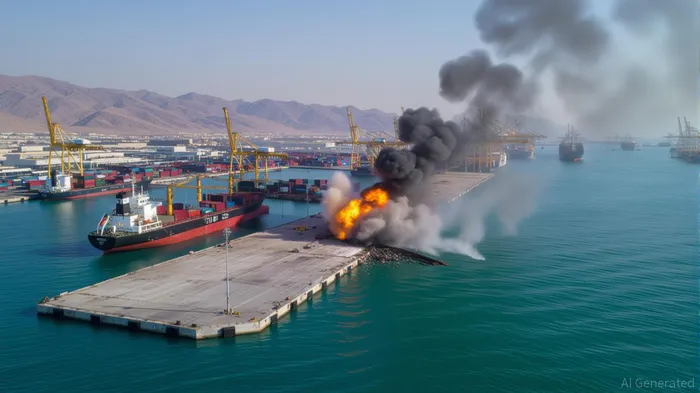
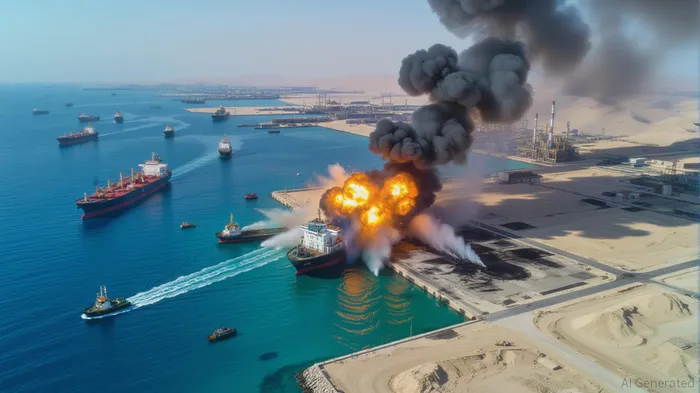
The April 26, 2025, explosion at Iran's Shahid Rajaei Port—a catastrophic event that disrupted 85% of the country's container traffic and 55% of its total trade—has become a watershed moment for the Persian Gulf. The blast, suspected to involve ammonium perchlorate stored in improperly handled containers, not only caused immediate human and environmental tolls but also exposed systemic vulnerabilities in regional infrastructure and energy supply chains. For investors, the incident underscores a critical question: How will geopolitical tensions and infrastructure fragility reshape energy and defense investment strategies in one of the world's most strategically contested regions?
Infrastructure Vulnerabilities and the Fragility of Energy Trade
The Shahid Rajaei Port explosion highlighted the precariousness of the Persian Gulf's infrastructure. As the largest maritime hub in Iran, the port's closure for nearly two weeks in early May 2025 disrupted global trade flows through the Strait of Hormuz, a chokepoint for 21 million barrels of oil per day. The incident forced logistics professionals to scramble for alternatives, with rerouted shipments increasing costs and delays.
For investors, the explosion signals a growing risk of supply chain disruptions in a region already prone to instability. The Persian Gulf's energy infrastructure, including pipelines, refineries, and ports, is increasingly vulnerable to both accidental failures and deliberate attacks. The environmental fallout from the blast—contaminated waters, toxic air pollution, and long-term ecological damage—also raises questions about the sustainability of current infrastructure practices.
The market's reaction was swift: Brent crude prices surged 2.4% to $87.60 per barrel within days, reflecting heightened fears of supply shocks. While the port resumed operations by late April, the event has prompted a reevaluation of energy infrastructure resilience. For example, Gulf states are now prioritizing investments in redundant systems, such as expanding the capacity of secondary ports like Chabahar (Iran) and Fujairah (UAE), and accelerating the development of the India-Middle East-Europe Economic Corridor (IMEC) to diversify trade routes.
Geopolitical Tensions and the New Defense Spending Landscape
The explosion occurred amid a volatile geopolitical backdrop. The Iran-Israel conflict, U.S. military interventions, and regional rivalries have already driven defense spending in the Persian Gulf to record levels. In 2024, Saudi Arabia allocated $78 billion to its defense budget—a 3.2% increase from 2023—while Israel's spending surged 65% to $46.5 billion, the largest annual jump since the Six-Day War. These trends are expected to continue, with the Middle East and North Africa (MENA) defense budget projected to reach $255.8 billion by 2029.
The explosion has further accelerated this arms race. Gulf states are now prioritizing investments in advanced air-defense systems, cyber resilience, and naval capabilities to protect critical infrastructure. For example, Saudi Arabia's Vision 2030 aims to localize 50% of defense spending by 2030, with the General Authority for Military Industries (GAMI) identifying 74 opportunities for domestic production. Meanwhile, the UAE and Qatar are expanding their partnerships with Russian and Chinese defense firms, reducing reliance on U.S. suppliers.
Strategic Investment Opportunities in a Shifting Landscape
For investors, the post-2025 landscape presents both risks and opportunities. Here are three key areas to consider:
Energy Infrastructure Resilience:
The explosion has underscored the need for robust energy infrastructure. Gulf states are now investing in redundant systems, such as dual ports and diversified storage facilities. For example, Saudi Arabia's Ras Al-Khair and Yanbu ports are being expanded to handle increased oil exports, while the UAE's Fujairah Port is positioning itself as a regional LNG hub. Investors should monitor companies involved in port modernization, such as China's COSCO Shipping, which has a stake in several Gulf ports.Defense Industrialization:
The push for self-reliance in defense production offers long-term opportunities. Saudi Arabia's GAMI, for instance, is prioritizing the localization of drones, armored vehicles, and missile systems. Companies like BoeingBA-- and Lockheed MartinLMT--, which have joint ventures with Gulf states, could benefit from this trend. Additionally, Chinese firms like Huawei are expanding 5G and cybersecurity infrastructure in the region, aligning with defense modernization goals.Renewable Energy and Decarbonization:
While the Gulf remains heavily dependent on fossil fuels, the explosion has accelerated interest in renewable energy as a buffer against geopolitical risks. The UAE's Barakah nuclear plant and Saudi Arabia's Neom megacity project, which includes solar and wind farms, are prime examples. Investors should also consider the role of green hydrogen in diversifying energy exports, as Gulf states seek to reduce their reliance on oil.
Conclusion: Navigating a High-Stakes Environment
The Shahid Rajaei Port explosion is a stark reminder of the Persian Gulf's fragility. For investors, the key takeaway is clear: Diversification is no longer optional. Energy and defense strategies must account for both supply chain disruptions and geopolitical volatility. By prioritizing infrastructure resilience, supporting regional defense industrialization, and embracing renewable energy, investors can position themselves to thrive in a region where stability is as fleeting as it is vital.
As the Gulf navigates this new era, one thing is certain: The interplay between energy, defense, and geopolitics will define the region's—and the world's—economic future. For those willing to adapt, the opportunities are as vast as the gulf itself.





Comentarios
Aún no hay comentarios