
Assessing Geopolitical Risks and Opportunities in Eastern Europe: Implications for Defense, Energy, and Tech Sectors
The Russia-Ukraine conflict, now in its fourth year, has reshaped the geopolitical and economic landscape of Eastern Europe. For investors, the war and its associated peace negotiations present a complex interplay of risks and opportunities across defense, energy, and technology sectors. While the conflict has intensified volatility, it has also accelerated strategic investments in resilience, innovation, and reconstruction. This analysis examines how investors can navigate these dynamics to capitalize on emerging opportunities while mitigating risks.
Defense Sector: A Surge in Demand, Persistent Supply Chain Challenges
The war has driven a dramatic increase in defense spending across Europe and the United States. According to a Reuters report, European defense tech startup investment surged over 500% between 2021 and 2024, driven by the urgent need for advanced military solutions. Ukraine's war effort has highlighted the importance of long-range precision weapons, drones, and cyber capabilities, creating a fertile ground for defense technology firms. However, the sector faces significant challenges. A McKinsey analysis notes that fragmented supply chains and underinvestment in post-Cold War defense industries have exposed vulnerabilities, particularly in the U.S. and Europe.
For investors, the key opportunity lies in supporting companies that can scale production of critical technologies while addressing supply chain bottlenecks. 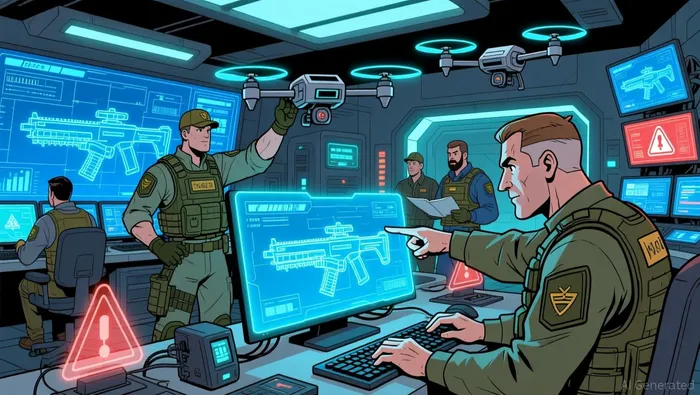 Yet, risks remain: Russia's refusal to engage in meaningful peace talks and its continued military operations suggest the conflict could persist for years, prolonging demand but also increasing uncertainty.
Energy Sector: Reconstruction and Renewables as a Double-Edged Sword
The EU has expanded its Ukraine Investment Framework to €9.5 billion, with a focus on modernizing energy infrastructure and accelerating renewable projects. For example, Notus's 120 MW wind farm in Odesa and Rengy Development's solar and battery storage installations exemplify the shift toward decentralized energy systems. By 2024, Ukraine had added nearly 1,500 MW of solar capacity, a critical step in reducing reliance on centralized, vulnerable infrastructure.
However, the sector is not without risks. Over 63,000 energy facilities have been destroyed or damaged since 2022, and Russian attacks on energy infrastructure remain a persistent threat. Geopolitical dependencies also linger: while Ukraine has pivoted toward U.S. LNG imports and European partnerships, its energy security remains fragile. Investors must weigh the long-term potential of renewable projects against the short-term volatility of infrastructure vulnerabilities and the possibility of renewed hostilities.
Technology Sector: Innovation Amid War, but Governance Risks Loom
Ukraine's technology sector has defied the odds. Despite the destruction of civilian infrastructure and workforce disruptions, IT services and software R&D have continued to grow. The country's highly educated workforce and alignment with EU standards make it an attractive destination for investors. Defense tech startups, in particular, have thrived, with military veterans playing a pivotal role in driving innovation.
Yet, governance risks persist. Corruption, an unreliable judicial system and wartime economic controls complicate investment decisions. The World Bank estimates $20 billion in energy sector damage alone, underscoring the scale of reconstruction needed. For investors with a high risk tolerance, early-mobilizing opportunities in Ukraine's tech ecosystem could yield substantial returns, but patience and a long-term horizon will be essential.
Strategic Positioning for Investors
The Russia-Ukraine conflict has created a paradox: it has heightened geopolitical risks while simultaneously unlocking opportunities in defense, energy, and technology. Investors must adopt a dual strategy:
1. Short-Term Focus: Prioritize sectors directly tied to the war effort, such as defense tech and energy reconstruction, where demand is immediate and well-funded.
2. Long-Term Vision: Invest in projects that align with Ukraine's post-war recovery and broader European integration, such as renewable energy infrastructure and digital innovation.
As stated by European leaders, unity in supporting Ukraine remains critical. However, Russia shows no signs of ceding its maximalist demands. Investors must remain agile, balancing the urgency of the present with the promise of a post-conflict future.







Comentarios
Aún no hay comentarios