
Assessing Geopolitical Risks in Global Oil Markets: Strategic Opportunities Amid Supply Uncertainty
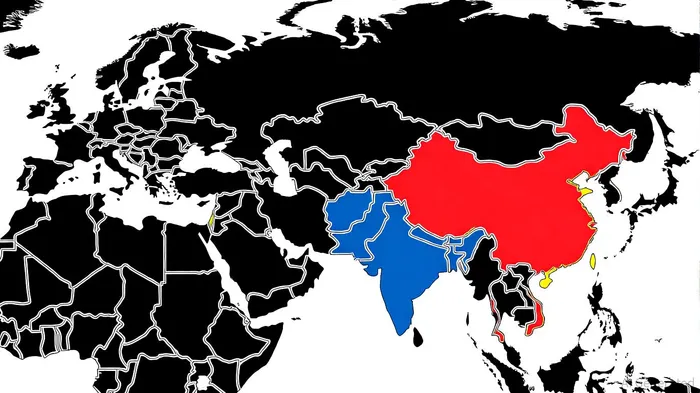
The global oil market in 2025 is a theater of paradoxes: constrained by geopolitical tensions yet pressured by oversupply risks, driven by OPEC+ policy dilemmas yet shaped by U.S. sanctions and shifting trade dynamics. For investors, this volatility has created a unique landscape where geopolitical-driven energy inflation intersects with oil equity valuations and commodity positioning. Understanding these dynamics is critical to identifying strategic opportunities amid uncertainty.
Geopolitical Tensions and Supply Chain Fragility
The Middle East and Eastern Europe remain epicenters of oil market instability. Israeli-Iranian clashes in June 2025, including strikes on June 13 and 21, triggered a 14.7% spike in Brent crude prices to $79 per barrel within a week, underscoring the region's role as a flashpoint for global energy security[1]. While a temporary ceasefire eased immediate risks, the Strait of Hormuz—responsible for 35% of seaborne oil trade—remains a critical vulnerability. A prolonged closure could push prices to $100 per barrel or higher, according to risk analysts[5].
OPEC+'s strategic paralysis further complicates the outlook. The coalition's decision to delay 2.2 million barrels per day of production cuts reflects a fragile balancing act: maintaining discipline risks losing market share to non-OPEC+ producers like the U.S. and Brazil, while increasing output could exacerbate price declines already threatening fiscal breakeven thresholds in Saudi Arabia and Russia[1]. Internal compliance issues, with Iraq and Kazakhstan frequently exceeding quotas, have weakened OPEC+'s ability to stabilize prices[3].
Meanwhile, U.S. sanctions on Russian oil exports—targeting 25% of its crude shipments via restrictions on maritime insurance and petroleum services—have added another layer of complexity[1]. These measures, combined with secondary sanctions complicating payments from China and Turkey, have forced Russia to pivot toward India and China for oil sales[4]. Citigroup analysts argue that such interventions, alongside OPEC+ hesitancy, will keep prices elevated through 2025[6].
Energy Inflation and Oil Equity Valuations
Geopolitical-driven energy inflation has created divergent impacts on oil equity valuations. A global vector autoregressive (GVAR) study reveals that a 1% increase in geopolitical risk—particularly "acts" like military escalations—correlates with sharp declines in Eurozone equity markets, while U.S. markets show relative resilience[2]. For oil equities, Brent crude's projected range of $70–$85 per barrel in 2025 reflects this duality: short-term shocks from conflicts or sanctions can push prices to $90, but OPEC+ spare capacity and U.S. tariff threats may cap long-term gains[4].
Emerging markets present a mixed picture. While China's oil demand is expected to peak by 2027 due to electric vehicle adoption and natural gas shifts, India and Southeast Asia remain growth drivers[2]. This regional disparity has led to uneven performance in energy ETFs. Midstream energy ETFs, which focus on infrastructure and transportation, have attracted inflows due to their stable cash flows and higher yields, contrasting with outflows in consumer discretionary sectors[5].
Strategic Investment Opportunities
Investors navigating this landscape are increasingly favoring strategies that hedge against macroeconomic uncertainty. Hedge funds, for instance, have amplified net-long positions in West Texas Intermediate (WTI) crude, anticipating supply disruptions from Middle East conflicts and Ukrainian drone attacks on Russian infrastructure[1]. Goldman Sachs notes that diesel markets, supported by depleted global inventories and refining constraints, offer indirect tailwinds for crude prices[3].
Sector rotation and thematic ETFs are also gaining traction. Energy sector ETFs have outperformed industrials and healthcare, reflecting capital reallocation toward inflation-resistant assets[4]. Diversified ETFs with exposure to both upstream and downstream energy segments are particularly favored, as they balance volatility in exploration with stability in refining and distribution[5].
Conclusion
The 2025 oil market is defined by a fragile equilibrium: geopolitical risks drive energy inflation and price volatility, while OPEC+ and U.S. policy decisions shape long-term supply dynamics. For investors, the path forward lies in strategic positioning—leveraging hedge fund agility, ETF diversification, and sector-specific insights to capitalize on emerging opportunities. As the May 2025 OPEC+ meeting approaches, the ability to navigate this uncertainty will separate resilient portfolios from those exposed to the next wave of shocks.





Comentarios
Aún no hay comentarios