
Assessing Geopolitical Risk Premium in Oil Markets Amid U.S. Pressure on Venezuela and Escalating Shadow Fleet Conflicts
The global oil market in 2025 is increasingly shaped by asymmetric geopolitical risks, as U.S. sanctions and military actions against Venezuela's oil sector intersect with broader conflicts over shadow fleet logistics. These dynamics are not only disrupting supply chains but also creating unique investment opportunities for those attuned to the interplay of policy, market structure, and strategic resource control.
Venezuela's Oil Sector Under Siege
The U.S. blockade of Venezuelan oil tankers, including the high-profile seizure of the Skipper in late 2025, has crippled the country's ability to export crude. According to the International Energy Agency, Venezuela's oil production plummeted to 860,000 barrels per day in December 2025, down from over 1 million barrels in September of the same year. This collapse is driven by the Maduro regime's reliance on shadow tankers-often flagged in jurisdictions like Panama or Singapore-to bypass sanctions and ship crude to China, its primary buyer. However, U.S. enforcement actions have forced as many as 75 tankers to idle in the Caribbean or turn away from Venezuelan ports to avoid seizure. With storage capacity nearing exhaustion, analysts warn that PDVSA, Venezuela's state oil company, may soon be forced to shut down wells, compounding the supply shock.
Shadow Fleet Vulnerabilities and Global Spillovers
The U.S. pressure on Venezuela is part of a broader strategy to disrupt the shadow fleet-a network of tankers used by sanctioned regimes to evade Western sanctions. This fleet, which includes vessels from Russia, Iran, and Venezuela, has grown in scale to maintain oil flows to buyers in China, India, and other markets. However, the recent enforcement actions have exposed vulnerabilities in this system. For instance, Ukraine's drone attacks on Russian-linked tankers and European efforts to enforce maritime sanctions highlight the heightened security risks associated with these operations. The shadow fleet's reliance on opaque ownership structures and deceptive flagging practices makes it a prime target for geopolitical escalation, further amplifying market volatility.
Asymmetric Investment Opportunities
The resulting disruptions are creating asymmetric opportunities in energy commodities. First, real assets like gold have surged over 60% year-to-date as investors hedge against inflation and geopolitical uncertainty. 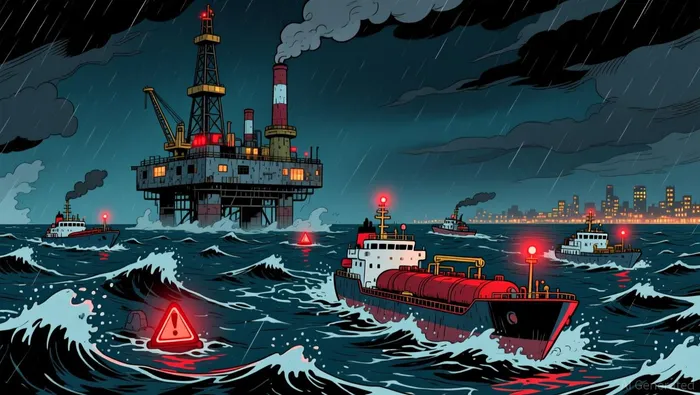 Second, U.S. crude oil exports have risen to 4.66 million barrels per day, capitalizing on the void left by declining Venezuelan and Russian supplies. Companies like Chevron (CVX), which operate under U.S. government licenses in Venezuela, are also positioned to benefit from continued access to the country's vast reserves.
Meanwhile, China and India are leveraging the situation to secure discounted oil from sanctioned sources. For example, both nations have increased purchases of Venezuelan and Russian crude, which is traded at significant discounts due to sanctions-related risks. This trend is particularly advantageous for energy-importing economies seeking to reduce costs amid global inflationary pressures.
Risks and Strategic Considerations
Despite these opportunities, investors must remain cautious. The U.S. campaign risks pushing Venezuela closer to China and Russia, creating alternative supply chains that could undermine Western influence. Additionally, sustained enforcement of the Venezuela blockade could push oil prices higher, with benchmarks potentially reaching $61–63 per barrel. The diesel market, in particular, faces inflationary risks due to Venezuela's role as a key supplier of heavy crude, a critical input for diesel production.
Conclusion
The interplay of U.S. sanctions, shadow fleet conflicts, and Venezuela's oil crisis underscores the importance of a nuanced approach to energy investing. While real assets and U.S. energy exports offer clear advantages, the risks of geopolitical escalation and supply chain reconfiguration cannot be ignored. Investors who can navigate these asymmetries-by hedging against volatility, capitalizing on discounted commodities, and monitoring policy shifts-stand to gain significant returns in an increasingly fragmented oil market.







Comentarios
Aún no hay comentarios