
Assessing the Geopolitical Risk Premium in Defense and Aerospace Stocks Amid Escalating NATO-Russia Tensions
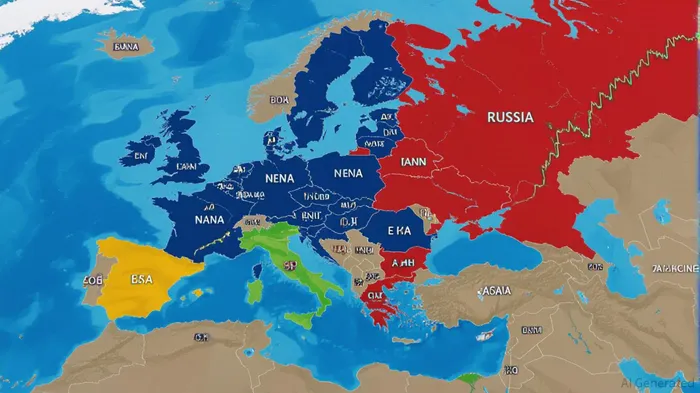
The escalating tensions between NATO and Russia in 2025 have created a volatile yet opportunity-rich environment for investors in the defense and aerospace sectors. The recent interception of Russian drones by Polish forces, coupled with NATO's invocation of Article 4 and Russia's aggressive military modernization, underscores a new phase of geopolitical risk. This analysis examines how these dynamics are reshaping risk premiums in defense stocks, drawing parallels to historical precedents like the Cold War and the 2014 Crimea crisis, while offering strategic insights for investors navigating this complex landscape.
The Current Landscape: A New Cold War?
NATO's reinforcement of its eastern flank, including doubling multinational battlegroups and committing to 5% GDP defense spending by 2035, signals a long-term strategic shift[1]. Simultaneously, Russia's 2025 military production plans—nearly 2,500 high-precision missiles, 250 T-90M tanks, and advanced aircraft—highlight its focus on asymmetric capabilities[3]. These developments mirror Cold War-era rearmament cycles, where defense budgets and industrial output became tightly linked to geopolitical posturing[5].
The recent Zapad-2025 military exercises in Belarus, which included hypersonic missile drills and nuclear scenarios, further heighten regional instability[1]. Poland's invocation of Article 4 after shooting down Russian drones—a first for NATO since the Ukraine invasion—has raised fears of accidental escalation[3]. Such events amplify demand for advanced defense systems, benefiting companies like Northrop GrummanNOC-- and Airbus, which reported 9% and 13% sequential revenue growth in Q2 2025, respectively[4].
Financial Market Response: Defense Stocks as Safe Havens
Defense and aerospace equities have surged amid heightened tensions. The Transatlantic Defense ETF (NATO) gained 35% year-to-date in 2025, while European-focused ETFs like EUAD and SHLD rose 70% and 55%, driven by governments' renewed commitment to defense spending[3]. This outperformance reflects a recalibration of risk premiums, as investors price in prolonged conflict and sanctions-driven supply chain disruptions.
Russia's aerospace sector, meanwhile, faces collapse. Sanctions have crippled its commercial aviation industry, with BoeingBA-- delivering 57 aircraft in August 2025—nearly four times Russia's total output since 2022[6]. The lack of Western components has pushed Russian civil aviation to a “critical point,” creating a stark contrast with NATO-aligned firms' growth trajectories[6].
Historical Parallels: Lessons from the Cold War and Crimea Crisis
The 1980s Cold War defense buildup offers a cautionary yet instructive precedent. U.S. defense spending peaked at over 6% of GDP under Reagan, fueling consolidation in the sector and boosting firms like Lockheed MartinLMT-- and Raytheon[5]. Similarly, the 2014 Crimea crisis triggered a 1.5% increase in European defense budgets, with Eastern European nations leading the charge[2]. These historical patterns suggest that sustained geopolitical tensions drive long-term capital allocation to defense, even as short-term volatility persists.
During the 2014 crisis, Russian defense stocks saw amplified risk premiums due to sanctions and uncertainty, with investors demanding higher returns for holding exposed assets[3]. Today's environment, however, is more globalized and interconnected, with NATO's 5% GDP target and U.S.-Saudi arms deals (valued at $142 billion in 2025) creating broader tailwinds for the sector[5].
Strategic Sector Positioning for Investors
For investors, the key lies in balancing exposure to near-term volatility with long-term secular trends. Here are three strategic considerations:
Prioritize Diversified Defense Contractors: Firms like Northrop Grumman and CAECAE--, which reported 28% and 13% YoY EPS growth in Q2 2025, benefit from both NATO modernization and international arms sales[4]. Their diversified revenue streams mitigate risks from any single conflict.
Monitor Geopolitical Catalysts: Events such as Zapad-2025 drills or further Article 4 invocations could trigger short-term selloffs in broader markets but may create buying opportunities in defense stocks. Historical data shows that defense sectors outperform equities by 8–12% during acute geopolitical spikes[1].
Factor in Sanctions and Supply Chain Shifts: The aerospace consulting services market, projected to grow at 14.43% CAGR through 2033, will play a critical role in helping firms adapt to sanctions-driven supply chain reconfigurations[3]. Investors should favor companies with expertise in autonomous systems and cybersecurity, areas prioritized by NATO's 2035 strategy[1].
Conclusion: Navigating Uncertainty with Discipline
The current NATO-Russia standoff resembles a new Cold War in its strategic depth and economic implications. While the risk of direct conflict remains low, the geopolitical risk premium embedded in defense stocks reflects a consensus view of prolonged tension. Investors who adopt a disciplined, long-term approach—leveraging historical precedents and sector-specific insights—can capitalize on this environment while mitigating downside risks. As the 2025 NATO Summit in The Hague demonstrated, the alliance's commitment to collective defense is not merely a political statement but a financial opportunity[1].





Comentarios
Aún no hay comentarios