
Assessing Geopolitical Risk in Emerging Markets: The Ukraine Conflict as a Catalyst for Strategic Reallocation
The Russia-Ukraine war has reshaped the investment landscape in Eastern Europe, forcing a recalibration of risk assessments and capital allocation strategies. As the conflict enters its fourth year, the recent escalation of Russian air attacks on Kyiv—targeting critical infrastructure and civilian areas—has underscored the fragility of market stability in the region. These strikes, , have deepened investor caution. Yet, amid the volatility, resilient sectors such as renewable energy and agriculture are emerging as potential safe havens for capital.
Geopolitical Uncertainty and Investor Behavior
The war has triggered a pronounced shift toward risk-averse strategies. Investors are increasingly favoring defensive assets like gold, government bonds, and low-volatility equities, while reducing exposure to regions perceived as vulnerable to conflict. , driven by fears of prolonged war, inflation, and economic stagnation. , such as U.S.-Russia summits or escalations in military strikes.
The lack of progress in peace negotiations—particularly Russia's insistence on hosting talks in Moscow—has further complicated investor decision-making. For example, the 's 2024 summit with Putin, though framed as a “listening exercise,” yielded no tangible results and was followed by intensified drone and missile strikes on Ukraine. Such events have reinforced the perception that geopolitical risks in Eastern Europe are not only persistent but asymmetric, with outcomes difficult to predict.
Resilient Sectors: Agriculture and Renewable Energy
Despite the challenges, certain sectors in Eastern Europe have demonstrated resilience. Agriculture remains a cornerstone of Ukraine's economy, with the country's Black Sea ports facilitating the export of critical commodities like grain and steel. However, climate-related disruptions—such as prolonged droughts and heat waves—pose new risks. To mitigate these, investors are turning to climate-smart technologies, including drip irrigation and drought-resistant seeds. The European Bank for Reconstruction and Development () has supported initiatives like Agtivate, a platform promoting sustainable agrifood investments in Eastern Europe and Central Asia.
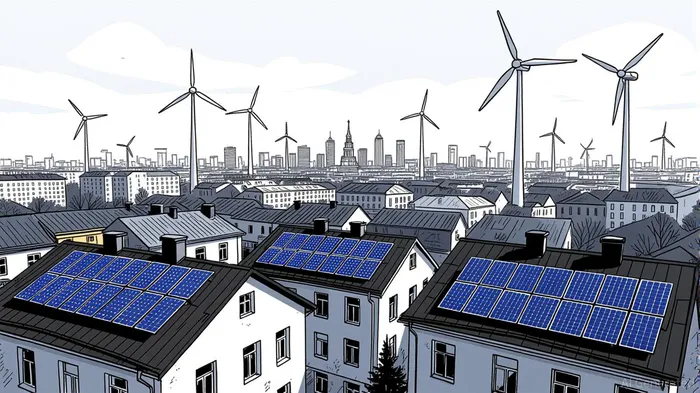
Renewable energy is another sector gaining traction. Ukraine's push to reduce reliance on Russian gas has accelerated solar and wind projects, with the EU's REPowerEU Plan providing critical funding. By 2025, , a target supported by private investments in solar farms and battery storage. Companies like Ørsted and NextEra Energy are expanding offshore wind projects in the North Sea, while TeslaTSLA-- and Fluence EnergyFLNC-- are supplying grid-stabilizing storage solutions.
Strategic Reallocation: Mitigating Risk While Capitalizing on Opportunities
Investors navigating this landscape must balance short-term risk mitigation with long-term growth potential. Here are three strategies:
Diversification Across Defensive and Resilient Sectors: Allocate capital to sectors less sensitive to geopolitical shocks, such as renewable energy and digital infrastructure, while hedging against currency volatility through diversified portfolios. For example, blending investments in Ukrainian solar projects with Polish wind farms can spread risk while tapping into regional growth.
Leverage Policy Frameworks and Blended Finance: The EU's Ukraine Investment Framework and REPowerEU Plan offer loan guarantees and blended finance to de-risk projects. Investors should prioritize initiatives with strong public-private partnerships, such as energy grid modernization or green hydrogen production.
Adopt ESG and Impact-Driven Capital: Environmental, Social, and Governance () investments have shown lower volatility during crises. Firms with strong ESG profiles, such as those focused on sustainable agriculture or clean energy, are better positioned to withstand geopolitical shocks.
Conclusion: A Path Forward
The Ukraine conflict has exposed the vulnerabilities of Eastern European markets but also revealed opportunities for strategic reallocation. While the region's economic resilience is tested by labor shortages, inflation, and energy disruptions, sectors like agriculture and renewable energy offer a path to long-term stability. Investors who prioritize risk mitigation through diversification, policy alignment, and ESG criteria can navigate the uncertainties of 2025 and beyond. As the war continues to reshape global supply chains and investor sentiment, Eastern Europe's ability to adapt will determine its role in the post-conflict economic order.
For those willing to act decisively, the region's challenges are not insurmountable. The key lies in identifying sectors with structural growth potential and deploying capital with a long-term horizon. In a world where geopolitical risks are no longer confined to the periphery, Eastern Europe's emerging markets demand both caution and conviction.







Comentarios
Aún no hay comentarios