
Assessing Geopolitical Risk and Defense Sector Opportunities Amid Escalating IS Threats in Post-Assad Syria
The fall of Bashar al-Assad's regime in late 2024 has reshaped Syria's geopolitical landscape, creating both vulnerabilities and opportunities in its defense sector. As the Islamic State (ISIS) regroups in the power vacuum left by the Assad era, the new interim government-led by Ahmed al-Sharaa-faces a dual challenge: stabilizing a fractured nation while countering a resurgent extremist threat. This dynamic has drawn renewed international attention, with U.S. military coordination, Gulf investments, and Syria's recent integration into the Global Coalition to Defeat ISIS signaling a pivotal shift in regional security strategies. For investors, the interplay of geopolitical risk and defense sector resilience presents a complex but potentially lucrative arena.
The Evolving ISIS Threat and Regional Security Dynamics
ISIS remains a significant threat in post-Assad Syria, with over 2,500 active fighters operating in the region as of 2025, alongside thousands detained in Syrian prisons or camps. The group's resurgence is tied to the fragmented political environment, where the interim government led by Hayat Tahrir al-Sham (HTS) struggles to extend control beyond Damascus and Idlib. Sectarian tensions in areas like al-Suwayda and the coast have further destabilized the country, creating fertile ground for extremist recruitment.
The U.S. military presence in Syria, though reduced to 700 troops from 2,000, continues to play a critical role in containing ISIS through intelligence sharing and support for the Syrian Democratic Forces (SDF) as research shows. However, the risk of a U.S. withdrawal remains a wildcard. As one analysis warns, "any US withdrawal would remove this critical pressure, likely enabling ISIS to reconstitute and expand its reach." This underscores the fragility of the current security architecture and the need for sustained international cooperation.
Defense Sector Resilience and Emerging Investment Trends
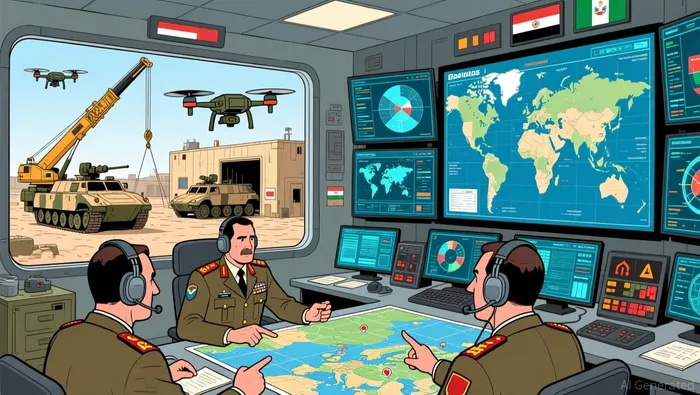 Syria's formal membership in the Global Coalition to Defeat ISIS in November 2025 marks a strategic pivot toward Western and Gulf allies, unlocking new avenues for defense sector investment. The U.S. and Gulf Cooperation Council (GCC) members, including Saudi Arabia and the UAE, have temporarily paused Caesar Act sanctions to facilitate investments in Syria's stabilization and counterterrorism infrastructure. This shift has already spurred $28 billion in announced investments over 10 months, with a focus on infrastructure, energy, and telecommunications.
Key players in this emerging market include Saudi firms like ACWA Power and STC, which have committed $6 billion to energy and telecom projects. Meanwhile, Turkey has positioned itself as a supplier of defense technology, offering drones, land systems, and naval platforms to Syria's security forces. These developments highlight a broader trend: regional actors are leveraging economic and military partnerships to counter Iranian influence and secure strategic footholds in post-Assad Syria.
The defense sector's resilience is further bolstered by the integration of the SDF into Syria's national security framework. Despite tensions with Turkey, the SDF remains a critical partner in counter-ISIS operations, supported by U.S. military advisors and logistics. The U.S. has also prioritized managing detention facilities holding 10,000 ISIS fighters and 46,000 supporters, recognizing the long-term risks of unsecured prisoner populations.
Geopolitical Risks and Strategic Considerations
While the defense sector shows promise, investors must navigate significant geopolitical risks. The interim government's ties to former jihadist factions and its reliance on pro-government militias with sectarian affiliations raise concerns about its long-term reliability as a counterterrorism partner. Additionally, the ideological complexities of HTS's leadership-many of whom previously commanded extremist groups-complicate international engagement.
Regional rivalries further complicate the landscape. Turkey's operations in northern Syria and Israel's military activities in the south create friction points that could destabilize the fragile equilibrium. For instance, clashes between HTS-aligned forces and Druze and Alawite factions in al-Suwayda have resulted in over 4,600 fatalities in five provinces, accounting for 60% of conflict-related deaths nationwide. These tensions underscore the need for careful diplomacy and security sector reforms to prevent a resurgence of violence.
Conclusion: Balancing Risk and Opportunity
The post-Assad era in Syria presents a paradox: a nation in transition, grappling with extremist threats and internal divisions, yet attracting unprecedented international investment and military cooperation. For the defense sector, the key lies in balancing short-term security needs with long-term stability. The U.S. and Gulf-backed initiatives to integrate Syria into global counterterrorism networks, coupled with infrastructure investments, offer a blueprint for resilience. However, success hinges on addressing the interim government's legitimacy challenges and ensuring that security partnerships do not exacerbate regional rivalries.
As one expert notes, Syria's participation in the coalition has encouraged intelligence and military coordination with the U.S. and its allies, enhancing the country's capacity to combat ISIS and other extremist groups. For investors, the path forward requires a nuanced understanding of both the risks and the strategic opportunities in a region where geopolitics and defense innovation are inextricably linked.







Comentarios
Aún no hay comentarios