
Assessing Geopolitical Risk and Commodity Exposure in a Volatile Iran Protests Scenario
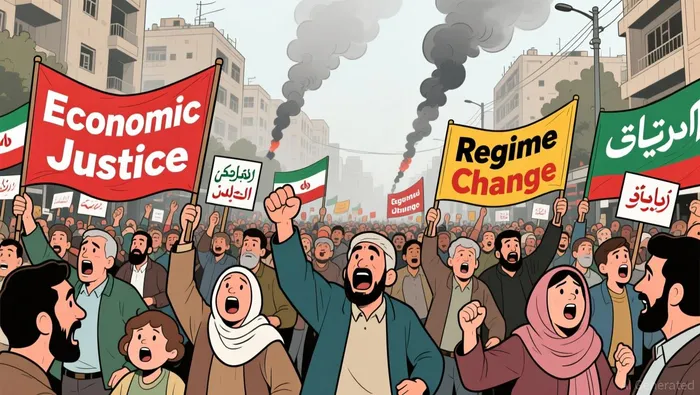
The 2026 Iranian protests, driven by economic despair and political repression, have escalated into a systemic crisis with far-reaching implications for global markets. As the rial collapsed to over 1.35 million to the dollar and inflation surged to 42.4% in 2025, the protests have shifted from economic grievances to broader calls for regime change, destabilizing key sectors and amplifying geopolitical risks. This analysis examines the interplay between Iran's internal turmoil, its impact on regional commodities, and the vulnerabilities in global supply chains.
Economic Instability and Its Drivers
Iran's economic collapse is rooted in a confluence of factors: international sanctions, mismanagement of oil revenues, and a devalued currency. The rial's freefall has rendered imports of essential goods unaffordable, while domestic producers face paralysis due to a lack of foreign exchange. According to a report by , the government's contractionary budget and inability to address inflation have eroded purchasing power, fueling widespread unrest. The bazaar merchants, traditionally a pillar of regime support, have joined the protests, signaling a loss of social cohesion.
 The oil sector, once a cornerstone of Iran's economy, is now under strain. Chinese independent refiners, increasingly reliant on Iranian crude as U.S. actions redirect Venezuelan exports to American markets, are amplifying Iran's role in global oil supply. However, the government's strategic investments in Venezuela's oil infrastructure-designed to bypass sanctions- now face uncertainty following the removal of the Maduro regime. These politically motivated projects, lacking commercial viability, threaten to undermine Iran's influence within OPEC+ and its ability to sustain oil exports.
Geopolitical Risks and Supply Chain Vulnerabilities
The Strait of Hormuz, a critical chokepoint for 20 million barrels of oil and significant LNG shipments daily, remains a flashpoint. Iran's parliamentary measure to consider closing the strait, coupled with heightened U.S.-Iran tensions, has raised the specter of disruptions. A blockade would trigger immediate price spikes, with cascading effects on energy-dependent industries like pulp and paper. For instance, rerouting shipments through the Cape of Good Hope could add 10–12 days to transit times, inflating freight costs and insurance premiums.
Beyond oil, non-oil sectors face indirect disruptions. While specific statistics on agricultural or metal exports are scarce, the economic environment suggests significant strain. The International Monetary Fund estimates that inflation will remain above 40% in 2026, crippling the affordability of imported inputs for agriculture and industrial production. The collapse of the rial to 1.47 million to the dollar has further hampered trade, with Tehran's bazaars effectively shutting down. These conditions threaten to destabilize regional supply chains, particularly in agriculture and metals, where Iran's role as a transit hub for Central Asian goods could be compromised.
Strategic Implications for Investors
For investors, the crisis underscores the need to reassess exposure to energy markets and regional trade corridors. The Strait of Hormuz's vulnerability necessitates contingency planning, including diversification of energy sources and hedging against price volatility. Similarly, the erosion of Iran's non-oil export capacity-exacerbated by sanctions and internal mismanagement-highlights risks in sectors reliant on regional trade, such as agriculture and metals.
The geopolitical landscape is further complicated by external actors. U.S. and Israeli statements on the protests have heightened tensions, while China's dependence on Iranian oil through the strait has prompted diplomatic pressure. These dynamics suggest that Iran's instability could trigger broader regional conflicts, with knock-on effects for global supply chains.
Conclusion
Iran's 2026 protests represent a systemic crisis with profound implications for global markets. The interplay of economic collapse, geopolitical risks, and supply chain vulnerabilities demands a nuanced approach to risk management. Investors must prioritize diversification, monitor developments in the Strait of Hormuz, and factor in the potential for cascading disruptions in energy and non-oil sectors. As the world grapples with the fragility of interconnected supply chains, resilience-rather than reliance-will define successful strategies in this volatile environment.







Comentarios
Aún no hay comentarios