
Assessing Geopolitical and Regulatory Risks in European Equities
The European equity market in late 2025 faces a dual challenge: escalating U.S.-Iran tensions and the U.S. government's political pressure on the Federal Reserve. These factors have created a volatile environment, forcing investors to reassess risk exposure and strategic positioning. This analysis synthesizes recent developments to evaluate how geopolitical and regulatory risks are reshaping European equities, with a focus on sectoral vulnerabilities, regulatory responses, and the interplay between U.S. policy and global market dynamics.
Geopolitical Risks: Energy, Inflation, and Sectoral Volatility
The U.S.-Iran conflict has intensified fears of a Strait of Hormuz closure, a critical oil transit chokepoint. According to a Reuters report, European shares, including the STOXX 600 index, have fallen amid concerns over energy supply disruptions and rising oil prices. Energy importers like Germany and France face heightened macroeconomic pressure, as inflationary risks delay central bank rate cuts and strain consumer spending.
Sectoral performance has diverged sharply. Energy and defense stocks have gained traction, with companies like Dassault Aviation and Leonardo benefiting from heightened geopolitical uncertainty. Conversely, travel and leisure sectors have underperformed due to energy cost pressures and reduced consumer confidence. Defensive sectors such as utilities and consumer staples, however, have shown relative stability, offering a hedge against market volatility.
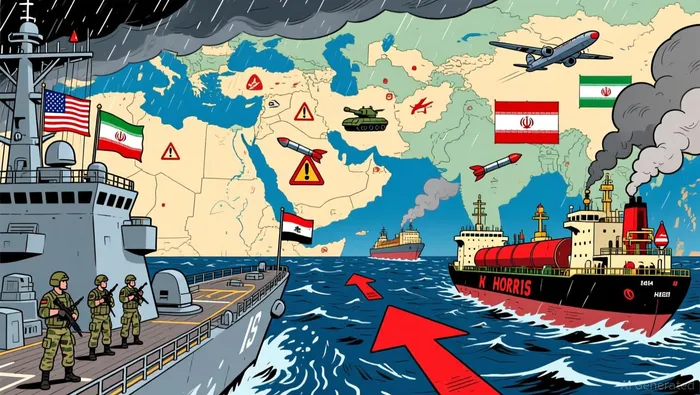
The global energy system has demonstrated resilience, with spare production capacity from Saudi Arabia and the UAE mitigating immediate supply risks. Yet, long-term uncertainties persist, particularly if regional conflicts escalate or trade routes are disrupted.
Regulatory Responses: Sanctions and Strategic Alignment
European regulators have intensified sanctions against Iran, aligning with U.S. and UN policies. The EU reimposed nuclear-related sanctions in September 2025, emphasizing its commitment to preventing Iran's nuclear ambitions. Switzerland further expanded its measures in December 2025, restricting trade in dual-use items and surveillance technologies. These actions reflect a broader geopolitical strategy to counter Iran's destabilizing activities while reinforcing international obligations.
EU foreign policy chief Kaja Kallas has signaled readiness to propose additional sanctions in response to Iran's human rights abuses and military support for Russia. Such regulatory shifts not only heighten geopolitical risks but also create compliance challenges for European firms operating in energy, defense, and technology sectors.
U.S. Pressure on the Fed: Policy Uncertainty and Market Spillovers
The U.S. government's political pressure on the Federal Reserve has introduced further uncertainty. According to a CNN report, Fed Chair Jerome Powell faced threats of criminal indictment from the Trump administration over testimony related to a Fed building renovation project. This erosion of central bank independence has raised investor concerns about the Fed's ability to respond to inflationary shocks driven by energy price volatility.
The Fed's decision to hold rates steady at 4.25% to 4.5% in June 2025 underscores its cautious approach amid geopolitical and economic uncertainties. However, the U.S. dollar's muted response to the crisis has weakened its safe-haven status, complicating global capital flows. For European equities, this creates a dual challenge: rising energy costs and delayed rate cuts, which could prolong inflationary pressures and dampen corporate earnings.
Strategic Positioning for Investors
In this environment, investors must prioritize resilience and diversification. Defensive sectors like utilities and consumer staples offer stability, while energy and defense stocks provide exposure to inflationary tailwinds. Safe-haven assets such as gold and government bonds have rallied, reflecting heightened risk aversion.
However, regulatory and geopolitical risks remain underpriced in many markets. As stated by JPMorgan's analysis, investors should prepare for prolonged volatility by allocating to uncorrelated assets and hedging against currency and commodity shocks. European equities in energy-importing nations, particularly those with exposure to oil and gas, remain vulnerable to supply chain disruptions.
Conclusion
The interplay of U.S.-Iran tensions, regulatory actions, and U.S. pressure on the Fed has created a complex risk landscape for European equities. While energy and defense sectors offer short-term resilience, long-term success will depend on navigating regulatory compliance, inflationary pressures, and geopolitical spillovers. Investors must adopt a strategic, diversified approach to mitigate these risks and capitalize on emerging opportunities in a fragmented global market.







Comentarios
Aún no hay comentarios