
Assessing the Geopolitical and Market Impacts of North Korea's Advancing Missile Capabilities
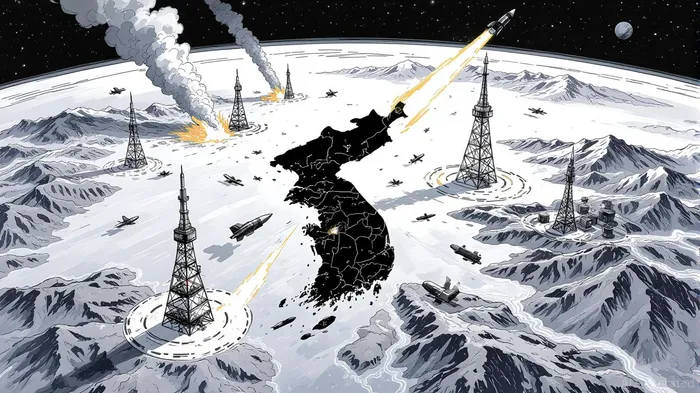
North Korea’s accelerating missile and nuclear advancements in 2025 are reshaping the geopolitical and economic landscape of Strategic Asia, creating both risks and opportunities for defense and aerospace sectors. From the development of nuclear-powered submarines to hypersonic glide vehicles, Pyongyang’s strategic modernization efforts are forcing regional allies like South Korea, Japan, and India to rethink their defense postures. For investors, this dynamic environment demands a nuanced understanding of how technological innovation, geopolitical alliances, and market trends intersect.
Geopolitical Implications: A Shifting Balance of Power
North Korea’s recent unveiling of a second uranium enrichment facility and a nuclear-powered strategic guided missile submarine underscores its commitment to expanding its nuclear arsenal and delivery systems [1]. These developments, coupled with military cooperation with Russia—including access to advanced missile and space technologies—have elevated Pyongyang’s strategic position [2]. Analysts warn that this partnership could destabilize the region, particularly as North Korea integrates Russian-designed systems like the KN-23 missile, which now boasts enhanced precision [3].
South Korea’s response has been twofold: bolstering self-reliant defense capabilities and recalibrating its alliance with the United States. The establishment of the ROK Strategic Command (ROKSTRATCOM) reflects Seoul’s push to integrate advanced weapons systems, including the KF-21 Boramae fighter jet and AI-driven missile defense platforms [4]. However, this shift risks creating friction with U.S. extended deterrence guarantees, as South Korea increasingly prioritizes unilateral capabilities [5]. Meanwhile, North Korea’s dismissive stance toward inter-Korean dialogue—epitomized by Kim Yo Jong’s rejection of South Korean overtures—has further entrenched a security dilemma [6].
Market Opportunities: Defense and Aerospace Sector Expansion
The Asia-Pacific defense aerospace market is poised for significant growth, driven by heightened tensions and technological innovation. The missile tracking system market alone is projected to expand from $13.98 billion in 2024 to $26.79 billion by 2035, with countries like India and Japan investing in space-based sensors and AI-enabled threat detection systems [7]. South Korea’s Hanwha Aerospace Co., for instance, secured a $642 million contract in December 2024 to supply the M-SAM II missile defense system, illustrating the surge in regional demand [8].
Investors are also witnessing a boom in next-generation technologies. Companies like Raytheon and Northrop GrummanNOC-- have secured multi-billion-dollar contracts for hypersonic missile defense systems and Gallium Nitride (GaN)-based radar technologies [9]. In India, the Integrated Guided Missile Development Program (IGMDP) is accelerating indigenous production of long-range strike systems, reducing reliance on foreign suppliers [10]. These trends highlight a broader shift toward self-reliance and technological sovereignty in the face of North Korean and Chinese military advancements.
Investment Risks: Navigating Uncertainty
While the sector offers lucrative opportunities, investors must contend with significant risks. High R&D costs, supply chain vulnerabilities, and geopolitical volatility—such as the potential for North Korea-Russia-China coordination—pose challenges [11]. For example, the development of hypersonic missile tracking systems requires substantial capital and technological expertise, with no guarantee of immediate returns. Additionally, overinvestment in specific technologies could lead to market saturation if geopolitical tensions ease or technological breakthroughs render current systems obsolete.
South Korea’s aerospace firms, including Korea Aerospace Industries (KAI), are also navigating the dual challenge of innovation and cost control. KAI’s advancements in manned-unmanned teaming systems, while strategically vital, face scrutiny over budget overruns and operational delays [12]. Similarly, Japan’s procurement of Tomahawk missiles and long-range standoff cruise systems hinges on political consensus and budgetary approvals, introducing regulatory risks for suppliers.
Conclusion: Strategic Positioning for Investors
North Korea’s missile advancements are a catalyst for both innovation and instability in Strategic Asia. For defense and aerospace investors, the key lies in balancing long-term strategic bets—such as AI-driven defense systems and hypersonic countermeasures—with short-term hedging against geopolitical uncertainties. Companies that demonstrate agility in adapting to evolving threats, while maintaining strong ties to regional allies, are likely to outperform. However, success will require rigorous due diligence, particularly in assessing the sustainability of demand and the geopolitical trajectories of key players like North Korea, South Korea, and Russia.
Source:
[1] New presidents and new nuclear developments test the ... [https://www.atlanticcouncil.org/in-depth-research-reports/issue-brief/new-presidents-and-new-nuclear-developments-test-the-united-states-republic-of-korea-alliance/]
[2] North Korea Announces Nuclear-Powered Submarine Development [https://www.csis.org/analysis/north-korea-announces-nuclear-powered-submarine-development]
[3] What North Korea's New Russian Weapons Tech Means [https://www.newsweek.com/north-korea-russia-shahed-drones-weapons-south-korea-2084627]
[4] South Korea DM in Aerospace and Defense Market: Growth [https://www.linkedin.com/pulse/south-korea-dm-aerospace-defense-market-growth-fnohe]
[5] Lost Seoul? Assessing Pyongyang's Other Deterrent [https://tnsr.org/2025/06/lost-seoul-assessing-pyongyangs-other-deterrent/]
[6] Inter-Korean Trust-Building and North Korea's Strategy [https://www.globalnk.org/publication/view.php?cd=COM000194&ctype=1]
[7] Asia-Pacific Missile Tracking System Market Size 2035 [https://www.organicmarketresearch.com/asia-pacific-missile-tracking-system-market]
[8] Asia-Pacific (APAC) Missile Market Size, Share & Trends [https://www.marketsandmarkets.com/Market-Reports/asia-pacific-apac-missile-market-37326539.html]
[9] Strategic Missile Defense Market Size, Share & Trends, 2033 [https://www.globalgrowthinsights.com/market-reports/strategic-missile-defense-market-115458]
[10] Asia Pacific Missile Market Outlook 2030 and Regional ... [https://www.linkedin.com/pulse/asia-pacific-missile-market-outlook-gn1tf]
[11] Global Defense Aerospace Industry – Market Outlook 2025 [https://www.crescendoworldwide.com/blogs/global-market-outlook-defense-aerospace]
[12] Strategic Implications of Korea Aerospace Industries Adaptable Aerial Platform Advancing Manned-Unmanned Teaming in Global Aerospace Defense by 2025 [https://debuglies.com/2025/05/24/strategic-implications-of-korea-aerospace-industries-adaptable-aerial-platform-advancing-manned-unmanned-teaming-in-global-aerospace-defense-by-2025]





Comentarios
Aún no hay comentarios