
Assessing the Geopolitical and Market Impact of Israel's Doha Strike on Middle East Stability and Energy Markets
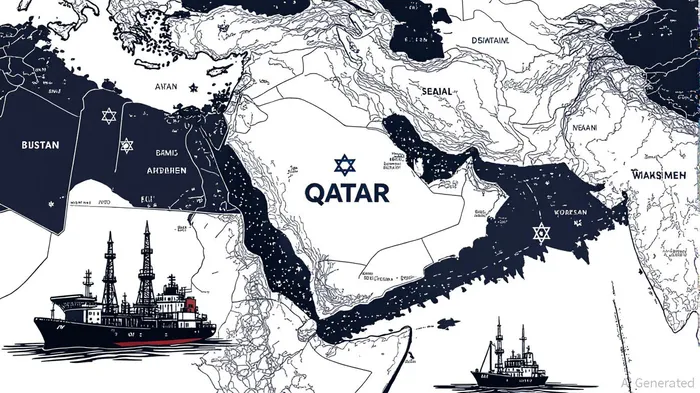
The Israeli military's unprecedented strike on Hamas leadership in Doha, Qatar, on September 9, 2025, has sent shockwaves through global markets and regional diplomacy. This operation—Israel's first direct attack on a Gulf Arab state—has not only destabilized Middle East geopolitics but also triggered immediate volatility in energy and defense equities. For investors, the incident underscores the growing interplay between strategic risk and market fundamentals, with implications that extend far beyond the immediate aftermath.
Geopolitical Implications: A Shattered Regional Equilibrium
The Doha Strike has exposed the fragility of Gulf states' balancing act between U.S. alliances and Palestinian solidarity. Qatar, a key U.S. partner hosting the Al Udeid Air Base, was caught off guard by the attack, which killed at least one Qatari security personnel and several Hamas figures[6]. Israeli officials framed the operation as a “wholly independent” move to accelerate hostage negotiations, but the strike has instead complicated diplomatic efforts and eroded trust in U.S. security guarantees[6].
Regional analysts warn that Gulf states are now more vulnerable to external shocks, as their attempts to mediate conflicts and maintain economic growth are overshadowed by escalating tensions[3]. The U.S. assurance to Qatar that such an event would not recur has done little to quell concerns about its credibility, particularly as Iran's influence wanes and Israel's military assertiveness grows[6]. This recalibration of power dynamics risks fragmenting the Gulf's strategic cohesion, with potential spillovers into energy diplomacy and trade routes.
Energy Market Reactions: Volatility as the New Normal
The strike's immediate impact on energy markets was stark. Brent crude oil prices surged nearly 2% to $67.38 per barrel, while U.S. West Texas Intermediate (WTI) climbed to $63.18, reflecting fears of supply disruptions in the Strait of Hormuz[2]. Gold, a traditional safe-haven asset, hit a record high as investors fled equities[4].
According to a report by Bloomberg, the market reaction was driven by the perceived threat to Qatari sovereignty—a major LNG exporter—and the broader risk of regional conflict spilling into energy infrastructure[1]. While analysts note that the absence of direct damage to oil facilities has tempered long-term price pressures, the underlying uncertainty remains. “The Gulf's role as a stable energy hub is now in question,” said one Reuters contributor, highlighting that even a minor escalation could push oil prices above $90–$100 per barrel[4].
For energy equities, the strike has amplified sector-specific vulnerabilities. Companies like ChevronCVX-- (CVX) and ExxonMobil (XOM) face heightened exposure to geopolitical risks, particularly as Gulf producers reassess partnerships and infrastructure investments[5]. Meanwhile, insurance and reinsurance firms are recalibrating risk models, with political and war risk premiums expected to rise[2].
Defense Sector Implications: Winners and Losers in a New Security Paradigm
The Doha Strike has also reignited demand for advanced defense systems, benefiting firms like Lockheed MartinLMT-- (LMT) and Raytheon Technologies (RTX). These companies, which supply Israel and the U.S. with missile defense systems and surveillance technology, are likely to see increased orders as Gulf states bolster their security postures[5].
However, the long-term outlook for defense equities is nuanced. While short-term demand may surge, the strike's erosion of U.S. credibility in the region could dampen future defense contracts with Gulf allies. A report by Fastbull notes that companies like Northrop GrummanNOC-- (NOC) and BAE Systems (BA) may face challenges if regional alliances fracture[5]. Additionally, the incident has highlighted the need for cyber and electronic warfare capabilities, creating opportunities for niche players like PalantirPLTR-- Technologies (PLTR) and Leonardo (LDO).
Strategic Risks for Investors: Navigating a Fractured Landscape
For global investors, the Doha Strike underscores three key risks:
1. Energy Supply Chain Disruptions: Even minor conflicts in the Gulf could disrupt LNG and crude flows, with cascading effects on global inflation and economic growth[1].
2. Defense Sector Overexposure: While defense stocks may benefit from short-term volatility, overreliance on geopolitical tensions could lead to market corrections if conflicts de-escalate[5].
3. Insurance Market Hardening: Rising political risk premiums and tighter reinsurance capacity could increase costs for energy and infrastructure projects in the Middle East[2].
Investment institutions like BlackRockBLK-- have already flagged the “weaponization of energy systems” as a critical risk, urging investors to diversify energy portfolios and hedge against geopolitical shocks[4]. Similarly, defense investors must balance near-term gains with the likelihood of shifting alliances and U.S. policy recalibrations.
Conclusion: A Precarious Path Forward
Israel's Doha Strike has not only destabilized the Middle East but also exposed the fragility of global markets in the face of geopolitical volatility. While energy and defense equities may see short-term gains, the long-term risks—ranging from supply chain disruptions to eroded U.S. credibility—demand a cautious, diversified approach. For investors, the key takeaway is clear: in a world where regional conflicts can trigger market tremors overnight, strategic risk management is no longer optional—it is essential.





Comentarios
Aún no hay comentarios